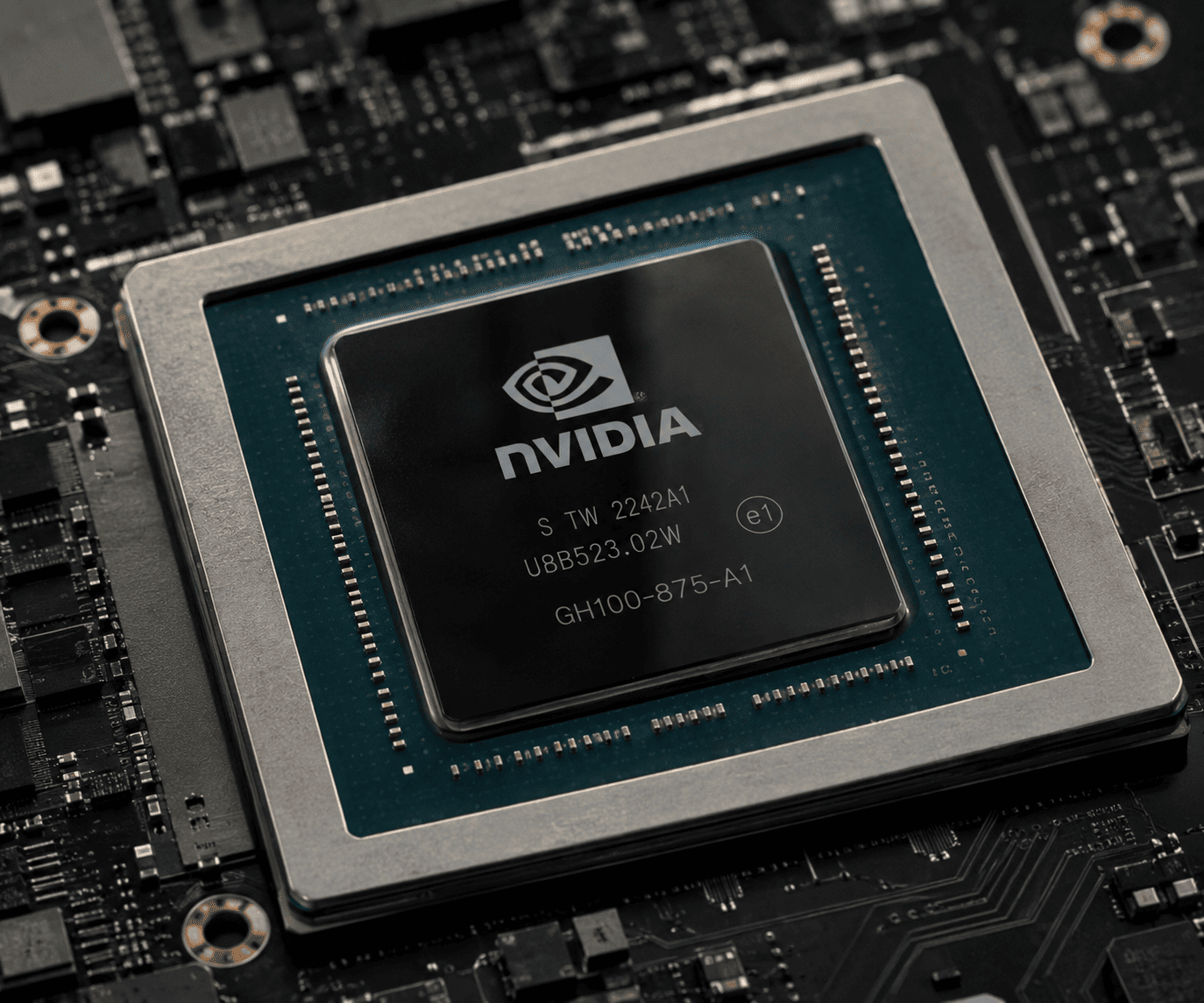
Nvidia's stock advanced more than 3% in early trading Monday after the company unveiled a record $150 billion share repurchase authorization, highlighting the substantial cash flows generated by the artificial intelligence boom.
The buyback announcement helped lift the shares even as broader markets remained under pressure from rising oil prices and higher bond yields, with the 10-year Treasury yield climbing to 5.23%.

The new authorization is the largest single addition to a U.S. company's buyback program, surpassing Apple's $110 billion approval in 2024. Nvidia's total remaining repurchase capacity now stands at $235 billion, which the company plans to deploy through fiscal 2028.
Cash Generation Powers Buyback
Nvidia's financial position has strengthened dramatically alongside the AI investment cycle. The company generated nearly $100 billion in free cash flow in its most recent fiscal year, which ended in January. According to S&P Global's Visible Alpha, consensus estimates project that figure could more than triple to $329 billion by fiscal 2028.
At the end of its July quarter, Nvidia held $22.4 billion in cash and cash equivalents. Net income is forecast to more than double to $245 billion in the current fiscal year, with Visible Alpha estimating it could reach $387 billion by the fiscal year ending January 2028.
The buyback provides a mechanism to return a portion of these anticipated cash flows to shareholders while continuing to fund expansion and AI investments.
Valuation and Margin Concerns
Large buyback authorizations often signal management's belief that shares are undervalued, but they are also typical of mature companies with moderating growth. Despite Nvidia's strong financial outlook, questions persist about how much future growth is already priced into the stock.
The shares recently traded at about 16.5 times forward 12-month earnings, according to LSEG data—the lowest level since January 2015 and well below its 15-year average of roughly 30 times earnings. Some analysts view this multiple compression as a sign that investors are more cautious about the pace and durability of Nvidia's profit growth.
One concern is pressure on gross margins. Nvidia's gross margin was 75% last quarter, but Bloomberg-compiled analyst estimates suggest it could fall below 72% by the fourth quarter before recovering. Higher costs for critical components, including memory chips, are contributing to the pressure.
Nvidia also faces a changing competitive landscape as some of its largest customers develop their own AI silicon. Meta Platforms and Alphabet are among those pursuing in-house AI processors, potentially reducing their dependence on Nvidia over time.
David Russell, global head of market strategy at TradeStation, noted in a Bloomberg report that "multiples expand when companies are well positioned with potential to get better, and Nvidia doesn't offer that."
CEO Jensen Huang has pushed back against the cautious view, describing Nvidia as "the world's first and only growth value stock" and calling the company "incredibly misunderstood."
Growth Outlook and Strategic Implications
The record buyback comes as Nvidia seeks to reassure investors that the AI spending cycle has further room to run. Last month, the company forecast approximately 70% revenue growth for fiscal 2028, addressing concerns about a potential slowdown in AI infrastructure spending.
Sales are projected to increase by about 90% this year, with major AI companies including OpenAI, Anthropic, and SpaceX among its customers. Google also remains a significant buyer through its cloud business despite developing its own AI chips.
Nvidia has also invested in AI startups and cloud providers, a strategy that has drawn scrutiny from some investors over whether such investments can indirectly support demand for its chips.
The comparison with Apple is notable. When Apple authorized its $110 billion buyback in 2024, it held all five top spots for the largest U.S. corporate repurchase authorizations, according to Bloomberg. Apple's smartphone growth had slowed, but its profitability enabled substantial capital returns.
Nvidia, by contrast, is still in a period of rapid expansion. Its expected $329 billion in free cash flow by fiscal 2028 and projected $387 billion in net income underscore the scale of the opportunity the company believes lies ahead.
The $150 billion authorization is more than a capital-return decision; it is a statement from management that the AI infrastructure boom can generate sufficient cash to fund continued investment while returning significant sums to shareholders.
For investors, the key question is whether Nvidia's extraordinary cash generation and projected growth can continue to offset margin pressures, customer competition, and a rapidly evolving AI chip market.
This article is for informational purposes only and does not constitute financial advice.

