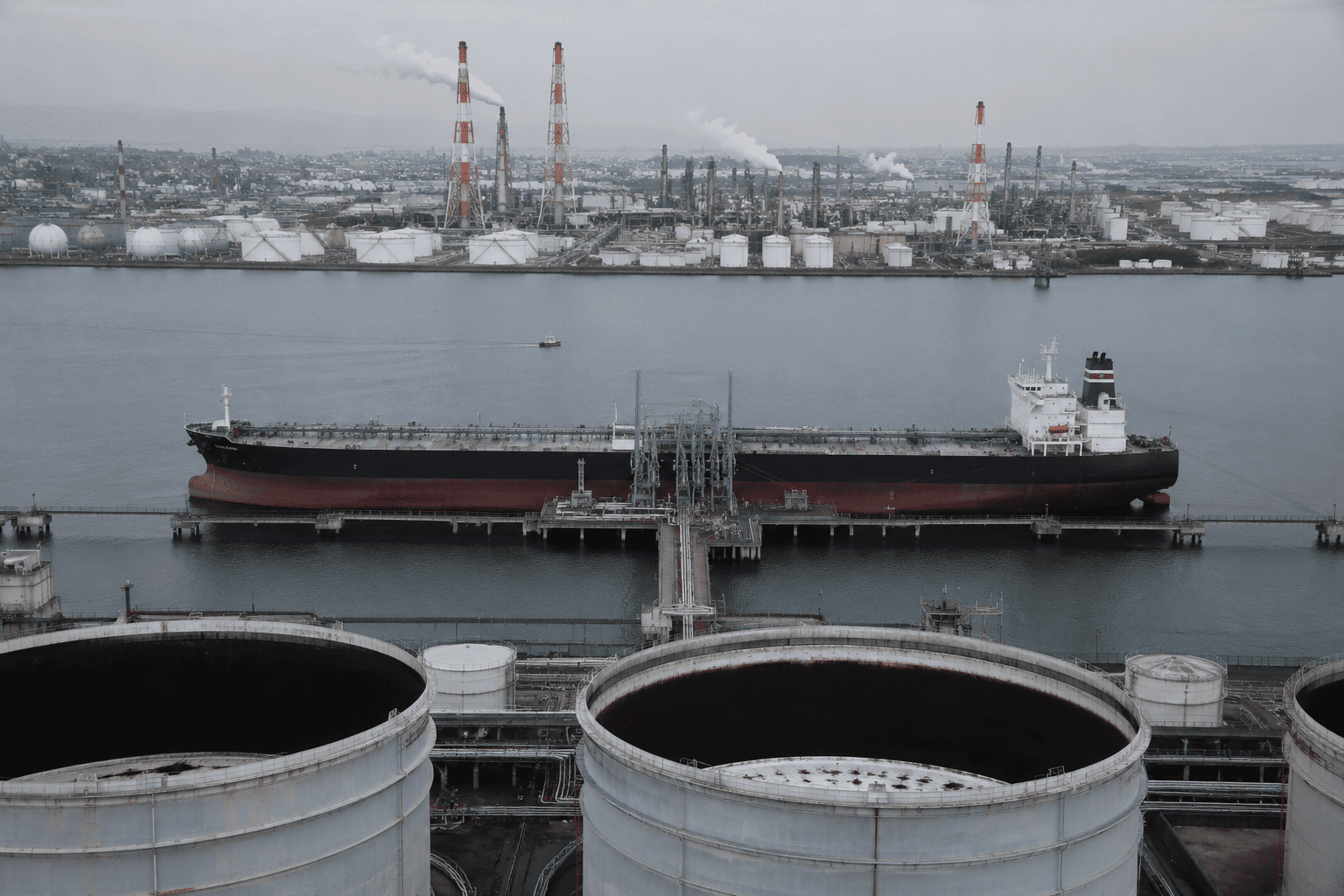
Brent crude extended its decline toward the mid-$80s on Thursday as traders priced in a potential reopening of the Strait of Hormuz, with diplomatic efforts gaining momentum. Futures fell 0.5% to $87.43 a barrel, with Qatar's prime minister set to visit Iran and Tehran continuing talks with Oman over the waterway's control.
Before the conflict, Hormuz handled oil and gas shipments equivalent to roughly one-fifth of global consumption. However, current flows are estimated at only about a quarter of pre-war levels, underscoring the gap between diplomatic optimism and physical supply reality.
Technical levels: $86 as the key trigger
Analysts point to $86 as a critical support level for Brent. According to FXEmpire's Muhammad Umair, a break below $86 could open the door to $76, while a move above $95 might pave the way toward $101. The recent selloff is not driven by a collapse in demand but by traders stripping out part of the geopolitical premium that had built around disrupted Gulf shipping.
Diplomacy vs. physical flows
ING strategists Warren Patterson and Ewa Manthey caution that any agreement does not guarantee a normalization of oil flows. They argue that a genuine recovery would likely require Washington to lift its blockade on Iranian ports and ease sanctions. ING also questioned US estimates of 8-9 million barrels per day moving through Hormuz, noting ship-tracking data suggests a range of 2-6 million.
ANZ's Daniel Hynes echoed concerns about persistent supply shortages, particularly in diesel. US distillate inventories fell by 2.2 million barrels last week to 103.4 million barrels, the lowest level ever recorded for this time of year. Damage to Middle Eastern refineries and attacks on Russian plants have further constrained supply.
Institutional forecasts: sub-$85 plausible
Institutional forecasts suggest that Brent below $85 is not an extreme scenario. HSBC lowered its 2026 Brent forecast to $80 from $95, assuming Gulf exports return to normal by the end of September. A Reuters poll from July placed the 2026 average at $85.22. These figures make an $85 test increasingly plausible if diplomatic progress continues.
However, the same poll warned that full normalization could take months, with analysts still expecting significant Middle East disruptions. The market can remove geopolitical risk faster than tankers, refineries, and export infrastructure can restore lost supply. Thus, Brent could fall below $85 simply because traders anticipate a better future before the barrels actually arrive.
A sustained move substantially lower would require more evidence: higher Hormuz traffic, easing sanctions, recovering product inventories, and fewer refinery disruptions. For now, the market remains caught between diplomatic headlines and physical tightness, with diesel stocks at record lows providing a floor under prices.
This article is for informational purposes only and does not constitute financial advice.