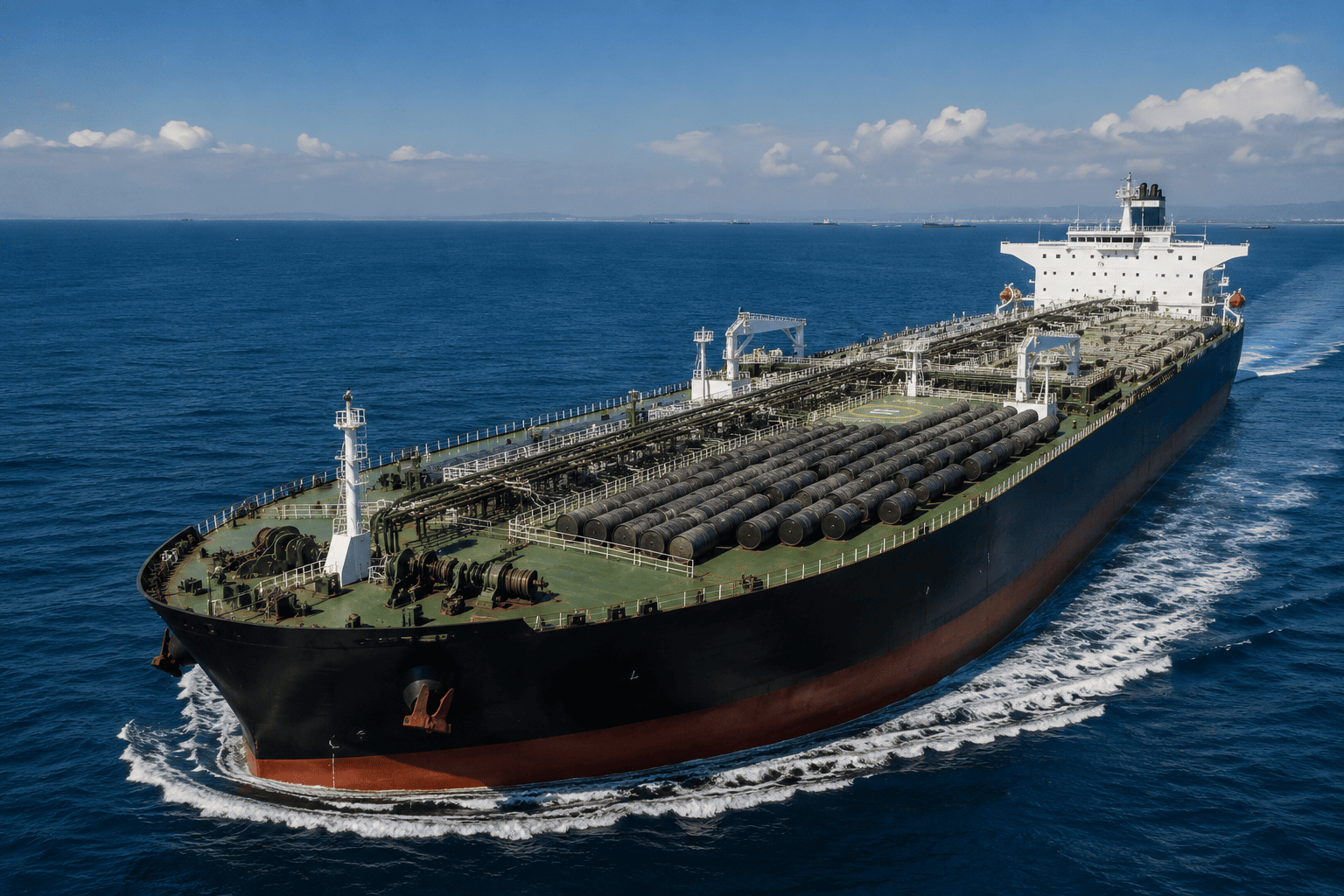
Oil prices remained near four-week highs on Thursday, with Brent crude hovering above $91 a barrel and West Texas Intermediate (WTI) trading around $86, as geopolitical tensions around the Strait of Hormuz continued to underpin the market despite a surprise build in U.S. crude inventories.
Brent futures were last seen near $91.87, while front-month WTI was around $85.81. Both benchmarks have risen for four consecutive sessions, with Brent settling at $91.62 on Wednesday and WTI at $85.83, driven primarily by supply disruption risks rather than robust demand.
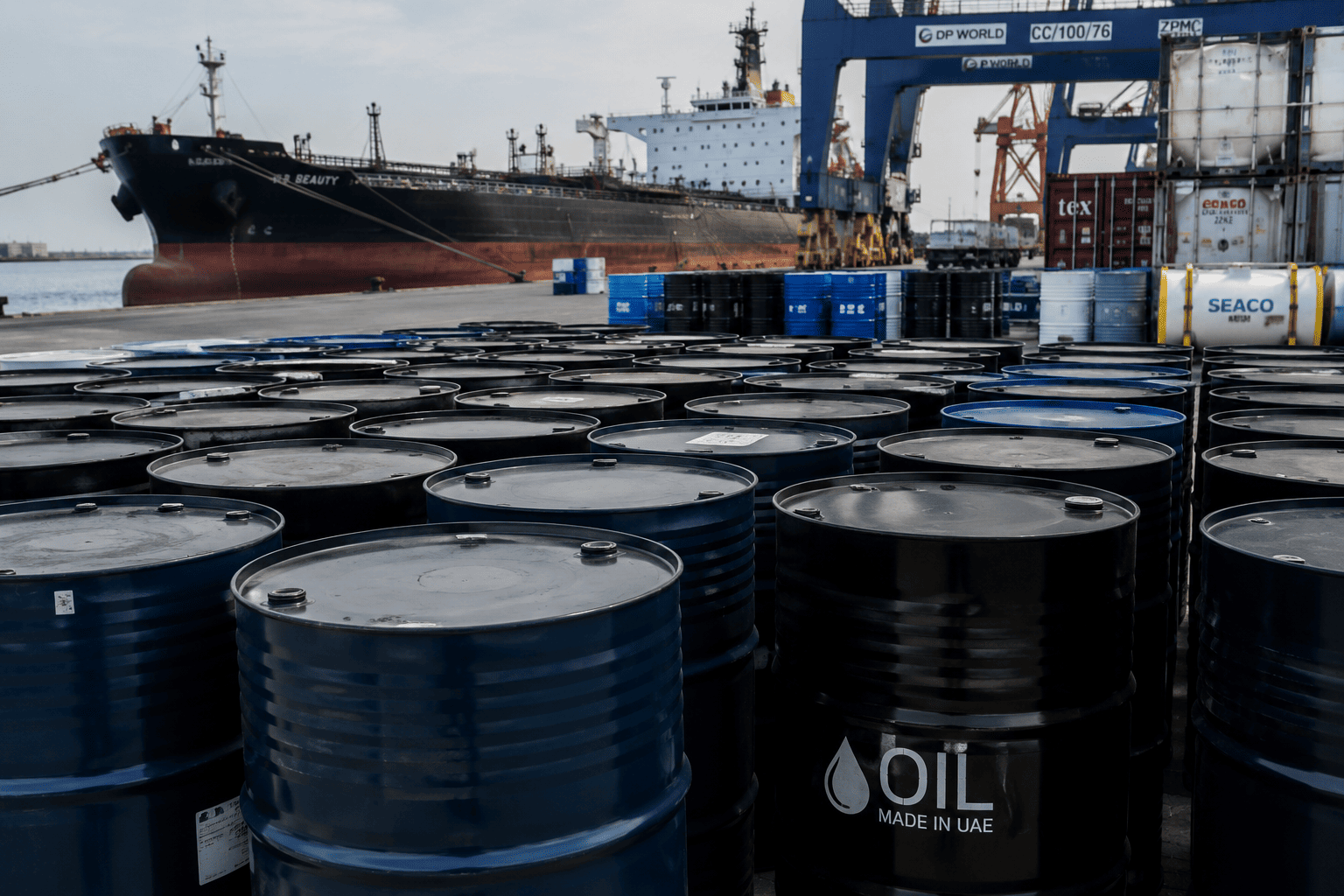
Hormuz remains the key risk factor
The Strait of Hormuz, a critical chokepoint for roughly one-fifth of global oil consumption, remains the dominant driver of crude prices. While Washington insists the waterway is open, Tehran has indicated restrictions remain, and many shipping companies continue to avoid the route due to security concerns.
The latest escalation came as the United Arab Emirates suspended trade and financial dealings with Iran, following accusations of renewed missile attacks—claims that Iran has denied. This move adds further uncertainty to Gulf commerce and reduces hopes for a quick diplomatic resolution.
Even with alternative pipelines, ship-to-ship transfers, and rerouted cargoes helping to mitigate the disruption, the cost of moving Gulf crude has surged. According to the Financial Times, spot earnings for some supertankers have climbed above $550,000 a day, reflecting the heightened risk premium.
U.S. inventories and demand signals cap gains
Offsetting the bullish geopolitical narrative, physical supply is not tightening as quickly as feared. The Energy Information Administration (EIA) reported that U.S. commercial crude inventories rose by 4.4 million barrels last week to 428.8 million, defying expectations for a decline. Gasoline stocks also increased, while U.S. crude production averaged 13.8 million barrels per day, and refinery utilisation climbed to 97.2%.
David Russell, of TradeStation, noted that the inventory build and softer gasoline demand suggest U.S. supply conditions are becoming less strained. However, analysts at Ritterbusch point to low distillate stocks as a counterweight, with diesel and other middle-distillate supplies still well below seasonal norms.
This divergence helps explain why crude has held firm without breaking decisively higher. The market is paying a sizeable geopolitical premium, but not pricing in a full-scale supply shock.
Implications for inflation and central banks
Brent's ability to stay above $90 has broader implications beyond energy markets. Expensive crude can feed directly into fuel, freight, and manufacturing costs, complicating the inflation outlook just as investors debate whether the Federal Reserve may need to tighten policy again.
The next move in oil prices will likely depend on whether shipping through Hormuz deteriorates further or whether rising inventories and alternative export routes continue to absorb the disruption. For now, the market remains rangebound, with geopolitical risks providing a floor and supply data capping the upside.
This article is for informational purposes only and does not constitute financial advice.