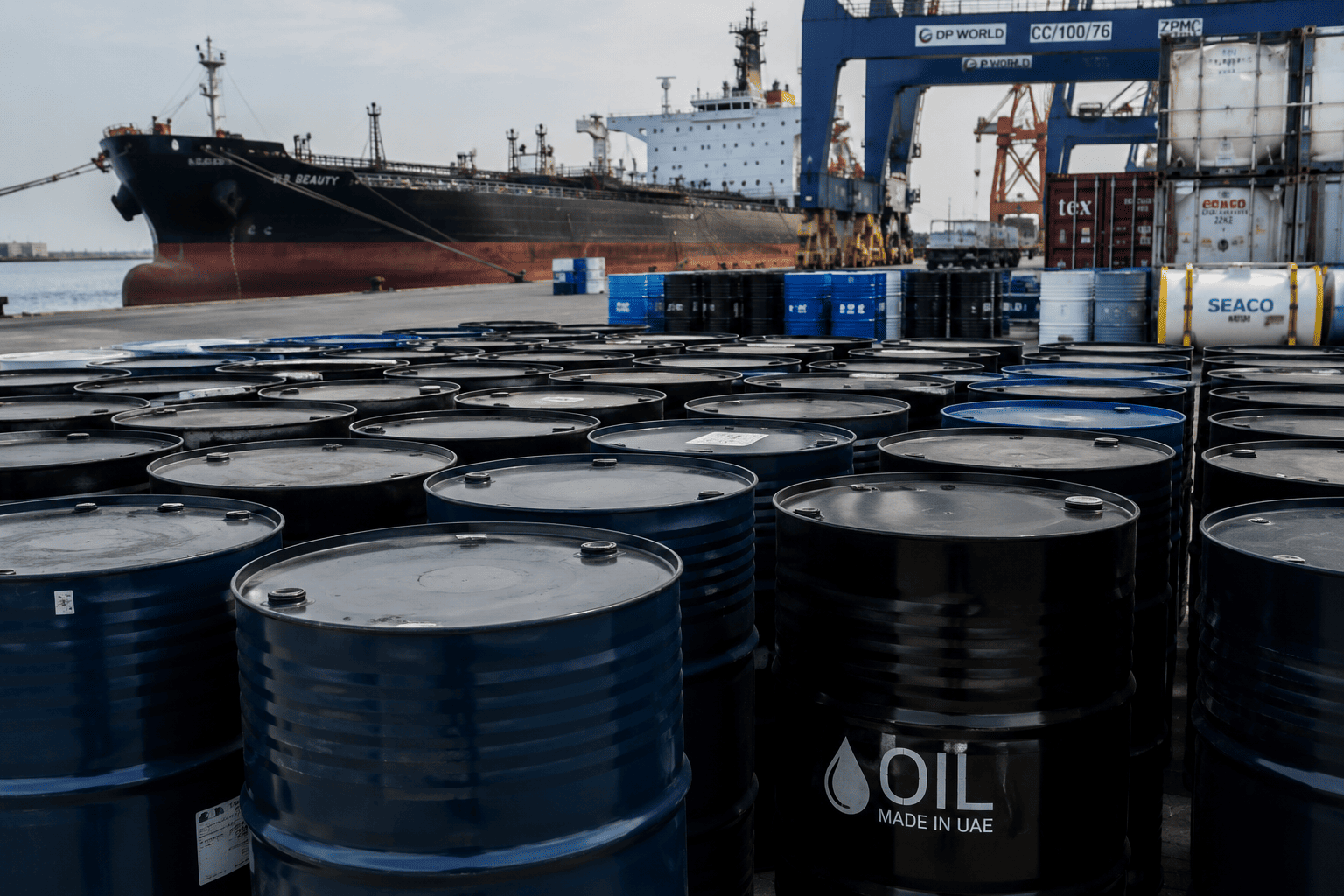
Brent crude oil prices pulled back on Wednesday, September 11, as traders locked in profits following a sharp rally that pushed the benchmark above $109 earlier in the week. The international crude marker was last seen trading near $104, down from a weekly high of $109.85, as market participants weighed the potential for diplomatic progress in the Middle East against persistent supply concerns.
Iran-Gulf meeting raises hopes for Strait of Hormuz reopening
The sell-off was triggered by a Financial Times report indicating that Iran and several Gulf Cooperation Council (GCC) members are planning to meet in Oman to discuss a possible deal to reopen the Strait of Hormuz. The strait is a critical chokepoint through which roughly 20% of global oil consumption passes, and its closure has been a major driver of the recent price surge.

This would mark the first such meeting since the conflict began six months ago. Attendees are expected to include representatives from Bahrain, Kuwait, Qatar, Oman, Saudi Arabia, and the United Arab Emirates. The talks come amid growing unease among Gulf producers about the trajectory of the war and its impact on their oil exports.
Data released this week showed Saudi Arabia's crude exports fell to 3.6 million barrels per day in August, the lowest level in 13 years. Similar declines have been reported across the region, underscoring the strain on global supply. The meeting also reflects a broader recalibration of Gulf states' relationship with Washington, especially after reports that President Donald Trump rejected a request from Crown Prince Mohammed bin Salman to strike Houthi targets.
Some analysts speculate that Gulf nations may offer Iran financial incentives in exchange for reopening the strait. Notably, Qatar and the UAE have reportedly made payments to Tehran, which may explain why they have avoided direct attacks.
Supply outlook remains fragile
Despite the potential for diplomatic progress, the energy market faces significant headwinds. The conflict between Saudi Arabia and the Iran-backed Houthi rebels shows no signs of abating. The Houthis have captured a strategic port city and continue to launch attacks on Saudi infrastructure, keeping supply risks elevated.
The International Energy Agency (IEA) warned that global oil supply is expected to contract by about 5.7 million barrels per day this year. While demand is also weakening, the IEA noted that supply is falling at a faster pace, which could keep prices elevated in the near term.
Adding to the uncertainty, President Trump has ruled out direct talks with Iran, suggesting that a resolution is unlikely before the U.S. midterm elections. This leaves the market vulnerable to further supply disruptions.
Technical outlook: Break-and-retest pattern
From a technical perspective, Brent has been in a robust uptrend since July, when it traded near $70. The rally accelerated after Houthi advances against Saudi Arabia, pushing prices to a high of $109.84. The commodity is now attempting to retest the key support level of $101.80, a move that could confirm a break-and-retest pattern—a classic continuation signal.
If the support holds, the path of least resistance remains upward, with the next major resistance at $119, the highest point of the year. However, a sustained break below $101.80 could signal a deeper correction.
Investors are also keeping an eye on related assets. For instance, BP's stock has been buoyed by the crude rally, and the recent surge has faced headwinds from profit-taking and diplomatic overtures. Meanwhile, equity markets have reacted to higher oil prices, and the broader economic impact of sustained high crude remains a key concern for investors.
This article is for informational purposes only and does not constitute financial advice.

