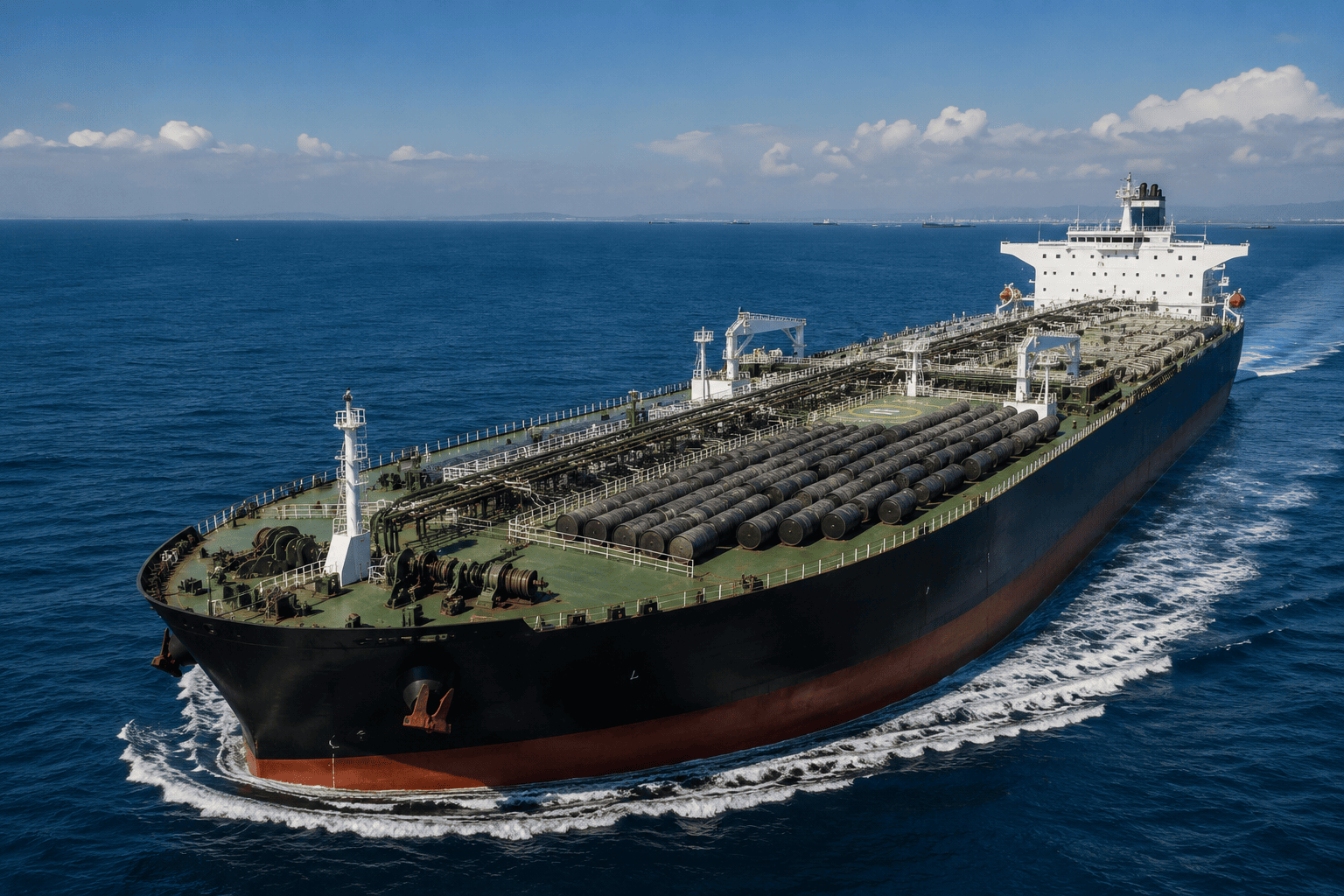
Brent crude is on track for its strongest weekly performance this year, with prices climbing nearly 13% to approach the $110 per barrel mark. The benchmark traded around $108.44 early Friday after touching $109.97, driven by escalating supply fears in the Middle East and tightening physical availability.
Supply fears remain, but the rally looks stretched
On Thursday, Brent jumped 6.3% to settle at $107.63, as heightened tensions across the Persian Gulf and threats to Red Sea shipping intensified concerns about disruptions to crude flows. The Strait of Hormuz, a critical chokepoint for global oil shipments, has seen constrained traffic, while Iran-aligned Houthis seized Yemen's port of Mocha, adding to the risk premium.

OPEC's output also fell by about 640,000 barrels per day in August, reinforcing the narrative that disrupted barrels are difficult to replace. However, after such a violent move, positioning becomes a risk. Dennis Kissler of BOK Financial told Barron that futures were in an "overbought condition" with a "corrective phase due." Prices can fall even while geopolitical risks remain elevated.
After a 13% weekly surge, crude no longer needs a ceasefire to correct. A pause in escalation or profit-taking could expose how crowded the trade has become.
$110 oil contains the seeds of its own reversal
The strongest resistance to higher crude may eventually come from consumers rather than producers. The International Energy Agency (IEA) expects global oil demand to decline by about 1.6 million barrels per day in 2026, with elevated fuel costs and disrupted trade already weighing on consumption.
Naeem Aslam, chief investment officer at Zaye Capital Markets, told Rigzone: "Supply tightness supports prices, but demand destruction can cap the upside if crude remains elevated for too long."
US diesel prices have reached record highs above $6 per gallon, while refining constraints have lifted diesel margins. Airlines, hauliers, and manufacturers can absorb those costs only for so long before cutting activity, raising prices, or passing the burden to customers. Households then have less money for discretionary spending.
The move from $100 to $110 can be driven by scarcity, but $120 becomes harder because every additional dollar creates a stronger incentive to consume less.
China is becoming a weaker safety net
China remains the world's biggest crude importer, but its transport system is electrifying rapidly. Sinopec's Economics and Development Research Institute estimates electric vehicles will displace about 1.2 million barrels per day of Chinese oil demand in 2026. EV penetration could reach 75% to 80% by 2030.
"It is equivalent to almost 15% of China's total demand for refined oil products," institute vice-president Fairy Wang told Reuters.
That shift matters because previous oil rallies could rely on strong Chinese consumption to absorb barrels once prices eased. Electrification is gradually weakening that support. OPEC added another warning on Thursday, cutting its 2026 global oil-demand growth forecast for a fifth consecutive month to just 380,000 barrels per day.
That matters because a weaker demand outlook leaves less room for prices to absorb another supply shock. None of this neutralises a major Hormuz disruption overnight, but the market is balancing extremely bullish near-term supply conditions against a demand base that is becoming more fragile.
This article is for informational purposes only and does not constitute financial advice.

