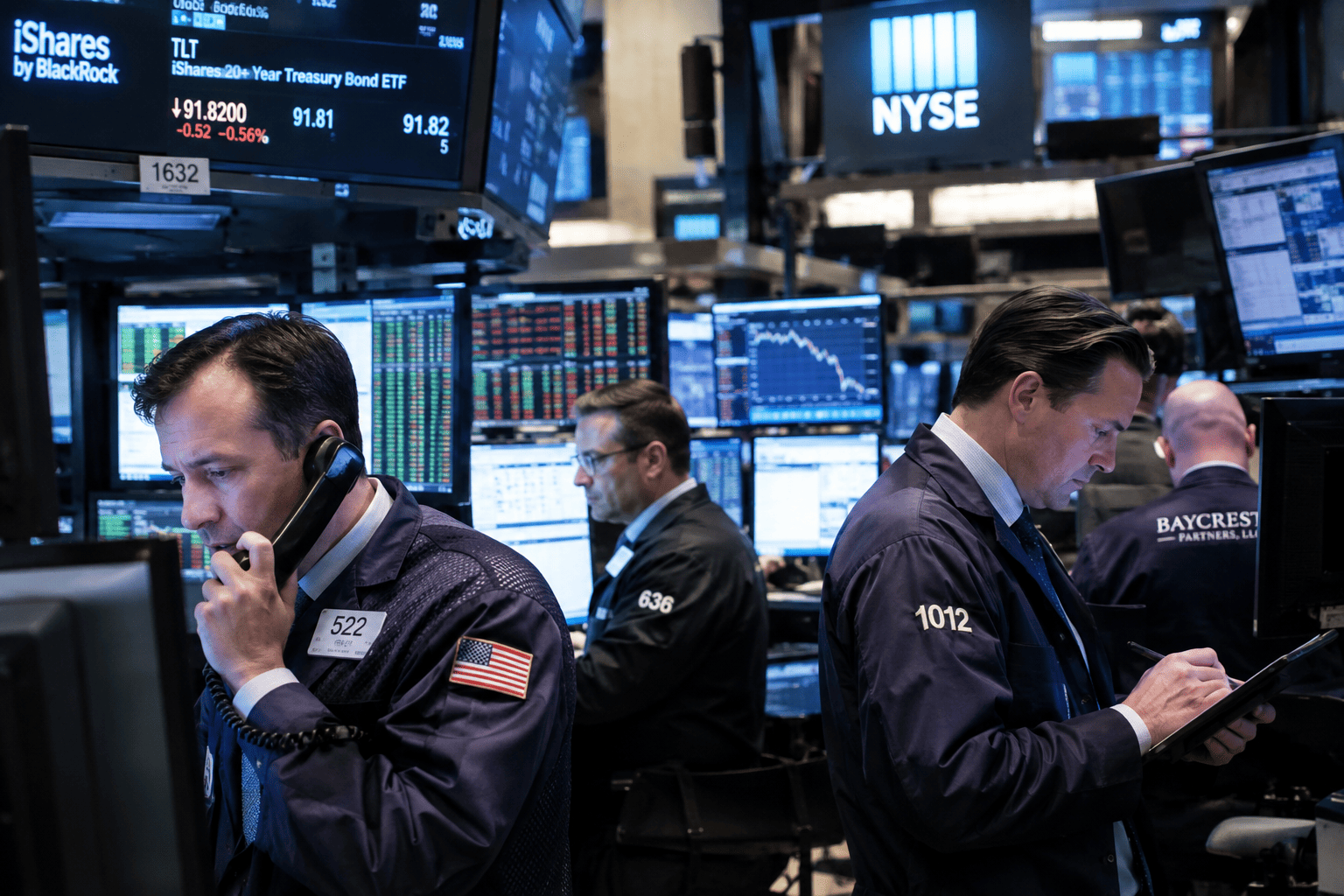
The global bond selloff deepened on Monday, pushing the US 10-year Treasury yield to fresh multi-year highs as oil prices spiked on fading hopes for a diplomatic resolution between Washington and Tehran over the Strait of Hormuz. Brent crude rose more than 3% to $108.27 a barrel, adding to inflationary pressures and complicating the Federal Reserve's policy path.
The benchmark 10-year yield climbed 5 basis points to 5.23%, while the 30-year bond yield topped 5.5%, both trading near levels not seen in over a decade. The policy-sensitive two-year yield also rose 5 basis points to 4.92%. Equity futures weakened, with S&P 500 futures down 0.33% and Nasdaq 100 futures off 0.44%, as investors braced for a prolonged period of elevated inflation and higher borrowing costs.

Jim Reid, global head of macro research at Deutsche Bank, described the US-Iran standoff as a "stalemate," noting that despite possible talks this week, there was little sign of a breakthrough. The conflict has disrupted energy flows and raised concerns about the Strait of Hormuz, a critical chokepoint for global oil shipments. A sustained disruption could feed directly into fuel and transportation costs, making it harder for central banks to bring inflation down.
The Federal Reserve raised borrowing costs for the first time since 2023 earlier this month, and futures markets now price in two additional quarter-point hikes by January—a sharp reversal from earlier expectations of rate cuts. The combination of resilient US economic activity and renewed energy inflation has left investors facing the prospect of interest rates remaining restrictive for longer.
The pressure was not confined to US debt. UK 10-year gilt yields rose 6 basis points to 5.42%, near their highest since 2008, while Germany's 10-year Bund yield climbed 3 basis points to 3.65%, the highest since 2011. French and Italian yields also hit multi-year highs, and two-year Japanese government bond yields touched 1.98%, their highest since 1995, after Bank of Japan minutes showed some policymakers calling for faster rate increases.
Ecaterina Bigos, senior market strategist at BNP Paribas Asset Management, attributed part of the global bond pressure to increased corporate issuance for artificial intelligence infrastructure, creating a "competition for capital." Companies are raising large amounts of debt to finance data centers and computing capacity, which can compete with government debt for investor capital and push yields higher.
This week's economic data will be a key test for Treasury yields. The August personal consumption expenditures report, due Thursday, is expected to show headline PCE rising 0.4% month over month, with core PCE up 0.3%. The September jobs report, due Friday, is forecast to show just 100,000 new jobs, down from 162,000 in August, but recent business surveys suggest employment could surprise to the upside.
Michael Kramer, founder of Mott Capital Management, noted that the 10-year yield is approaching major technical resistance around 5.25%, a level last seen in July 2007. A break above that could trigger another sharp move higher, with some strategists already discussing the possibility of 6% yields.
This article is for informational purposes only and does not constitute financial advice.

