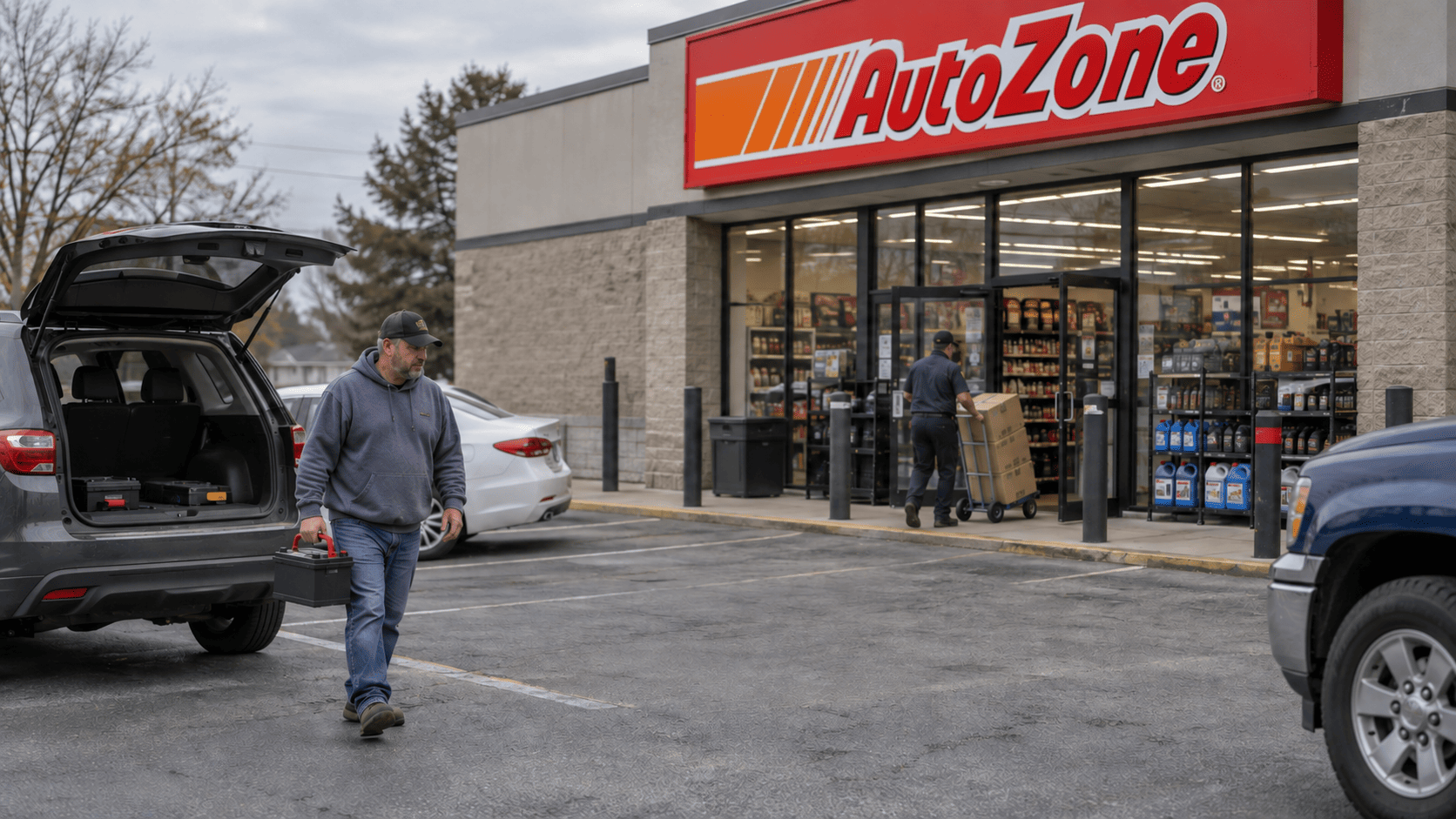
AutoZone will report fiscal fourth-quarter results on Tuesday with the stock trading near its 52-week low, having lost roughly 31% over the past year. Shares closed Monday at $2,803.25, down 1.82%, as investors weighed whether the worst of the demand slowdown is already reflected in the price.
Consensus estimates call for earnings of about $54.30 per share on revenue near $6.71 billion. Several analysts have trimmed their forecasts in recent weeks, yet many have maintained bullish ratings, creating an unusual setup in which near-term numbers are falling while longer-term price targets remain well above the current quote.

DIY weakness has driven the selloff
The core of AutoZone's problem sits in its do-it-yourself customer base. Higher fuel costs and pressure on lower-income households have made motorists more reluctant to spend on discretionary vehicle repairs, weighing on comparable sales.
Oppenheimer analyst Brian Nagel recently lowered his fourth-quarter and fiscal 2027 comparable-sales projections, noting that the spike in oil prices has compounded an already strained consumer backdrop. The firm cut its price target to $3,500 from $4,300 and removed AutoZone from its Top Pick list, but kept an Outperform rating on the shares.
That combination captures the current earnings debate: Wall Street is growing more cautious about the next few quarters without abandoning the longer-term investment case.
What to watch in Tuesday's report
AutoZone does not need to prove that DIY demand has suddenly recovered. It needs to show that conditions are stabilising. The key metric will be US same-store sales, particularly the spread between DIY and commercial growth.
Investors will also scrutinise gross margins, SG&A growth and whether heavy spending on stores and distribution is beginning to generate better sales leverage.
UBS sees a possible inflection
UBS is more explicit about the possibility of a turn. The bank expects domestic comparable sales to rise about 2.5%, below the Street's earlier 3.6% estimate, with commercial sales growing around 8% and DIY roughly flat. It forecasts fourth-quarter EPS of $52.19, below consensus.
Those figures hardly describe a strong quarter. But UBS believes sales growth bottomed in June and improved modestly through July and August, making this quarter a potential inflection point for fiscal 2027. Its argument rests on more than sales: easing LIFO inventory pressure, maturing stores, additional Mega Hubs, commercial market-share gains, moderating expense growth and continued buybacks could support mid-teens EPS growth next year. UBS retains a Buy rating and a $4,555 price target, implying substantial upside from Monday's close.
Valuation versus a clean beat
Morgan Stanley's Simeon Gutman also remains constructive, reiterating a positive rating with a $3,605 target on September 16. That sits nearly 29% above Monday's closing price. Oppenheimer's reduced $3,500 objective still implies about 25% upside despite its more cautious near-term forecasts.
The reason analysts are lowering numbers without giving up on the stock is AutoZone's heavy investment in additional stores, Mega Hubs and commercial distribution capacity. Investors have punished the near-term margin cost because the promised operating leverage has been slow to materialise.
Tuesday's report must therefore show whether those investments are beginning to offset DIY weakness. Stronger commercial sales, easing gross-margin pressure and better expense leverage would matter more than a narrow headline EPS beat.
This article is for informational purposes only and does not constitute financial advice.

