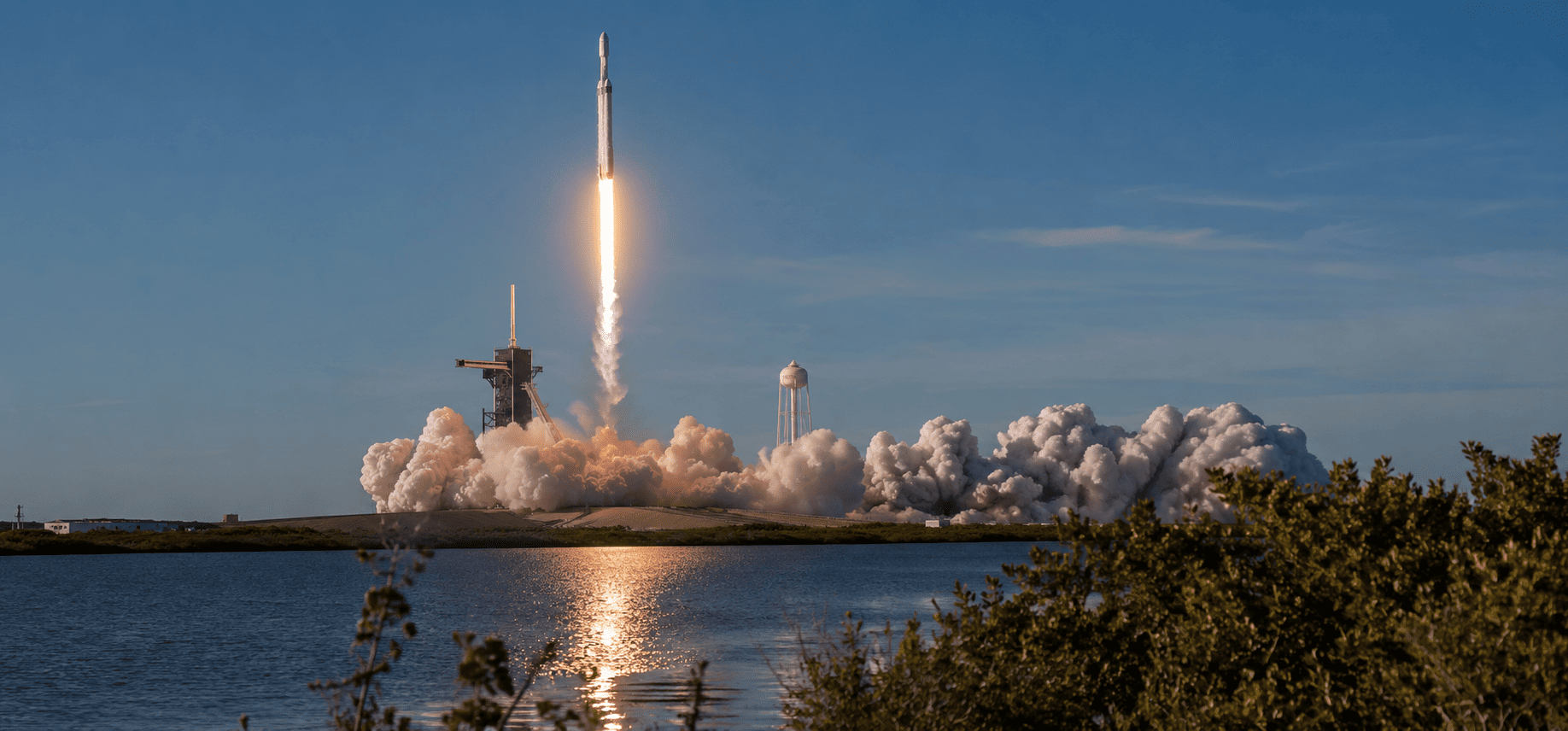
AST SpaceMobile (ASTS) shares rose approximately 4% on Wednesday following the successful launch of three of its largest communications satellites aboard a SpaceX Falcon 9 rocket. The mission, which lifted off from Cape Canaveral Space Force Station at 2:39 a.m. EDT, marks a critical step in the company's plan to build a space-based cellular broadband network.
The launch sent BlueBird 8, 9, and 10 into low Earth orbit, increasing AST SpaceMobile's total in-orbit satellite count to nine. Investors reacted positively to the news, particularly after a setback earlier this year when a previous satellite mission was lost during a failed Blue Origin New Glenn rocket launch.
BlueBird Launch Advances Network Expansion
The newly deployed satellites are the largest and most advanced spacecraft AST SpaceMobile has launched to date. Each satellite features an antenna array spanning approximately 2,400 square feet, making it among the largest commercial communications arrays ever placed into low Earth orbit. The company stated that these Block 2 BlueBird satellites are designed to deliver peak data speeds of nearly 200 Mbps directly to standard smartphones, a significant improvement over the 98.9 Mbps peak download speeds achieved by the first-generation Block 1 satellites.
AST SpaceMobile is developing a satellite network capable of connecting directly to existing 4G and 5G smartphones without requiring users to purchase specialized satellite hardware. The technology is intended to support voice calls, broadband internet access, and video services through space-based connectivity. However, investors are expected to closely monitor the next phase of the mission, as confirmation that the satellites have successfully unfolded and are operating correctly may take several weeks.
SpaceX Plays Dual Role as Partner and Competitor
The mission also underscores SpaceX's dominant position in the commercial launch industry. While SpaceX provided launch services for AST SpaceMobile, the two companies are simultaneously competing in the rapidly developing direct-to-device satellite communications market. SpaceX's Starlink Mobile initiative aims to provide broadband-quality smartphone connectivity from space and is targeting commercial availability by the end of next year. Despite this competitive dynamic, AST SpaceMobile continues to rely on SpaceX's Falcon 9 launch capabilities as it builds its satellite constellation.
The successful launch also helps ease concerns that emerged following the failed Blue Origin mission in April, which raised questions about AST SpaceMobile's ability to reach its goal of placing at least 45 satellites into orbit by the end of the year. For more on SpaceX's market performance, see SpaceX Stock Dips Below $135 IPO Price Amid Post-Listing Volatility.
Commercial Ambitions Continue to Grow
AST SpaceMobile said BlueBirds 11, 12, and 13 are already being prepared for shipment to Cape Canaveral ahead of future launches. The company also confirmed that next-generation satellites through BlueBird 37 are currently in production and assembly at its facilities in Midland, Texas. AST SpaceMobile operates more than 500,000 square feet of manufacturing and operations facilities worldwide and employs over 2,250 people. The company holds more than 3,900 patents and patent-pending claims.
The company has agreements with nearly 60 mobile network operators representing more than 3 billion subscribers globally, including partnerships with AT&T, Verizon, Vodafone, Rakuten, Google, Bell, Telus, stc Group, and American Tower. Founder, Chairman, and CEO Abel Avellan said the launch represents "the continued execution of a vision once considered impossible: space-based cellular broadband to everyone, everywhere."
As AST SpaceMobile continues expanding its constellation and preparing for commercial service, investors remain focused on whether the company can successfully scale deployment and deliver direct-to-smartphone connectivity at a global level. For additional context on SpaceX's stock movements, see SpaceX Stock Drops 40% from Peak, Yet Analysts See 76% Rebound Potential.
This article is for informational purposes only and does not constitute financial advice.