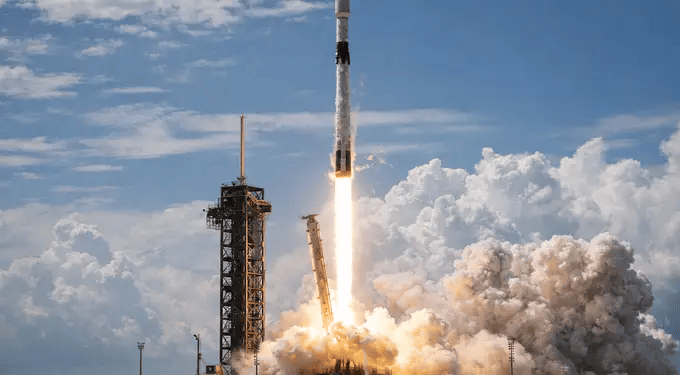
SpaceX (NASDAQ:SPCX) shares have given back all the gains from their record-breaking initial public offering, closing Tuesday at $136.08—just $1.08 above the $135 IPO price. The stock has tumbled nearly 40% from its June 16 intraday peak of $225.64, erasing roughly $1.2 trillion in implied market value. Yet Wall Street remains overwhelmingly bullish, with an average analyst target near $240 suggesting a potential 76% rebound from current levels.
Post-IPO Hype Fades Fast
SpaceX priced its IPO at $135 on June 11 and began trading on the Nasdaq the next day under the ticker SPCX. The stock opened at $150 and closed its first session at $160.95, a 19% gain. By June 16, just its third trading day, shares hit an intraday record of $225.64. The reversal has been equally dramatic: the stock has since fallen nearly 40%, dropped below its first-day close, and recorded three consecutive declines through Tuesday.
The $135 IPO price now carries both psychological and financial weight. A sustained break below that level would put institutional IPO buyers underwater and could further erode confidence in a listing marketed as a rare opportunity to own Elon Musk’s launch, satellite-connectivity, and AI businesses.
Wall Street Stays Bullish Despite Sell-Off
Roughly 80% of analysts covering SpaceX recommend buying the stock, with an average target near $240. Evercore ISI initiated coverage Tuesday with an Outperform rating and a $230 target. Morgan Stanley’s Adam Jonas has one of the highest mainstream targets at $300, based on SpaceX combining near-monopoly launch economics, the world’s largest low-Earth-orbit satellite network, and a growing AI-infrastructure operation. Starlink could generate recurring cash flow, while Starship may eventually cut launch costs enough to unlock larger markets in communications, defense, lunar transport, and orbital computing.
Goldman Sachs’ Eric Sheridan takes a more conservative approach but still rates SpaceX a Buy with a $205 target, citing the company’s positioning across space, connectivity, and AI—each potentially a multitrillion-dollar opportunity. Cantor Fitzgerald’s Colin Canfield has a $246 target and describes SpaceX as a “planetary infrastructure company,” arguing that its vertical integration of rockets, satellite connectivity, AI computing, and the X distribution platform may elude conventional valuation models.
Key Risks: Valuation, Share Supply, and Regulation
The sell-off suggests investors are not accepting those assumptions without question. SpaceX remains valued at roughly $1.8 trillion, is not expected to report a profit in 2026, and trades near 50 times estimated sales. Share supply is another concern: the prospectus allows eligible pre-IPO holders to sell up to 20% of their holdings shortly after SpaceX publishes its first quarterly results, expected in August. That could flood the market with additional stock.
MoffettNathanson analyst Julie Zhu illustrates the skeptical case. She initiated coverage with a Neutral rating and a $131 target, acknowledging the strength of SpaceX’s launch business while warning that the range of potential financial outcomes remains unusually wide. Zhu told Business Insider that regulatory scrutiny is the largest long-term risk as SpaceX expands across connected industries, and that vertical integration could eventually attract antitrust attention similar to that directed at dominant technology platforms.
For context on broader market trends, see our coverage of Kospi Surges 7% as US Inflation Drop Sparks Broad Asia Rally and Gold Retreats From 2% Rally as Oil Spike Threatens to Undermine Inflation Relief.
This article is for informational purposes only and does not constitute financial advice.