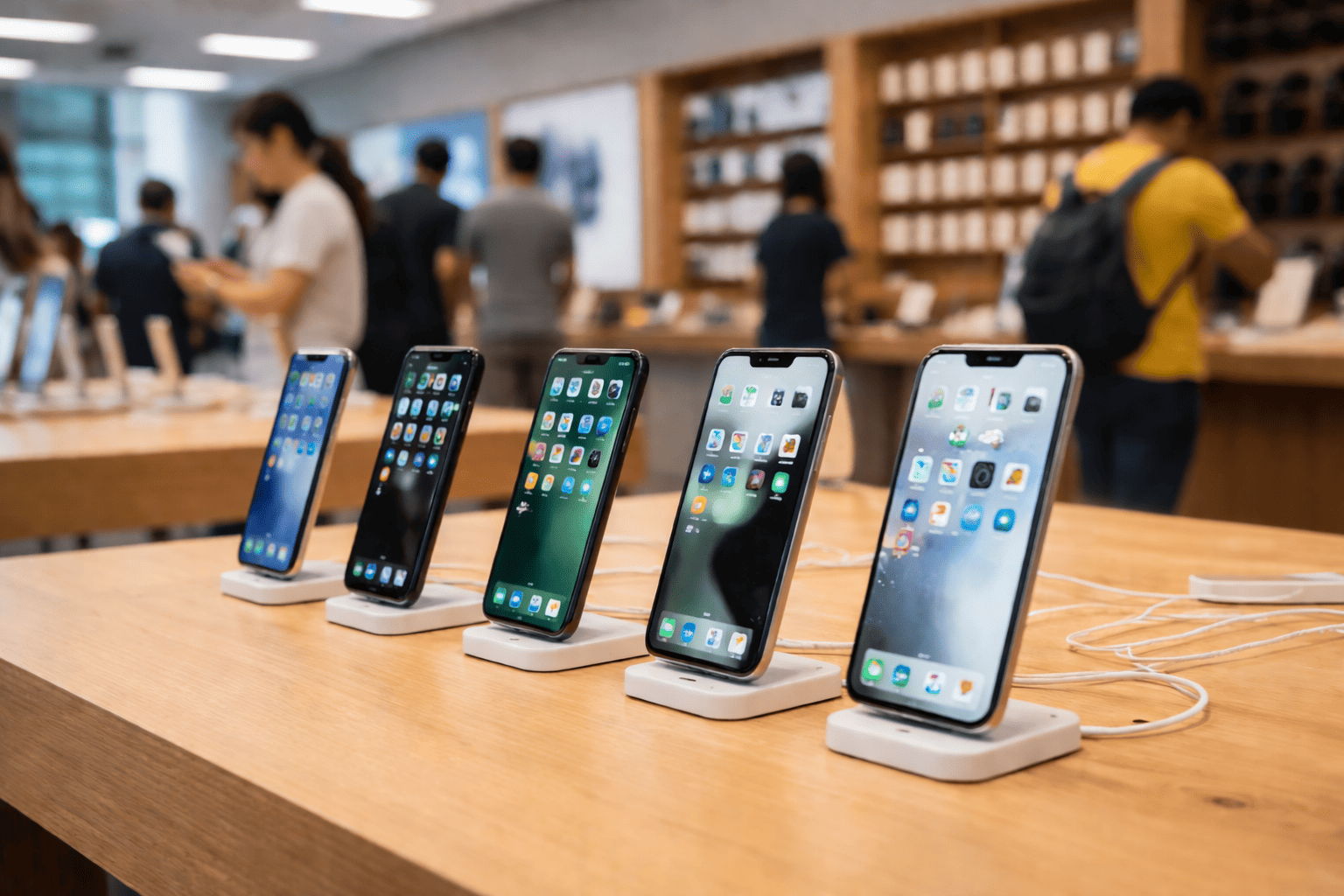
Apple Outperforms in Challenging Chinese Smartphone Market
Shares of Apple Inc. moved higher in Friday trading, buoyed by new data indicating the company's iPhone business is demonstrating notable resilience in China. The positive movement occurred despite persistent sector-wide concerns regarding consumer demand and increasing production costs.
Robust Shipment Data Defies Broader Downtrend
According to research from Counterpoint, iPhone shipments in China increased by 20% year-over-year during the first quarter. This performance starkly contrasted with the overall Chinese smartphone market, which contracted by approximately 4% over the same period. The surge allowed Apple to capture a 19% market share, placing it just behind Huawei, which led with a 20% share driven by strong late-quarter sales.
Analysts attributed Apple's growth to sustained demand for its latest iPhone models, effective promotional campaigns, and the benefit of certain government subsidy programs. This execution enabled the company to gain ground even as competitors like Xiaomi reported a significant 35% decline in shipments for the quarter.
Premium Positioning Mitigates Industry Headwinds
The broader smartphone sector is grappling with headwinds, including rising memory chip prices and ongoing supply chain complexities that are elevating manufacturing expenses across the board. Industry observers note that Apple's premium brand positioning and its integrated supply chain management provide a relative advantage in navigating these cost pressures.
"Apple's product mix and operational control allow it to absorb a portion of rising component costs more effectively than some rivals," an analyst noted. The company's reputation for product longevity and sustained value is also cited as a key factor maintaining its appeal among Chinese consumers, even as overall market prices creep upward.
Cautious Outlook for the Chinese Market
Despite Apple's strong quarterly showing, the forecast for China's smartphone market remains cautious. Counterpoint Research projects a potential 9% decline in total shipments for 2026, citing persistent cost pressures and a challenging comparison to prior-year, subsidy-fueled demand. A near-term catalyst may emerge from the upcoming "618" mid-year shopping festival, which could provide a temporary boost to sales volumes.
Investor sentiment toward Apple has shown signs of stabilization. Bank of America recently reiterated a positive view on the stock, characterizing it as a high-quality compounder supported by resilient services revenue and a solid product cycle, despite its year-to-date underperformance relative to the broader S&P 500 index.
Broader Growth Drivers Beyond iPhone
Apple's business segments beyond the iPhone are also contributing to its narrative. Growing interest in artificial intelligence applications that run on local hardware has reportedly spurred demand for the company's Mac Mini desktop computers. This diversification highlights the tech giant's multiple avenues for growth.
For further context on regional economic conditions, see our analysis on China's Q1 GDP. The current market enthusiasm for technology themes is also evident in trends like AI rebrands fueling stock surges. For broader market momentum, readers can review our coverage of the Nikkei 225 reaching a historic peak.
This article is for informational purposes only and does not constitute financial advice.