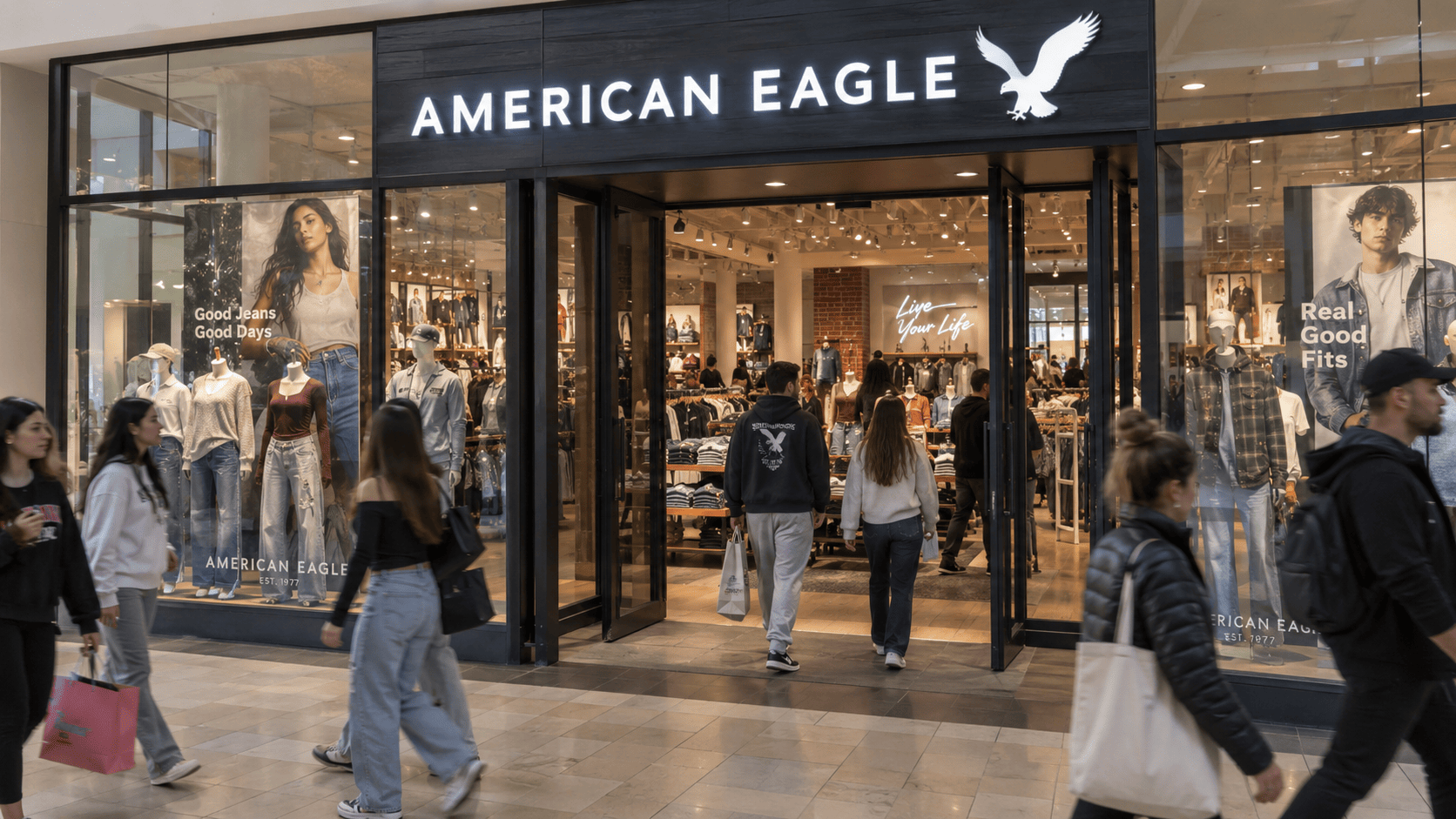
American Eagle Outfitters (NYSE: AEO) saw its shares tumble more than 11% in premarket trading on Thursday, even after the retailer delivered a headline earnings beat that seemed impressive at first glance. The company reported second-quarter earnings of 79 cents per share, far exceeding the consensus estimate of 22 cents, while revenue climbed 8% to $1.38 billion, slightly above the $1.37 billion analysts had projected.
However, beneath those headline numbers, investors found several reasons for caution. Comparable sales missed expectations, the flagship American Eagle brand continued to decline, and a significant portion of the profit improvement came from a one-time tariff refund rather than stronger underlying margins.

The earnings beat wasn't as clean as it looked
American Eagle's gross profit jumped 34% to $672 million, and gross margin expanded by 980 basis points to 48.7%. But those figures were heavily influenced by tariff refunds. The company recorded a $179 million tariff-refund benefit in gross profit, with a net benefit to operating income of about $161 million. Operating profit more than doubled to $211 million.
During the quarter, American Eagle received roughly $196 million in total federal tariff refunds, which largely explains why earnings exceeded forecasts by such a wide margin. The underlying merchandise picture was much weaker: merchandise margin fell 330 basis points as the company continued discounting older inventory. This makes the 79-cent EPS figure a less reliable indicator of sustainable earnings power than the headline suggests.
Aerie is booming, but American Eagle is not
The second concern is the growing divergence between the company's two major brands. Aerie and OFFLINE revenue surged 25%, with Aerie comparable sales up 19%. In contrast, American Eagle comparable sales declined 1%. Total comparable sales rose 6%, missing the 6.7% increase analysts had expected.
Inventory levels remained elevated, leaving the retailer exposed to further markdowns as it clears merchandise that has fallen out of step with changing fashion trends. That division was already a worry on Wall Street before earnings. BMO Capital initiated coverage on American Eagle with a Market Perform rating and an $18 price target this week. Analysts described the investment case as effectively two different businesses: Aerie's strong growth provides support, but persistent execution problems at American Eagle make it difficult to forecast a meaningful recovery in fiscal 2027 earnings.
Guidance gave investors little reason to overlook the risks
American Eagle raised its full-year operating-income forecast to between $540 million and $550 million, up from a prior range of $390 million to $410 million. But for investors tracking the stock through investment apps, the headline increase warrants a closer look because the new range includes the tariff-refund benefit.
More importantly, management expects third-quarter gross margin to be roughly flat from a year earlier. The company forecasts mid-to-high-single-digit comparable-sales growth in the third quarter, but investors appear more interested in whether that growth can translate into cleaner margins. Analysts noted that markdowns on outdated inventory, particularly in women's merchandise, continue to pressure profitability even as Aerie performs strongly.
For context, similar dynamics have played out in other retail names, where one-off benefits can distort quarterly results. Investors may want to compare American Eagle's situation with Apple's foldable launch, where hype can mask underlying challenges, or consider how Micron's momentum contrasts with AEO's mixed signals. The market's reaction suggests that the market is looking past the headline beat and focusing on the quality of earnings.
This article is for informational purposes only and does not constitute financial advice.

