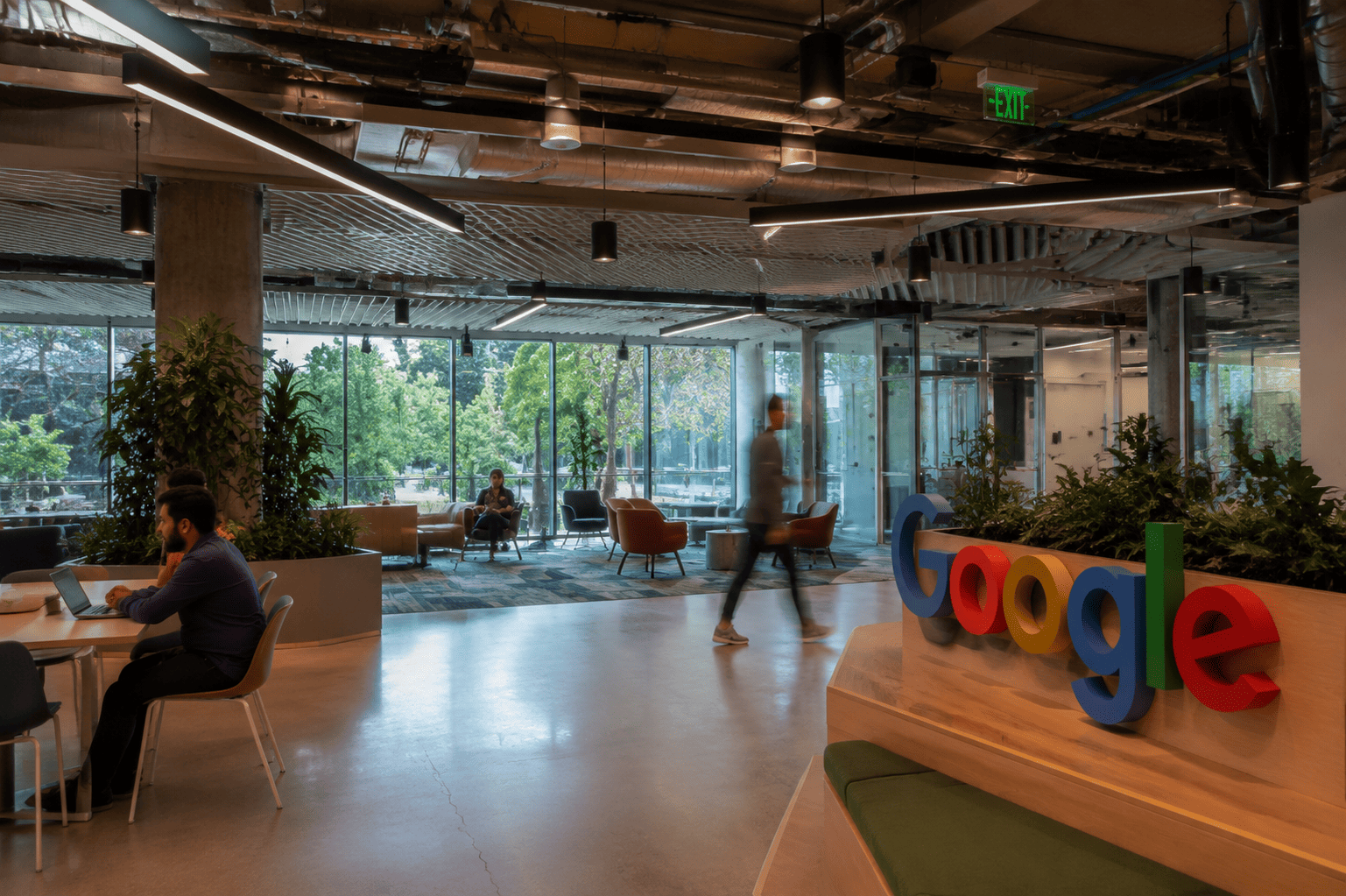
Alphabet Inc. (NASDAQ: GOOG) shares declined more than 3.5% in premarket trading Thursday after the company raised its 2026 capital expenditure forecast to as much as $205 billion and reported its first-ever quarter of negative free cash flow. The selloff came despite a blockbuster performance from Google Cloud, which posted its strongest quarterly revenue growth on record.
Google Cloud revenue jumped 82% year over year to $24.8 billion, significantly exceeding the roughly 64% growth analysts had expected, according to LSEG data. The division's performance was fueled by robust enterprise demand for AI infrastructure and cloud computing services as companies continue deploying generative AI applications at scale. Management also noted that cloud margins expanded during the quarter and that adoption of its Gemini AI models accelerated across enterprise customers.
Overall revenue topped Wall Street expectations, though adjusted earnings per share of $2.85 came in just below the consensus estimate of $2.89. Despite the slight earnings miss, analysts generally viewed the operating results as strong, with cloud emerging as Alphabet's primary growth engine.
Investors Focus on Soaring AI Spending
The positive cloud results were overshadowed by another sharp increase in Alphabet's investment plans. CFO Anat Ashkenazi told analysts that the company now expects to spend between $195 billion and $205 billion in capital expenditures during 2026, above the previous guidance of $180 billion to $190 billion and exceeding analysts' expectations of approximately $188 billion, according to Visible Alpha.
“The increase in the range is primarily due to an acceleration in the delivery of capacity to meet growing demand,” Ashkenazi said during the earnings call. She added that Alphabet remains committed to investing aggressively in infrastructure as long as returns remain attractive. “We're still in a supply-constrained environment,” she said. “I think we've said this now for multiple quarters in a row, and we are seeing very strong demand both from external cloud customers as well as across the business.”
The higher spending is directed at expanding data center capacity needed to support growing AI workloads and cloud demand. This aggressive capex trajectory mirrors similar moves by other tech giants, as seen in Tesla's recent earnings, where AI spending squeezed margins.
Negative Free Cash Flow Raises Red Flags
The scale of Alphabet's investments was also reflected in its cash generation. The company reported negative free cash flow of $5.9 billion during the quarter, a sharp reversal from nearly $25 billion in free cash flow generated during the same period last year. Ashkenazi acknowledged that cash generation is likely to remain under pressure.
“We expect the free cash flow will remain under pressure, driven by our investments in technical infrastructure, which enables us to capitalize on the AI opportunity and continue to drive attractive returns,” she said.
Bloomberg Intelligence analyst Mandeep Singh warned that the trajectory of capital spending could leave Alphabet generating negative free cash flow for an extended period. “Right now they are probably $10-$15 billion free cash flow for this year, next year if this goes to $300 billion there is no way they're going to be positive free cash flow,” Singh said on a Bloomberg Podcasts episode. He added that despite 24% topline growth, investors would like to see stronger contributions from Search, YouTube, and other businesses rather than relying primarily on cloud growth.
Thomas Monteiro, senior analyst at Investing.com, expressed similar concerns. “After a negative cash flow quarter, the new raise in capex does not sit well for Alphabet. The market's most reliable cash generators are now spending more than they bring in. As long as revenue keeps accelerating, investors will tolerate it. But capital has a real cost again, and the room for error is shrinking every quarter.”
AI Competition Remains Intense
While Google Cloud continues benefiting from the AI boom, Alphabet's own AI products remain under close scrutiny. The company delayed the launch of Gemini 3.5 Pro earlier this year, allowing rivals such as OpenAI and Anthropic to strengthen their positions in enterprise AI and coding assistants. Chinese open-source AI models have also intensified competitive pressure.
During the earnings call, analysts repeatedly questioned CEO Sundar Pichai about Google's ability to maintain leadership in frontier AI development. “There are many attributes on which we are still at the frontier. There are areas where we've acknowledged we need to improve; coding and agentic coding is an example of that,” Pichai said. He added that Alphabet has already begun training Gemini 4 and is directing significant computing resources toward the next-generation model.
Analysts Remain Optimistic Despite Spending Concerns
Despite investor concerns over spending, several brokerages maintained bullish views on the stock. Mizuho said the higher capital expenditure guidance had been largely anticipated and argued the market reaction was surprising given the strength of the cloud business. “As such, we are surprised the stock is trading off after hours and would expect it to recover in trading tomorrow,” the firm wrote, reiterating its Buy rating. Wolfe Research also reaffirmed its Outperform rating with a $460 price target.
The broader market reaction also lifted Asian chip stocks, as detailed in our coverage of the Kospi surge, highlighting the ripple effects of Alphabet's massive AI investment plans.
This article is for informational purposes only and does not constitute financial advice.