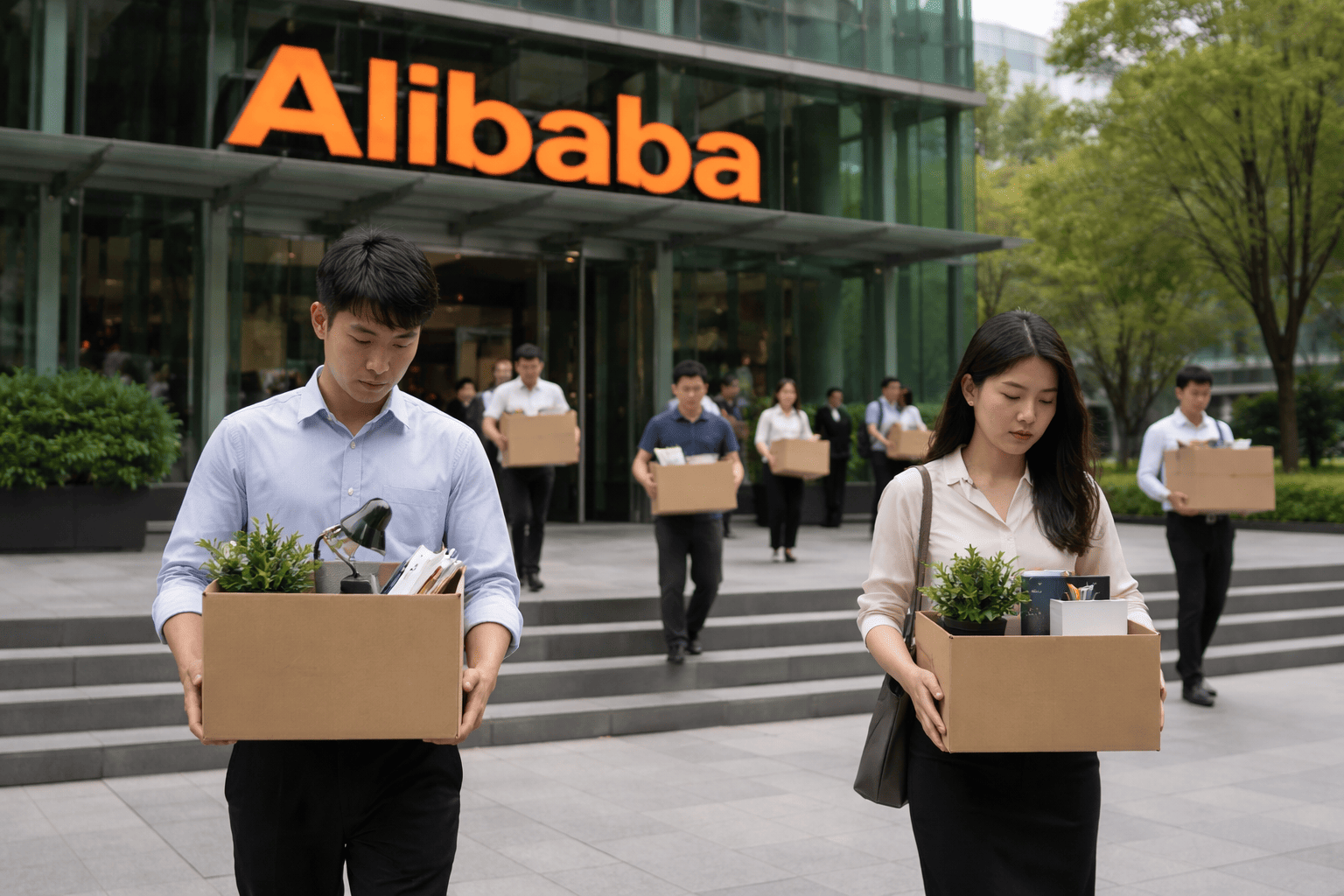
Alibaba's stock in Hong Kong tumbled to its lowest level since July 30, with shares dropping to H$111, down sharply from this month's high of H$130.1. The decline, which extends a slide of more than 40% from last year's peak, came as investors digested the company's latest earnings report and its plan to raise fresh capital through a share sale.
AI costs weigh on profitability
The e-commerce and cloud giant reported solid top-line growth for the second quarter, with revenue rising 9% year-over-year to over 268 billion RMB. E-commerce revenue grew 4%, while its AI cloud and compute services surged 45%. Notably, revenue from its AI labs and applications climbed 16% during the quarter.
However, the cost of that growth was steep. Operating income plunged 57% to just over 15.1 billion RMB, and net income fell 75% to 10.4 billion RMB. The company's capital expenditure soared to over 67 billion RMB in the quarter, reflecting heavy investment in AI infrastructure. These costs are likely to remain elevated as Alibaba continues to fund its AI ambitions.
Share sale and asset divestiture
Management also announced a $10 billion capital raise through the sale of 710 million new shares in Hong Kong at HK$112.7 each, a discount to Friday's closing price. The move, aimed at funding AI initiatives, dilutes existing shareholders and contributed to the negative sentiment.
In a related move, Alibaba sold its gaming studio Lingxi Games to Trustar Capital Group, as it streamlines operations and redirects resources toward AI. The divestiture was reported earlier, and the deal is expected to close soon.
AI investments showing promise
Despite the near-term pain, there are signs that Alibaba's AI push is gaining traction. Recent reports indicate its AI models have achieved around 3 billion downloads, surpassing those of Meta Platforms and Google. The company has also secured a major partnership with Apple, which will use Alibaba's models in China. Its latest models are reportedly on par with Anthropic's Fable model.
However, competition in China's AI sector is intensifying, with rivals like Moonshot, DeepSeek, and MiniMax vying for market share. As seen in the electric vehicle industry, this could lead to price wars and pressure margins.
Technical outlook
From a technical perspective, Alibaba's Hong Kong shares have formed a double-top pattern, a bearish reversal signal. The stock has fallen below its 50-day moving average, and the Relative Strength Index (RSI) has dropped below the neutral 50 level. This suggests further downside, with the next psychological support at H$100. The bearish view would be invalidated if the price climbs back above the key resistance at H$130.
Investors are also watching broader market cues, including the Hang Seng Index's recent movements and the performance of other tech giants. For more context on Alibaba's earnings and AI spending, see our earlier analysis on Alibaba's AI capex surge and the profitability test for its AI cloud.
This article is for informational purposes only and does not constitute financial advice.