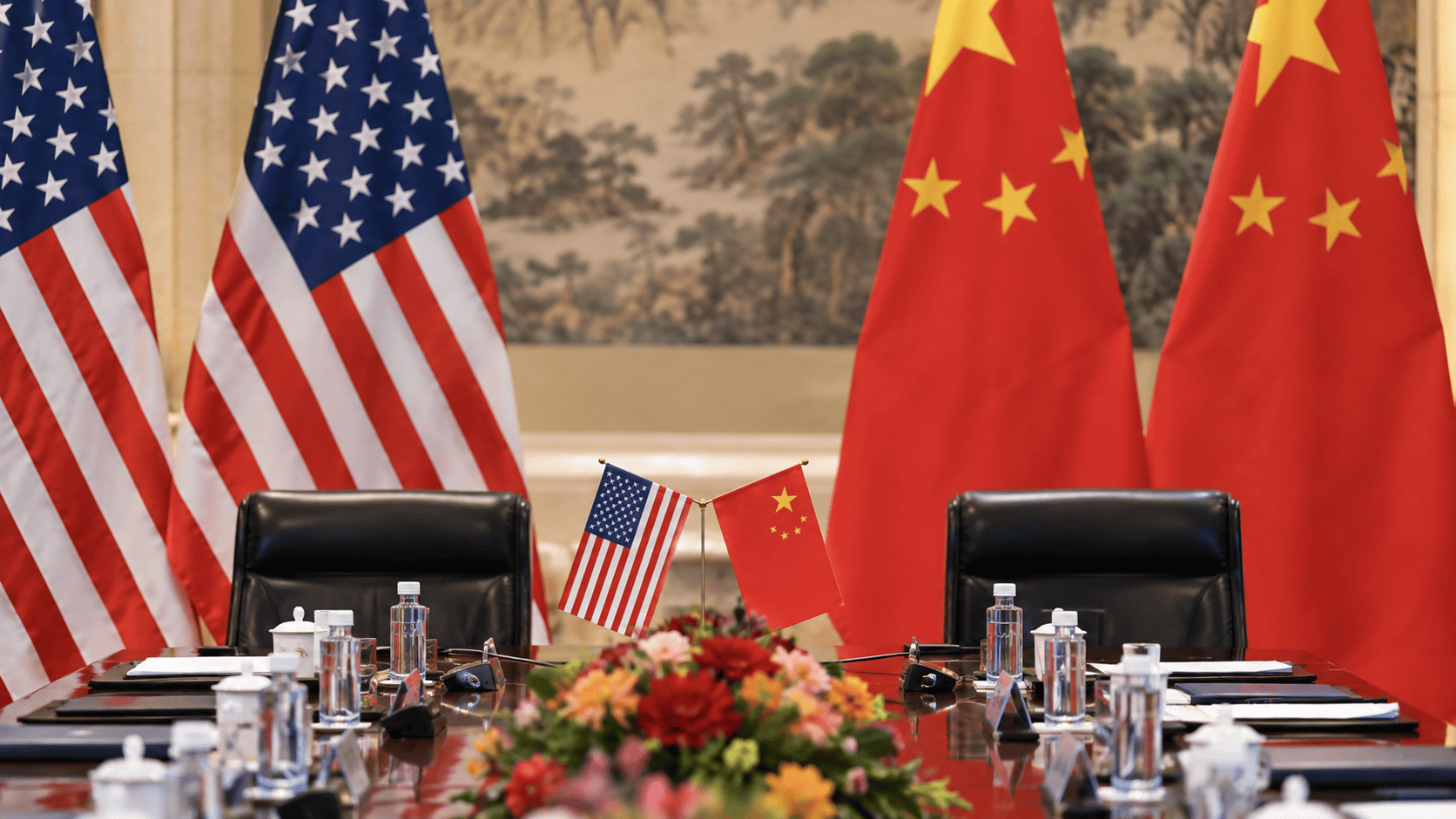
When President Donald Trump hosts Chinese President Xi Jinping for a state dinner on September 24, the guest list will read like a who's who of America's AI industry. Elon Musk, Jensen Huang, and Sam Altman are among the expected attendees, alongside Sundar Pichai, Tim Cook, Michael Dell, and Jeff Bezos. Their presence underscores the deep entanglement of US technology giants with both the AI boom and the Chinese market.
A Guest List That Mirrors the AI Supply Chain
The executives represent every critical layer of the technology economy. Huang's Nvidia dominates AI compute, Altman leads OpenAI, Pichai runs Alphabet, and Musk oversees Tesla and xAI. Cook brings Apple's manufacturing and consumer exposure to China, while Dell and Bezos add infrastructure interests. This makes the dinner more than a diplomatic photo opportunity, though there is no indication the executives will negotiate policy themselves.

For Nvidia, China policy is a strategic issue. US export controls have restricted sales of advanced AI accelerators to Chinese customers, while Beijing has ramped up investment in domestic alternatives. Huang has publicly argued against slowing development. "We should go as fast as we can irrespective of anybody else," he told CBS News last week, while stressing that companies should not ship unsafe products. The executives around the table are therefore participants in the competition, not simply observers.
Chip Export Rules at the Center
Advanced semiconductors remain one of Washington's strongest tools for limiting China's access to cutting-edge AI compute. For Nvidia, this creates an unusual commercial tension: the company benefits from America's technological lead but also has an interest in maintaining access to the Chinese market. Huang's presence should not be read as evidence that chip rules are being negotiated over dinner, but any shift in export policy could carry direct consequences for Nvidia and ripple through the wider AI ecosystem.
The formal Trump-Xi talks are expected to cover trade, rare earths, and artificial intelligence. Over the weekend, US and Chinese officials agreed to establish an AI dialogue, including a mechanism for notifying each other about AI incidents. No chip-policy concession tied to the dinner has been announced. That distinction matters, as compute determines how quickly frontier systems can be trained and deployed, making semiconductors the point where national-security policy and Silicon Valley economics collide most directly.
Industry Split on AI Pace
The guest list also highlights a second tension: American technology leaders do not agree on how quickly frontier AI should advance. Anthropic's Dario Amodei has called for development to slow enough for safety work to catch up, while Altman and Musk have supported stronger safeguards in different forms. Huang has rejected a broad slowdown, arguing rapid development and safety are not mutually exclusive.
China complicates that debate because unilateral restraint by US companies would not automatically slow Chinese research. Representative Bill Foster, an Illinois Democrat, captured the problem in comments published by Yahoo News. Asking whether a US ban on superintelligence research would stop China, he said: "So the missing piece here is international collaboration." Competition gives both countries incentives to move faster, while managing risks from advanced AI may require cooperation between the same two rivals.
The dinner itself may produce little technology policy. The more important signals will come from the Trump-Xi talks and any subsequent language on export controls, AI governance, and trade. But the guest list shows that the companies building America's AI advantage are also among those most exposed to how Washington manages technological competition with China. For investors, the outcome of these discussions could have significant implications for US-China relations and the broader tech sector.
As the AI race intensifies, the intersection of geopolitics and technology will remain a key theme. The dinner's aftermath may offer clues about the future of AI-driven market moves and the regulatory landscape. While no immediate policy changes are expected, the gathering underscores the high stakes for companies like Nvidia, whose fortunes are tied to both American innovation and global market access.
This article is for informational purposes only and does not constitute financial advice.

