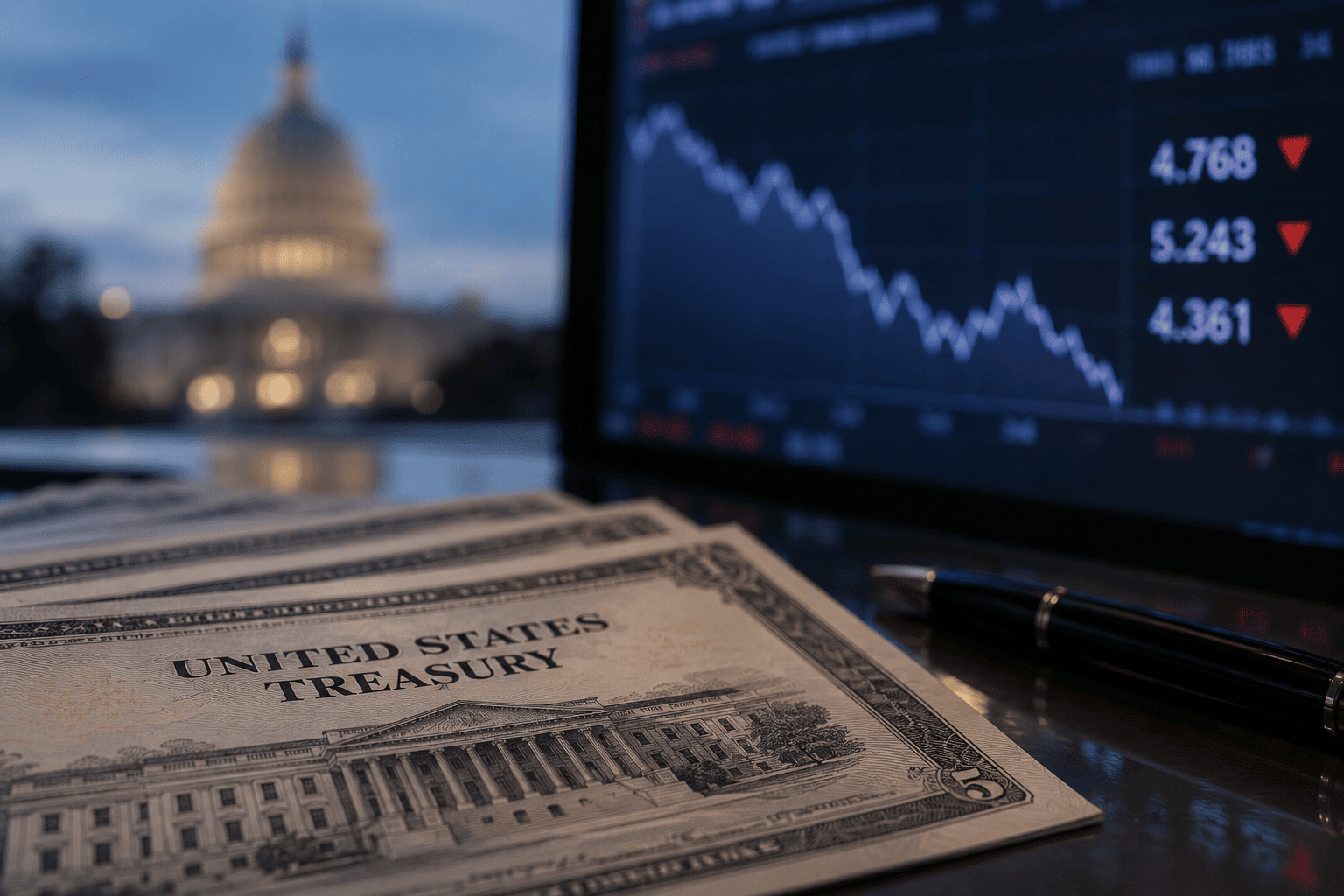
The bond market endured another turbulent week, with the US 10-year Treasury yield climbing to around 5.2% and the 30-year yield touching 5.5%—the highest levels since 2007 and 2004, respectively. The selloff extended beyond the US, as yields rose across major developed markets, driven by higher energy prices and stronger-than-expected economic data that have dampened hopes for near-term monetary easing.
The latest move has rattled equities. US stocks fell for three consecutive sessions through Thursday, with Wednesday's decline particularly sharp. Technology stocks came under pressure as higher bond yields increase the discount rate applied to future earnings, weighing heavily on long-duration growth stocks. The concern is not just the level of yields but the speed and breadth of the repricing.

A September 24 note from Rabobank highlighted sharp increases in yields across the US, Canada, the UK, Australia, Germany, France, and Japan. At the time, the US 10-year yield had risen to 5.11% from 4.93% the previous day. Stronger economic data have made the selloff harder to reverse. Rabobank pointed to eurozone services activity coming in slightly above expectations, while US manufacturing and services PMIs jumped to 57.0 and 58.7, respectively. Resilient growth reduces the pressure on central banks to cut rates.
At the same time, Brent crude has moved back above $100 a barrel as the Middle East conflict continues to disrupt the energy outlook. The result is a bond market forced to price a more difficult combination: higher energy costs, persistent inflation risks, stronger-than-expected growth, and the possibility of further rate hikes.
Why are bond yields rising so sharply?
Rabobank's research explains why the latest move has gathered pace. Seven months of conflict and high energy prices have not materially dented growth, leaving investors with less reason to expect rate cuts. Instead, economic activity has remained resilient, making the inflation problem more difficult for bond investors. Higher oil prices are already lifting headline inflation, and if those costs feed through into wages and other prices, inflation could prove more persistent, leaving central banks with less room to ease policy.
J.P. Morgan Asset Management's September 22 Global Fixed Income Views offers a complementary explanation, arguing that concerns about central-bank credibility were a major driver of higher real yields before policymakers began responding more decisively to the energy shock. Investors had become frustrated by delays in mounting a meaningful policy response to higher energy prices, raising fears of a repeat of the 2022–23 hiking cycle. That changed when the European Central Bank raised rates on September 10, and the Federal Reserve followed with a hike on September 16. JPMAM argues those moves have helped reassure investors that central banks remain willing to respond to renewed inflation pressure.
BlackRock's September 21 weekly commentary adds a longer-term explanation: the bond market is also dealing with increasingly intense competition for capital. Heavy government borrowing is occurring at the same time as companies are seeking more financing for artificial intelligence and other large investment projects. BlackRock estimates annual US financing demand could exceed $7.5 trillion by 2030, driven mainly by the AI buildout. It also estimates that AI and data-centre companies account for about 14% of US investment-grade bond issuance this year, up from 5% in 2025 and 1% during the previous decade. Even if the immediate inflation shock fades, there are structural reasons why borrowing costs may remain higher than in the years following the financial crisis.
What would it take to calm the bond market?
The most immediate answer is simpler: oil prices need to come down. “The next thing the bond market would need to see to help lower government borrowing yields would be a geopolitical resolution in the Middle East that would ease energy costs,” JPMAM said in the note. That is not a small assumption, as the conflict remains unresolved and most military strategists expect it to continue for some time.
But the potential market impact is significant. JPMAM estimates that if a geopolitical resolution were to push oil down to $70–$80 a barrel, global bond yields could retrace by one-third to one-half of their recent selloff. Lower energy prices would ease inflation pressures while reducing fears that central banks need to keep raising rates. JPMAM expects central banks to hike rates a couple more times before allowing economic data to determine the next move. “A Fed hiking cycle of 50–75 basis points would be minor by historical standards,” the analysts added, noting that the market has already priced in that move.
This article is for informational purposes only and does not constitute financial advice.

