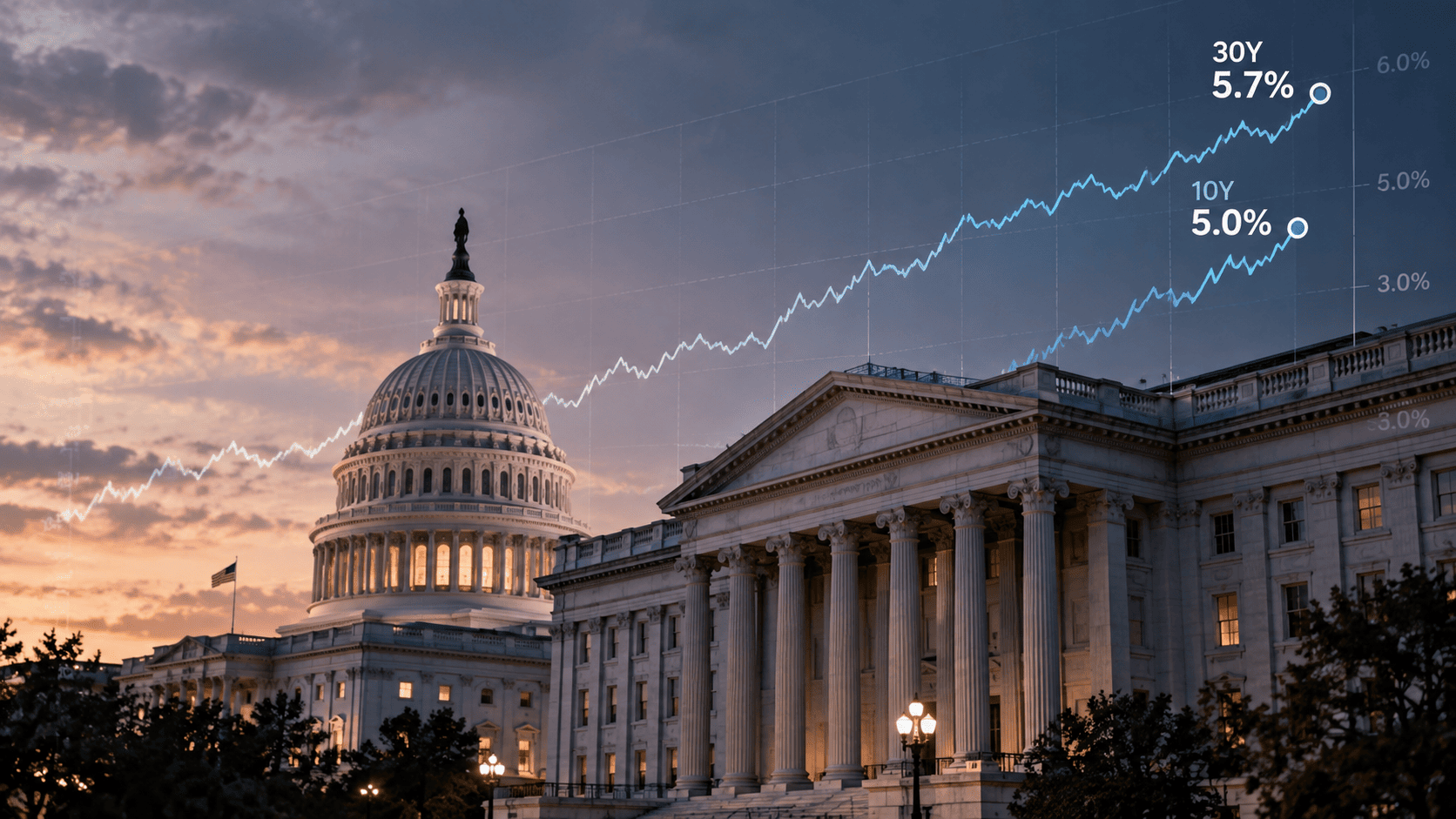
Treasury yields have climbed to levels not seen in decades, and market strategists are increasingly debating whether the 5% threshold on the 10-year note represents a new structural reality rather than a temporary spike. The yield on the benchmark note has pushed above 5%, while the 30-year bond hovers near 5.7%, its highest since 2002. This move has persisted into October, defying expectations of a quick reversal.
The surge in long-term yields has occurred even as U.S. equities remain resilient, with the S&P 500 and Nasdaq returning to record highs. This divergence underscores the significance of the bond market's repricing, as the 10-year Treasury serves as the global risk-free benchmark, influencing corporate borrowing costs and equity valuations.

Structural drivers behind higher yields
Analysts point to a combination of factors that could keep yields elevated. RBC Capital, in a report published Tuesday, argued that the selloff reflects a broader adjustment to a higher underlying cost of capital. "The corporate demand for capital is now competing with the government demand for capital as global debt and deficits remain elevated even during a time of solid economic growth – the cost of money is simply going higher as a result," the report stated.
David Russell, Global Head of Market Strategy at TradeStation Group, echoed similar concerns. "Yields could remain at or above 5 percent for a long time because of increasingly structural deficits and lingering inflation," Russell told Invezz. He highlighted tight energy supplies and a tight labor market as factors that make a rapid drop in prices unlikely, adding that the long end of the curve suggests the economy is at risk of overheating.
Not a permanent floor, but higher rates ahead
Some strategists caution against labeling 5% as a permanent equilibrium. JoAnne Bianco, Senior Investment Strategist at BondBloxx, said, "I would be hesitant to call 5%+ Treasury yields a new, permanent equilibrium." She noted that today's higher yields reflect a resilient economy, inflation above target, and a fiscal backdrop requiring substantial Treasury issuance. However, she expects a higher-rate environment than the post-financial-crisis decade.
Fed policy is no longer the sole driver
The relationship between Federal Reserve policy and Treasury yields remains important, particularly at the short end. However, the recent market reaction suggests long-term yields are increasingly driven by forces beyond expectations for the federal funds rate. The 10-year yield reflects not only future Fed policy but also inflation, economic growth, Treasury supply, and the term premium—the extra compensation investors demand for holding longer-duration debt.
Bianco emphasized that "the long end is being driven by more than just Fed policy expectations," pointing to fiscal uncertainty, elevated government borrowing needs, and inflation risks. Goldman Sachs highlighted a similar disconnect, with Muhammad Qubbaj, co-head of North America Interest Rate Product Sales and Trading, noting that the Fed "was very clear—it’s not going to police the long bond." This implies long-term yields must find their own clearing level, driven by institutional demand, inflation, energy prices, and Treasury supply.
The rise in long-term yields is not unique to the U.S., as German and Japanese yields face similar pressures from higher expected policy rates, investor demands for compensation, and uncertainty over debt absorption. This global trend helps explain why a shift in Fed expectations has not reversed the long-end selloff.
This article is for informational purposes only and does not constitute financial advice.

