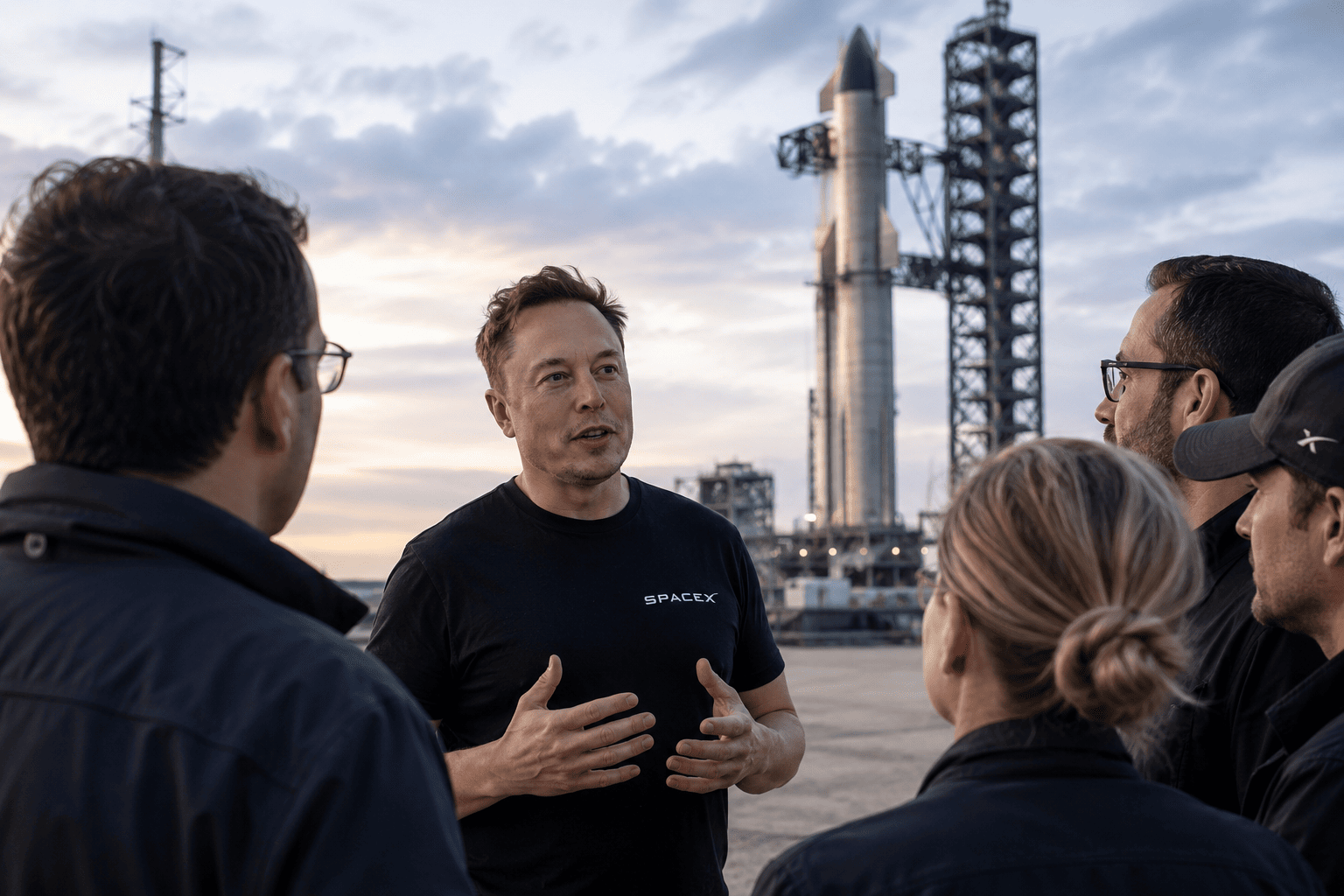
SpaceX (ticker: SPCX) saw its shares climb 2.2% in after-hours trading Tuesday after the aerospace and AI company posted a 161% surge in third-quarter revenue, comfortably beating analyst expectations. The growth was fueled by its AI infrastructure and Starlink satellite-internet businesses.
Revenue for the three months ended September 30 reached $14.58 billion, compared with the $12.72 billion consensus estimate compiled by LSEG. Net profit came in at $4.4 billion, far exceeding the $1.57 billion analysts had projected. This marks a sharp reversal from the second quarter, when SpaceX reported a net loss of $541 million on revenue of $7.81 billion.

The results underscore the company's expanding footprint across multiple sectors, though its AI operations and ambitious space projects continue to demand substantial capital. SpaceX shares have been volatile since their initial public offering in June at $135 per share.
AI business drives revenue growth
SpaceX's AI segment has emerged as a key growth driver, generating revenue primarily through data-center capacity contracts rather than proprietary AI models. The company rents computing power to developers, including Anthropic, Google, and Reflection AI. Its broader AI portfolio also includes xAI's Grok chatbot and the social media platform X.
However, SpaceX faces intense competition from OpenAI, Anthropic, and Google in the AI model space. The company has cautioned that its AI unit is experiencing substantial operating losses and will require sustained investment before it can consistently generate profits. The results highlight the growing contribution of AI infrastructure to SpaceX's business, alongside its established satellite and launch operations. Its ability to convert rising demand for computing capacity into sustainable profits remains an important consideration for investors.
Starlink expansion supports connectivity business
Starlink and SpaceX's broader connectivity operations remain central to the company's financial performance. The satellite-internet business continues to expand its subscriber base through additional satellite launches and a wider range of services for consumers, businesses, airlines, maritime customers, and government agencies.
However, expanding into less affluent international markets could put pressure on average revenue per user as SpaceX introduces lower-priced plans. Investors are watching whether this pricing pressure affects the economics of the network as the company expands its global reach. SpaceX is also investing heavily in coverage, network capacity, and direct-to-device mobile services. These initiatives could broaden its addressable market but add to the costs of maintaining and expanding its infrastructure. The company's ability to balance subscriber growth with improving network economics will remain a key factor in assessing Starlink's contribution to future earnings.
Starship development remains a key long-term challenge
SpaceX's launch operations include commercial missions, government contracts, and the development of Starship, its next-generation reusable rocket system. Starship has yet to enter commercial service but is expected to support the deployment of higher-bandwidth Starlink satellites and orbital AI-computing infrastructure. Its successful development and reliable reuse are central to Musk's longer-term plans.
Falcon launch activity has remained robust, although revenue can vary depending on the mix of internal Starlink deployments, commercial missions, and government contracts. SpaceX has increasingly prioritized launches for its own satellite network while absorbing the costs of Starship development. Investors are also watching for Musk's comments on a potential merger between SpaceX and Tesla, which is scheduled to report results on Wednesday.
Despite the strong quarterly results, SpaceX faces significant execution risks as it pursues expansion across AI, connectivity, and space transportation.
This article is for informational purposes only and does not constitute financial advice.