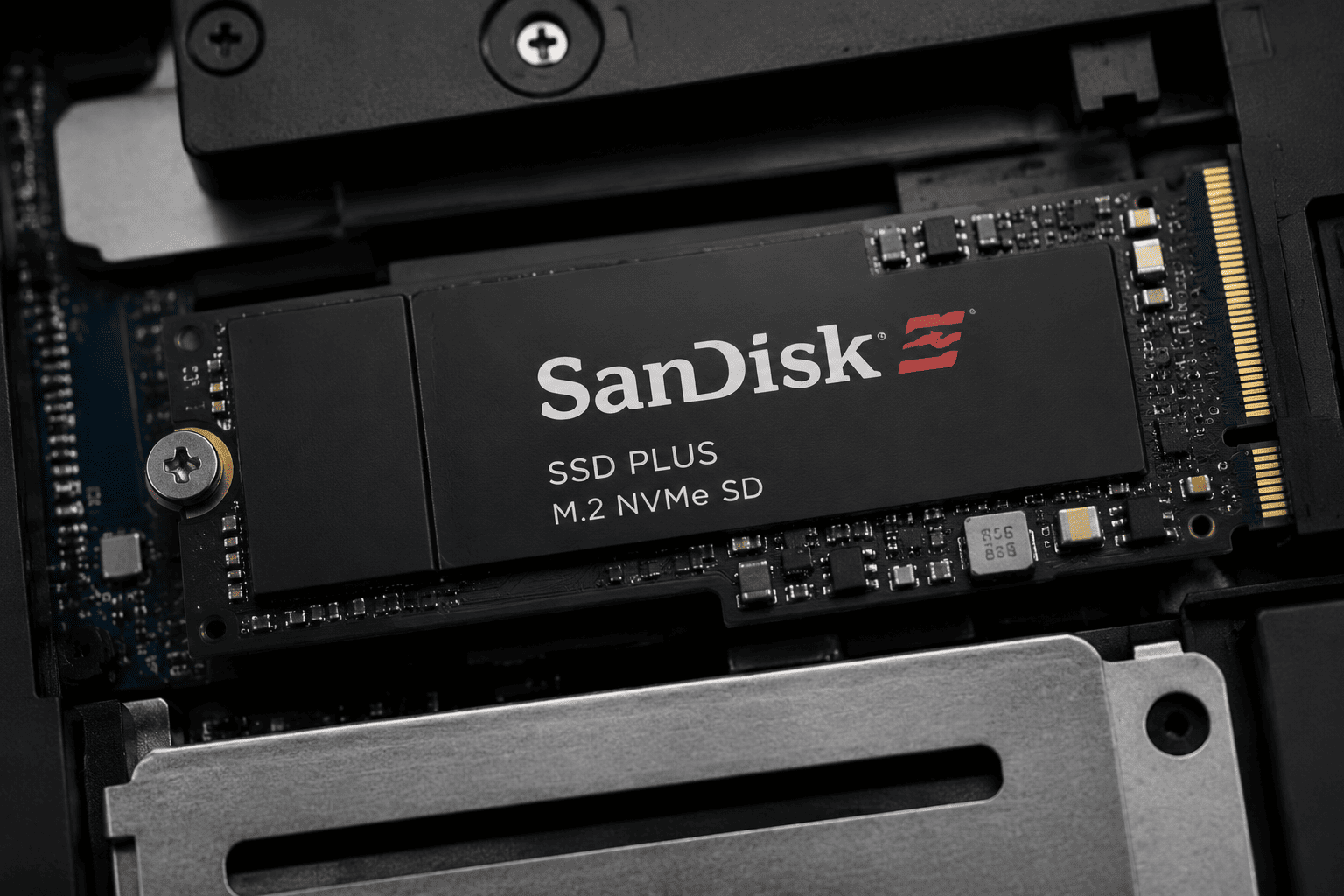
SanDisk (SNDK) continues to slide, falling to its lowest level since late May and extending a 35% decline from its 2024 high. The memory chip maker has been caught in a broader sector selloff that has also dragged down peers like Micron and Western Digital. Despite the bearish price action, Wall Street remains overwhelmingly bullish, with 19 out of 24 analysts rating the stock a buy and price targets implying significant upside.
Analyst Optimism Persists Despite Price Drop
The most bullish call comes from Susquehanna's Mehdi Hosseini, who set a price target of $3,250 — a 115% premium over current levels. Bernstein has a $3,000 target, while Bank of America expects $2,500. Other bullish firms include Evercore ISI, Citigroup, and Cantor Fitzgerald. The average analyst price target now stands at $1,803, up sharply from $692 just three months ago, according to MarketBeat.
Analysts point to SanDisk's strong revenue growth and expanding portfolio of multi-year contracts as key catalysts. These long-term agreements provide greater revenue visibility and help smooth out the industry's historically volatile boom-and-bust cycles.
Revenue Surge Driven by AI and Hyperscaler Demand
SanDisk's quarterly revenue jumped to $5.95 billion in the most recent quarter, up from $1.69 billion a year earlier. Nine-month revenue soared to $11.28 billion from $5.4 billion. The surge is fueled by rising memory prices and robust demand from top customers including Apple, Microsoft, Amazon, and Google.
Analysts expect the momentum to continue, with consensus estimates calling for quarterly revenue of $8.35 billion — a 339% year-over-year increase. The current quarter is projected to bring in $10.6 billion, up 360%. For context, SanDisk generated $7.2 billion in revenue for all of last fiscal year.
Despite the sharp run-up in earnings, the stock's forward price-to-earnings ratio of 24 is relatively modest, and its forward PEG ratio sits at just 0.13, suggesting the growth may still be undervalued.
Technical Picture Points to Further Weakness
From a technical perspective, SanDisk has broken below its 50-day moving average and is testing the 38.2% Fibonacci retracement level. The stock is also hovering at a key pivot level on the Murrey Math Lines tool. If selling pressure continues, the next major support is the 50% retracement level near $1,200 — implying another 20% downside from current prices.
The broader memory sector has been under pressure amid profit-taking and rotation out of AI hardware names. Recent earnings from Micron and Samsung have done little to reverse the trend. For a deeper look at the sector dynamics, see our coverage of Micron, SanDisk, Marvell Slide as SK Hynix's Record $26.5B Nasdaq Listing Looms and SanDisk Tumbles 8% as Global Memory Selloff Deepens Despite Samsung's Record Profit.
Risk of Boom-Bust Cycles Remains
Investors should note that SanDisk operates in an industry prone to sharp cyclical swings. In 2022, revenue jumped to $9.7 billion from $5.5 billion, only to tumble to $6 billion in 2023 as inventories ballooned. While long-term contracts offer some buffer, the memory market remains sensitive to supply-demand imbalances.
The stock could find a floor if major hyperscalers reaffirm their capital spending plans during the upcoming earnings season. Until then, the path of least resistance appears lower. For more context on the sector's recent moves, see SanDisk Stock Shows Bearish Divergence, Enters Wyckoff Distribution Phase and SanDisk Plunges 14% as AI Hardware Rotation Hits Memory Stocks Despite Analyst Upgrades.
This article is for informational purposes only and does not constitute financial advice.