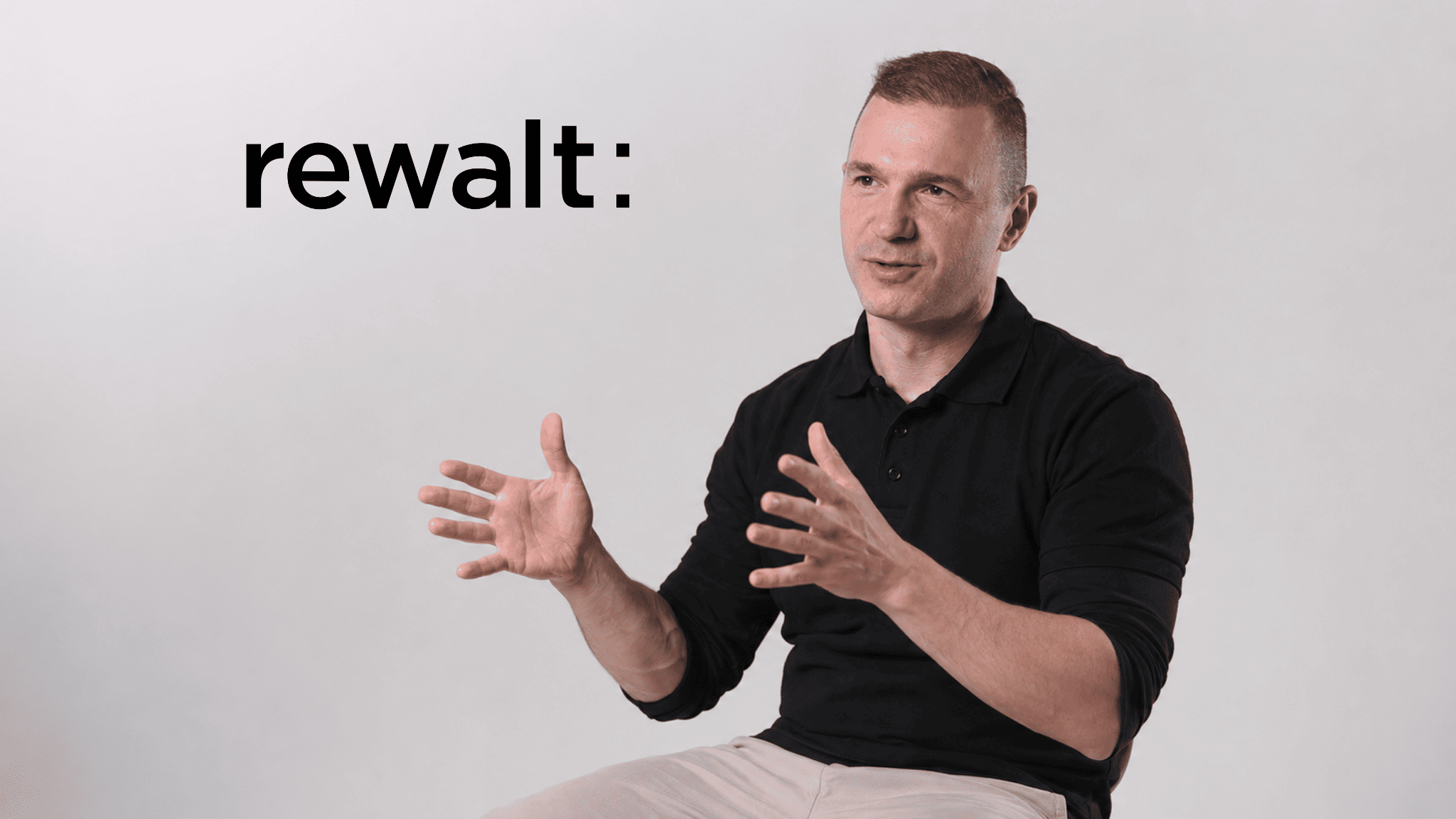
The financial services industry remains fragmented, with retail users forced to navigate multiple platforms for trading, banking, and spending. rewalt, the rebranded evolution of Rock-West, aims to dismantle these silos by creating a continuous pipeline for capital movement.
Mikhail Bobkin, Co-Founder and CEO of rewalt, identifies the core issue: "The problem in finance isn’t a lack of products; it’s the walls between them." A typical customer earns, banks, trades, and spends across separate institutions, each with its own fees and restrictions. rewalt seeks to integrate these functions into a single platform, allowing capital to flow naturally between trading, holding, converting, and spending.

Alignment Before Integration
Many institutions attempt to create an "ecosystem" by bundling services under one login, but rewalt argues that true synergy requires economic alignment. The company's A-Book philosophy ensures that revenue comes from customers choosing to trade, not from their losses. This alignment extends beyond brokerage: if a customer decides to hold, move, or spend capital instead of trading, that should not be a negative outcome for the company.
"Integration alone doesn’t create an ecosystem," Bobkin notes. "If every product is driven by conflicting incentives, you’ve simply put several businesses behind one login." rewalt prioritizes alignment to ensure that a customer who doesn't trade today remains valuable tomorrow.
Designing for the Lifecycle of Capital
rewalt's product development shifts focus from selling financial instruments to supporting the real-world utility of money. While high-performance execution remains core, the platform adds multi-rail payments, automated social investing, and daily spending utilities. The goal is a seamless experience: Fund, Trade, Move, Convert, Spend—all within one platform.
"Instead of asking, 'What product can we sell this customer?' we ask, 'What is this customer trying to do with their capital?'" Bobkin explains. This approach aims to eliminate the need for customers to rebuild their financial identity each time their money changes purpose.
Compliance as Invisible Architecture
Regulatory compliance, identity verification, and anti-money laundering frameworks are often blamed for poor user experience. rewalt views these as backend architecture challenges rather than burdens on the trader. "Regulation isn’t the enemy of customer experience—poor architecture is," states Bobkin. The company handles KYC, AML, security, and sanctions controls intelligently, ensuring compliance creates safety without becoming the product.
The Long-Term Vision
rewalt's ultimate ambition is to make capital movement as frictionless as information flow, while maintaining regulatory safeguards and client fund security. "Our ambition is to make the movement of capital feel more like the movement of information," Bobkin concludes. By reducing boundaries between banks, brokers, exchanges, and payment processors, rewalt aims to extend fairness beyond the trade.
Rock-West started with the principle of fair treatment in trading. rewalt asks the logical next question: "Why should that fairness stop when the trade ends?" This philosophy drives the company's mission to build a new model for capital.
This article is for informational purposes only and does not constitute financial advice.

