The latest inflation data came in hotter than Wall Street anticipated, but not all stocks are feeling the heat. The July Personal Consumption Expenditures (PCE) price index rose 3.7% year-over-year, matching June's pace but exceeding the 3.6% economists had forecast. Core PCE, which excludes food and energy, climbed 3.3%. While this may dampen hopes for aggressive rate cuts, it also signals an economy resilient enough to absorb higher prices.
Personal income rose 0.4% in July, disposable income increased 0.5%, and consumer spending ticked up 0.2%. These figures suggest that households are still spending, albeit more selectively. For investors, this creates a favorable backdrop for companies with pricing power and resilient demand. Here are three stocks that stand out in this environment.

JPMorgan Chase (JPM)
JPMorgan is arguably the clearest beneficiary of a higher-for-longer rate scenario. Sticky inflation makes it harder for the Federal Reserve to justify aggressive rate cuts, which could allow banks to preserve stronger net interest income for longer. JPMorgan's Q1 net interest income reached $25.5 billion, up 9% year-over-year, and its Q2 results were even stronger, with earnings of $7.70 per share on $57.35 billion in revenue.
The PCE report also indicates that the economy hasn't collapsed under higher borrowing costs. That's crucial for JPMorgan, as healthy consumer and business activity supports loan demand, card balances, payments, and investment banking. The bank reported record Q2 profit in July, providing a solid earnings cushion amid an uncertain rate outlook. In essence, JPMorgan is turning the macroeconomic headache of higher-for-longer rates into an earnings advantage.
Dollar General (DG)
Dollar General offers a different angle on the PCE data. With inflation at 3.7%, American households are still facing significantly higher prices than a year ago. The 0.2% monthly increase in consumer spending suggests shoppers are active but increasingly price-conscious. This backdrop can favor discount retailers as consumers seek ways to stretch their budgets without sacrificing everyday purchases.
The timing is particularly interesting because Dollar General recently raised its full-year earnings guidance and announced a new share-repurchase plan. Its stock jumped 6% following the announcement, according to Charles Schwab. Unlike discretionary retailers that depend on consumers feeling wealthy, Dollar General can potentially benefit when households become more price-sensitive. The latest PCE report reinforces, rather than undermines, the investment case for this discount retailer.
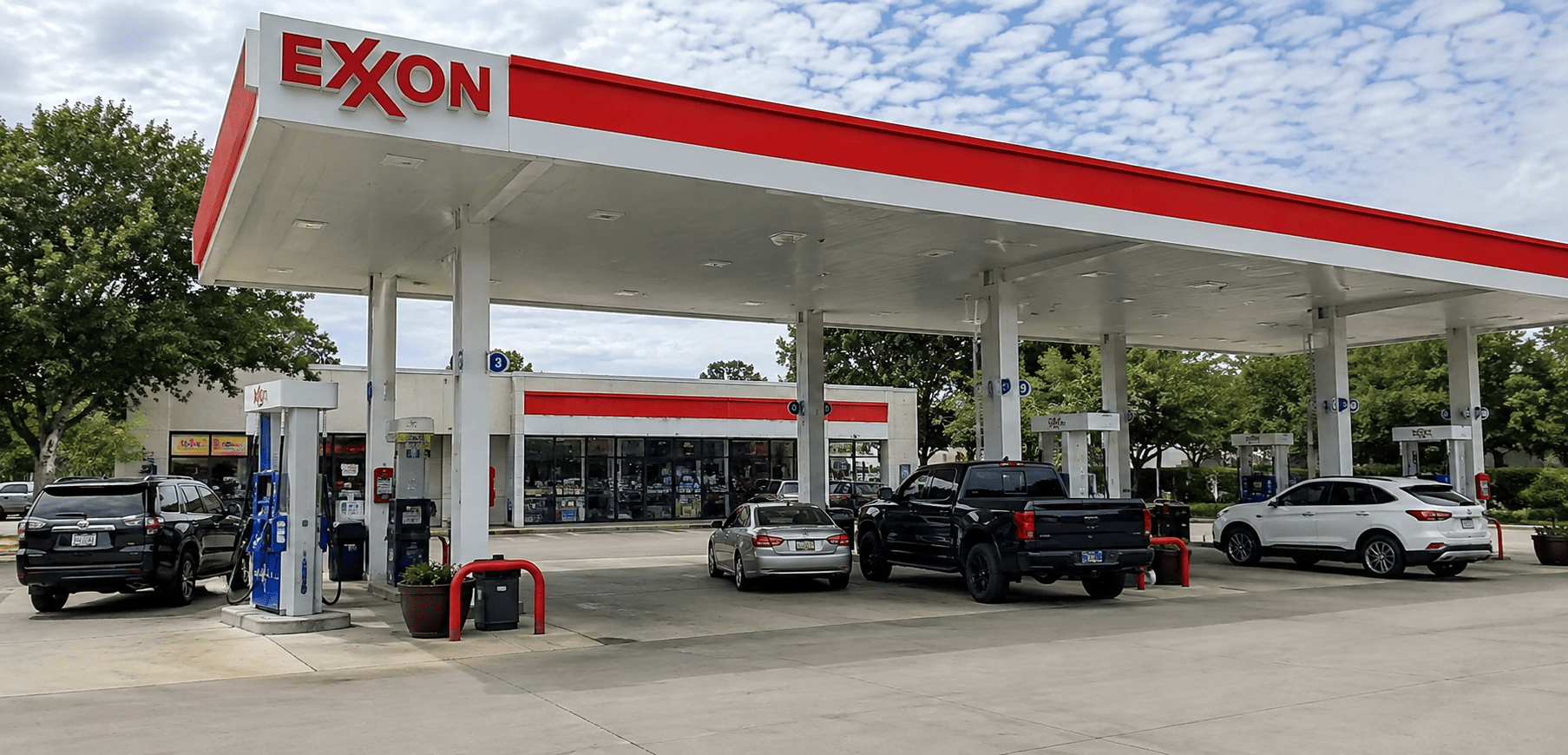
ExxonMobil (XOM)
ExxonMobil's connection to the PCE report is more indirect, but no less compelling. A 3.7% inflation rate underscores the value of owning businesses whose revenues are tied to essential commodities and whose assets can generate substantial cash flow when energy prices remain elevated. Oil and gas companies also provide a degree of protection against inflation, as energy is a major component of household and business costs.
Exxon enters this environment from a position of considerable financial strength. The company generated $23.6 billion in operating cash flow and $17.2 billion in free cash flow during the second quarter of 2026, while returning $9.4 billion to shareholders through dividends and buybacks. Its Guyana production growth and integrated business model add further support. XOM was trading around $158.19 at the August 26 close, below its 52-week high of $176.41.
For investors worried that sticky inflation could keep rates elevated and pressure traditional growth stocks, Exxon offers a profitable, cash-generative alternative. As the market digests the latest inflation data, these three stocks stand out as potential winners in a higher-for-longer environment.
This article is for informational purposes only and does not constitute financial advice.