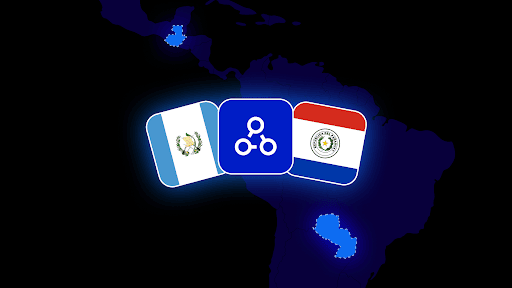
Oobit has extended its Tether-backed non-custodial crypto payments platform to Guatemala and Paraguay, marking the 10th and 11th Latin American markets for the company. The expansion comes as stablecoin-based payments gain traction across the region, with Oobit reporting a significant increase in user spending and transaction volumes.
The platform allows users in both countries to spend and send cryptocurrencies at any merchant that accepts Visa, covering over 150 million locations worldwide for both online and in-store purchases. Users can also join the waitlist for Oobit's AI Agent Cards, a new feature aimed at automating payments.

Non-Custodial Model Differentiates Oobit
Unlike some existing crypto payment solutions in Guatemala and Paraguay, Oobit's Visa card is non-custodial, meaning users retain control of their digital assets. Payments are made directly from supported wallets such as Phantom, MetaMask, Binance, and Trust Wallet, while merchants receive settlement in local currency. This approach avoids the need to transfer assets to a third-party custodian, a common requirement among competing offerings.
Tether, a strategic investor in Oobit, has supported the company's expansion through infrastructure investments in Latin America and efforts to broaden USDT distribution. The stablecoin issuer's backing has been instrumental in Oobit's growth across the region.
Stablecoin Spending Data Highlights Rapid Adoption
Oobit's internal data reveals a sharp increase in cryptocurrency usage for everyday purchases. Average spend per user reached $1,168 in June, while daily average spending rose from approximately $80 in March to around $200 in June. Peak daily spending exceeded $480 during the same period. Monthly average spending per user climbed 97.7% in May, with transactions concentrated in groceries, restaurants, taxis, ride-hailing, fast food, and convenience stores.
Stablecoins dominated activity on the platform. USDT accounted for 47% of all payments, while Brazil remained Oobit's largest regional market, representing 61% of its users. In the past 30 days, 74% of swaps were from USDT to OOB, and 18% from USDC to OOB. Users who swap into OOB before making purchases can receive up to 10% cashback through the company's OOB cashback program.
Crypto Adoption Accelerates in Guatemala and Paraguay
The launches coincide with rising cryptocurrency adoption in both countries. Remittances represent nearly 20% of Guatemala's GDP, and crypto adoption grew 88% in a single quarter during 2025. The country now hosts over 2,700 crypto ATMs and introduced its proposed Cryptocurrency Law, Bill 6538, in May 2025.
Paraguay recorded 52% crypto growth in the second quarter of 2025. A tax reporting framework introduced in January 2025 has helped formalize the market, and Oobit reported organic user activity in the country prior to the official launch.
Across Latin America, crypto transaction volume reached nearly $1.5 trillion between July 2022 and June 2025. Stablecoins continue to play a central role, with 61% of crypto users aged 18 to 34 using digital assets for remittances and USDT accounting for more than half of exchange buying in key markets.
Oobit's expansion into Guatemala and Paraguay follows its entry into Colombia in May and the addition of native Pix payment functionality in Brazil. The company continues to build payment infrastructure for stablecoin use across the region, positioning itself as a key player in the growing Latin American crypto payments ecosystem.
For broader context on the crypto market, see our coverage of Drift Protocol Token Surges 20% on $127.5 Million Tether Recovery Funding and BDIC Expands MGA Network, Targets Institutional Crypto Insurance Growth.
This article is for informational purposes only and does not constitute financial advice.