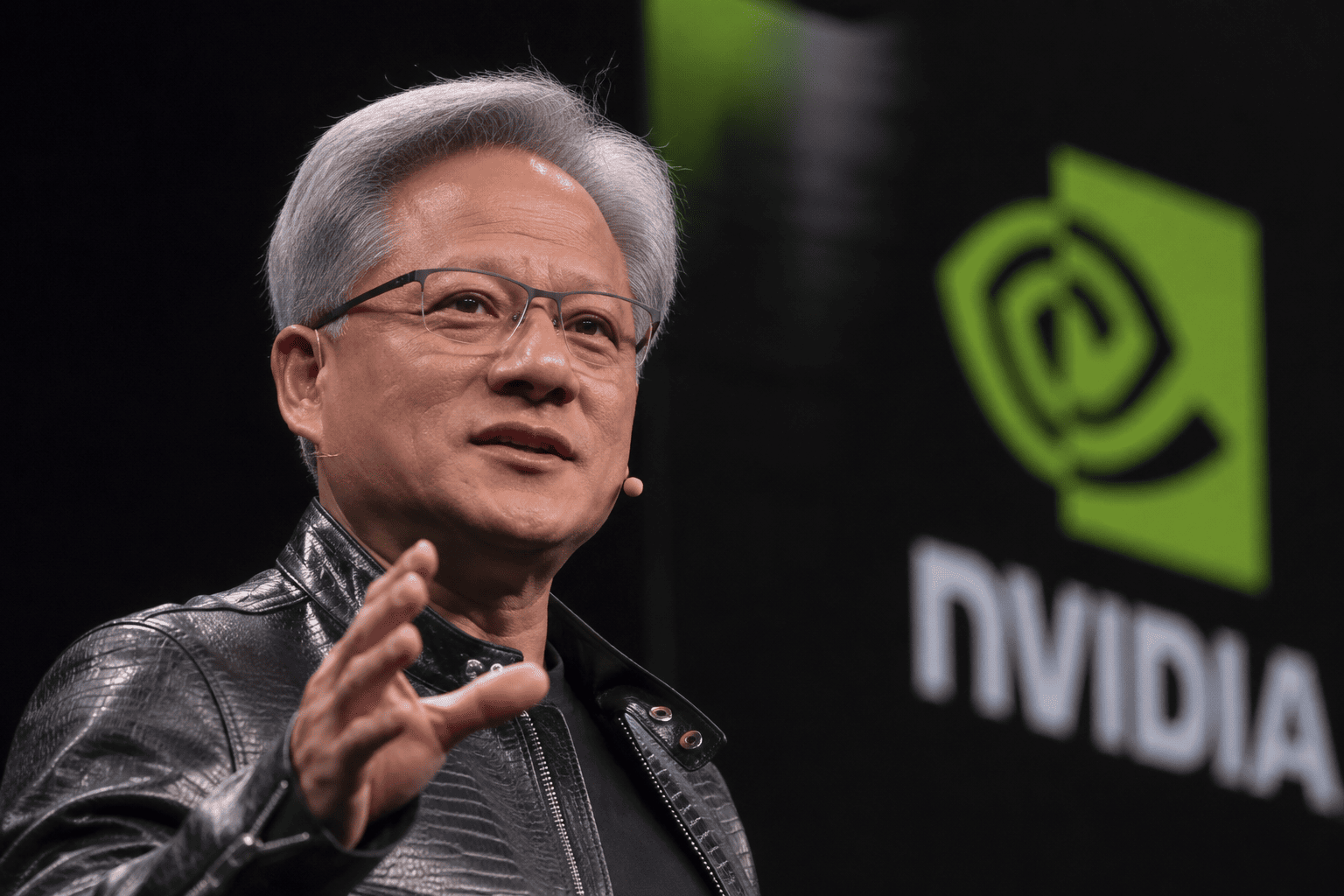
The competitive landscape for artificial intelligence chips is intensifying as a wave of startups and major technology companies accelerate efforts to challenge Nvidia's market dominance. With record funding flowing into AI chip startups and Big Tech firms developing proprietary silicon, investors are increasingly questioning whether Nvidia can maintain its commanding position through the next phase of AI computing.
Record Funding for AI Chip Startups
AI chip startups raised $8.3 billion globally in 2026, according to industry data, with investment expected to reach record levels this year. The latest example came Wednesday when SambaNova secured $1 billion in fresh financing, valuing the company at $11 billion. The round was led by General Atlantic, with participation from Seligman Ventures, T. Rowe Price, and Capital Group. Earlier this year, SambaNova raised over $350 million from Intel and other investors.

Other notable challengers include Cerebras, which recently debuted on public markets after raising $5.5 billion. Morgan Stanley has highlighted Cerebras's first-mover advantage in certain AI computing segments. Groq, another inference-focused startup, attracted so much attention that Nvidia licensed some of its chip technology and hired its CEO last December. Reports of a potential $20 billion acquisition by Nvidia remain unconfirmed. D-Matrix, founded in 2019, claims its processors can execute inference workloads up to 10 times faster while consuming five times less energy than standalone Nvidia GPUs for smaller workloads. The company has raised around $500 million at an estimated $2 billion valuation, with Microsoft's venture arm M12 participating.
Shift from Training to Inference Opens Doors
Nvidia built its dominance on graphics processing units originally designed for gaming but later adapted for AI model training. These chips remain the industry standard for building large language models. However, as enterprises increasingly deploy AI applications rather than train new foundation models, attention is shifting to AI inference—the process through which trained models respond to user queries. Many startups argue that specialized processors designed specifically for inference can dramatically reduce costs and power consumption compared to Nvidia's general-purpose GPUs.
Big Tech and AI Model Makers Develop Custom Chips
Nvidia's largest customers are simultaneously becoming rivals. Google is separating AI training and inference workloads under its eighth-generation tensor processing unit family, with TPU 8t and TPU 8i processors expected later this year. Amazon Web Services is discussing selling its Trainium AI chips to external customers, potentially creating one of the strongest alternatives to Nvidia in data center infrastructure. OpenAI recently unveiled its first custom AI processor, named Jalapeño, developed alongside Broadcom. Broadcom's CEO stated the processor performs on par with Nvidia's Blackwell chips and Google's TPUs. Chinese AI startup DeepSeek is developing its own chip to reduce reliance on Nvidia and Huawei, while Anthropic has held discussions with Samsung about collaborating on a future chip.
Nvidia's market share could decline to 68% by 2030 as competition mounts. The company has responded by introducing its own language processing unit at its annual GTC conference in March, suggesting it is incorporating ideas from emerging competitors. For more on Nvidia's recent performance, see Nvidia Lags Chip Rally as Kyber Delay, Rotation to Broader AI Spending Weigh and Intel and AMD Surge Past Nvidia in H1 2026: Can the Momentum Last Into H2?
This article is for informational purposes only and does not constitute financial advice.