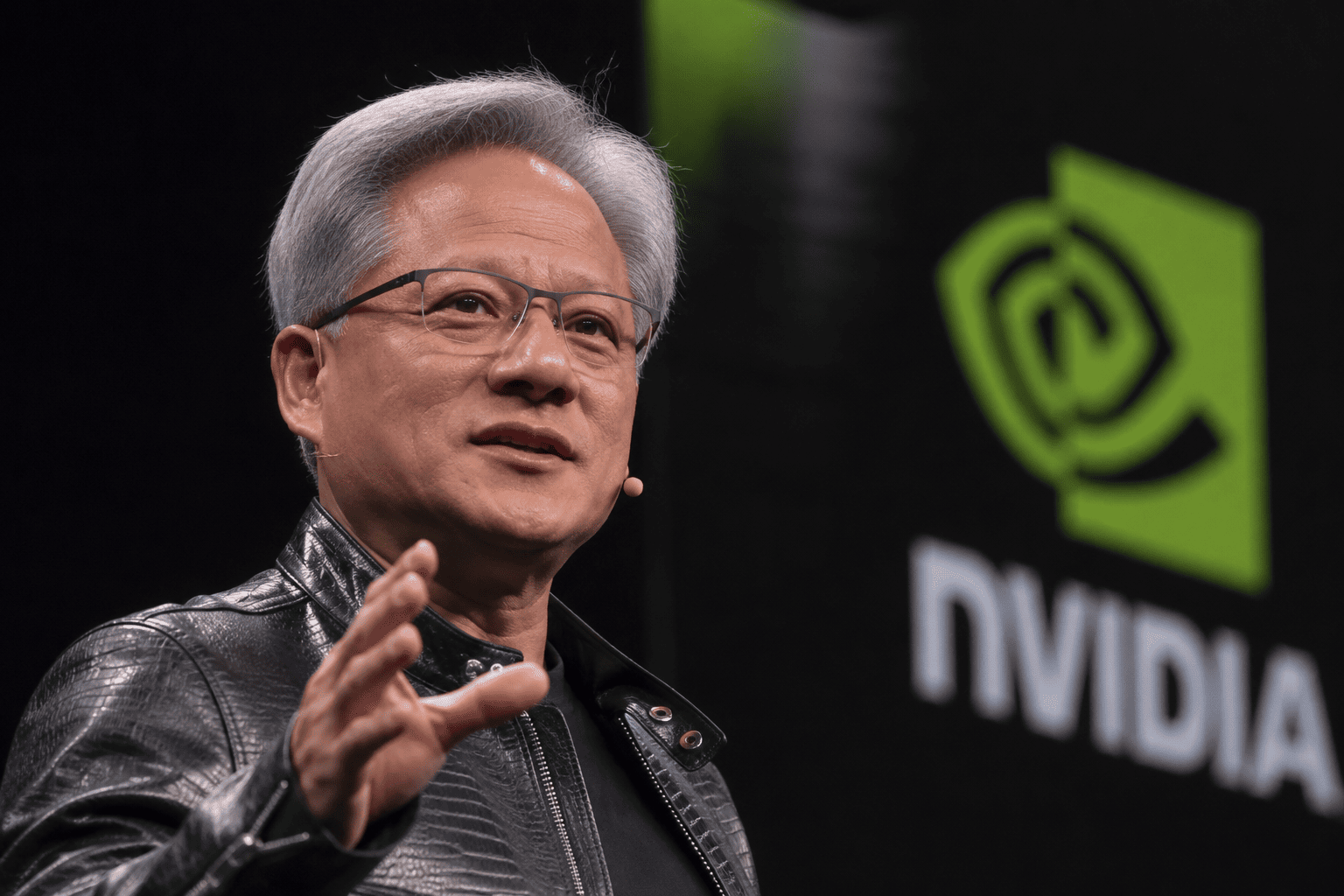
Nvidia (NVDA) shares edged lower on Monday, falling 0.75% to $209.11, as investors balanced the company's robotics expansion and partner stock rallies against broader geopolitical developments. The decline followed a 3% gain on Thursday, leaving the stock up 10% year to date and 44% over the past 12 months.
The muted performance came despite strength in parts of the semiconductor sector. Intel rose 4.9% to a new all-time high, building on a 10.6% surge on Thursday, while Advanced Micro Devices gained 1.1%. The divergence highlights ongoing rotation within the chip space, as investors reassess valuations amid shifting macro conditions.

Geopolitical Context and Rate Sensitivity
Tech stocks remain sensitive to US-Iran peace talks, with investors monitoring how potential energy price declines could influence inflation expectations and Federal Reserve policy. Lower energy costs would strengthen the case for rate cuts, which typically supports demand for AI infrastructure, including Nvidia's chips. However, the stock's lackluster response suggests the market is already pricing in much of this optimism.
Robotics Safety Push with Halos System
Nvidia unveiled Halos for Robotics on Monday, an expansion of its safety architecture designed to support autonomous robots in industrial environments. The system integrates AI compute, system software, sensor data, safety applications, and inspection tools into a unified framework. "Physical AI is transforming how factories, warehouses and logistics operations work, and robotics teams need a unified safety architecture to scale autonomous systems into these environments," said Deepu Talla, Nvidia's vice president of robotics and edge AI.
Agility, a humanoid robotics company, is the first adopter of Halos for Robotics. The firm will deploy the system in humanoids used by customers including Amazon, GXO, Schaeffler, and Toyota Motor Manufacturing Canada. Nvidia also made Halos Core for its IGX platform available in early access for registered developers, and released an open-source Halos Outside-In Safety Blueprint on GitHub.
Europe Supercomputer Expansion
Separately, Nvidia disclosed that 35 of its AI high-performance computing supercomputers are under development across Europe, marking the region's largest one-year expansion. The projects span national supercomputing centers, AI factories, and academic institutions, supporting research in climate science, healthcare, clean energy, quantum computing, and fundamental science.
Partner Stocks Rally
While Nvidia shares dipped, several partner companies posted strong gains. Fervo Energy surged after announcing a collaboration with Nvidia and the Pacific Northwest National Laboratory to develop a digital platform for geothermal drilling. Super Micro Computer jumped 16% after unveiling its Data Center Building Block Solutions (DCBBS) blueprint for high-performance computing at the ISC High Performance Conference in Hamburg. The company stated its infrastructure is optimized for Nvidia's Vera Rubin NVL4 platform, reinforcing their longstanding partnership.
Super Micro's AI business centers on its DCBBS platform, which integrates Nvidia's chips into customizable server architectures. The stock's rally underscores investor enthusiasm for AI infrastructure plays, even as Nvidia itself faces headwinds from sector rotation and geopolitical uncertainty.
For context on broader chip market dynamics, see Memory Chip Stocks Plunge Up to 10% on AI Debt Fears and Rate Hike Bets and Nvidia Lags Chip Rally as Smart Money Rotates to Memory, Custom Silicon.
This article is for informational purposes only and does not constitute financial advice.

