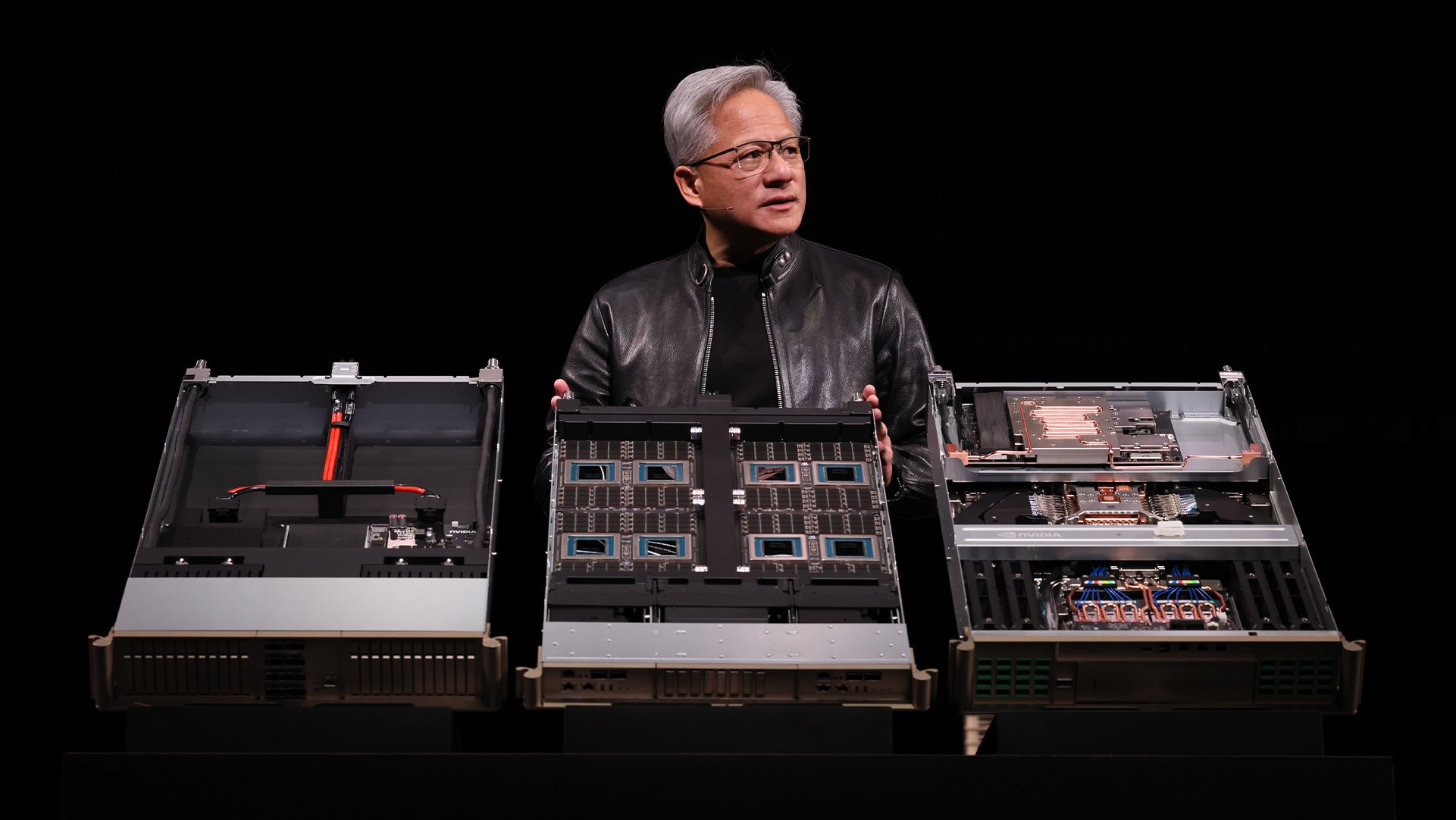
Nvidia (NASDAQ: NVDA) shares advanced more than 2% on Thursday, trading near $218, as technology stocks powered a broad market rebound. The move extends a two-day winning streak for the chipmaker, which has been at the center of the artificial intelligence investment boom.
The broader market also recovered some ground, with the Dow Jones Industrial Average up 0.7%, the S&P 500 gaining 1.1%, and the Nasdaq Composite climbing 1.6%. Easing Treasury yields and lower oil prices helped lift sentiment after the Federal Reserve's first interest-rate hike in three years triggered a selloff earlier in the week.

Other AI-related chip stocks also rallied, with Qualcomm up 2% and Intel surging 9%. The sector's strength underscores continued investor appetite for semiconductor names tied to AI infrastructure.
Huang sees chip demand doubling
Nvidia CEO Jensen Huang said Thursday that he expects the company to sell twice as many chips over the coming year as AI adoption spreads across industries. Speaking at an event in Scotland convened by King Charles III, Huang reiterated his bullish outlook for AI infrastructure, even as debate intensifies over the sustainability and risks of the technology.
Nvidia remains the dominant supplier of AI accelerators, the specialized processors used to train and run large language models. The company last month projected 70% revenue growth for its next fiscal year and indicated that revenue could potentially double if supply constraints were resolved.
Huang also addressed AI safety concerns, urging companies to take responsibility for ensuring their AI software and services are safe before release. His comments come as regulators and policymakers worldwide scrutinize the rapid deployment of generative AI tools.
Huawei steps up competition
Nvidia's optimistic demand forecast arrives as Chinese tech giant Huawei accelerates efforts to challenge its dominance in AI computing. Huawei announced Thursday that it plans to launch two new AI chips next year, part of a broader push to reduce China's reliance on U.S. technology.
The company has already shipped more than 1,000 AI computing systems—each combining hundreds of chips to boost processing power—to over 370 customers. Washington has restricted Chinese firms' access to Nvidia's most advanced AI chips and imposed controls on semiconductor equipment exports to China. Huawei has been under U.S. restrictions since 2019.
Morgan Stanley estimates China's AI chip market could reach $67 billion by 2030, with domestic companies capturing 86% of that market, up from less than half in 2025. That shift poses a long-term challenge to Nvidia's growth prospects in one of its key markets.
US-China tech diplomacy in focus
Next week, Huang is expected to attend a state dinner hosted by President Donald Trump for Chinese President Xi Jinping during Xi's visit to Washington on September 24, according to media reports. AI is likely to be a key topic as the two nations negotiate over economic and technology issues.
Huang has maintained close ties with the Trump administration and was among U.S. business leaders who traveled to China with the president earlier this year. He also attended a state dinner hosted by Xi during Trump's May visit to China, alongside Elon Musk and former Apple CEO Tim Cook.
The meeting underscores Nvidia's central role in the U.S.-China AI technology rivalry. While the company has navigated export controls by offering less powerful chips to Chinese customers, the expanding domestic alternatives from Huawei and others could reshape the competitive landscape.
For investors, Nvidia's near-term momentum remains tied to AI infrastructure spending, but the evolving geopolitical and competitive dynamics warrant close attention. The company's ability to sustain its growth trajectory will depend on both demand resilience and its strategic response to rising Chinese competition.
This article is for informational purposes only and does not constitute financial advice.

