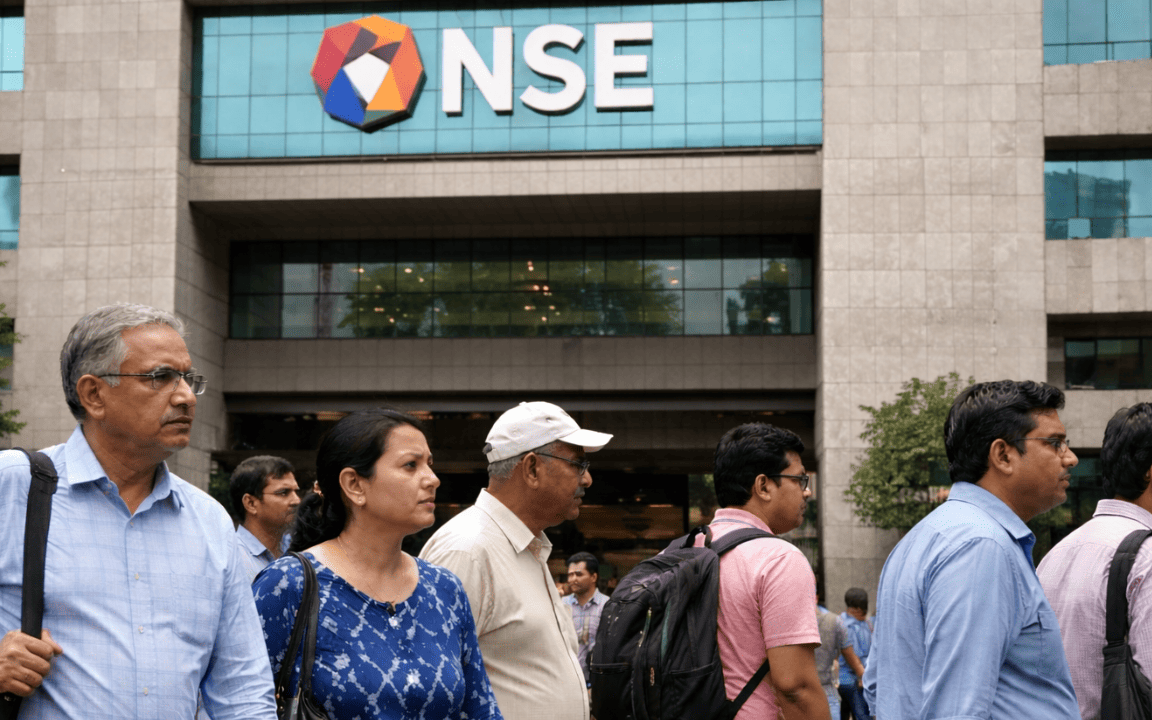
The National Stock Exchange of India (NSE) has taken a decisive step toward its long-awaited public listing by filing its draft red herring prospectus (DRHP) with the Securities and Exchange Board of India (SEBI). The proposed initial public offering, structured as a pure offer-for-sale (OFS) of approximately ₹30,000 crore, is set to surpass Hyundai Motor India's 2024 listing as the largest IPO in the country's history.
The filing marks a significant milestone for the exchange, which first attempted to go public in 2016 before being derailed by the co-location scandal. After nearly a decade of regulatory hurdles, the NSE is now on track to list on the BSE—since an exchange cannot list on its own platform—with market participants expecting the process to conclude by the end of 2026, subject to market conditions and regulatory approvals.

IPO Structure and Key Details
The IPO will comprise an offer-for-sale of up to 148.9 million shares, representing nearly 6% of NSE's paid-up equity. As no fresh shares are being issued, the exchange will not receive any proceeds from the listing; instead, the entire amount will go to existing shareholders selling their stakes. This structure reflects NSE's strong financial position—it is debt-free, highly cash-generative, and does not require capital in the conventional sense.
In the unlisted market, NSE has been valued at close to ₹5 lakh crore (over $58 billion), a valuation that would place it among India's most valuable listed companies upon its public debut.
Major Shareholders Cashing Out
State Bank of India is expected to be the largest seller, offering about 2.48 crore shares. Other prominent sellers include Canada Pension Plan Investment Board, Temasek-linked Aranda Investments, Bank of Baroda, General Insurance Corporation of India, The New India Assurance Company, National Insurance Company, and United India Insurance Company. Many of these long-time investors are monetizing holdings acquired at a fraction of the current implied value, giving the issue a strong value-unlocking angle for public-sector banks and insurers.
Notably, LIC, Premji Invest, and Radhakishan Damani are not among the proposed sellers, signaling that some influential investors prefer to remain invested through the listing cycle. The appeal is clear: NSE dominates India's cash market with a 93% share, holds near-total control of equity futures, and commands a leading position in equity options.
Market Expectations and Valuation
Sarvam Goel, founder of Pocketful, told Business Today that NSE's listing could immediately place it among India's 10 most valuable listed companies. However, he cautioned that unlisted-market optimism is already priced in. Goel noted that large IPOs typically come at a 15-20% discount to unlisted levels to leave room for listing gains and wider participation, suggesting a price closer to ₹1,600 per share could offer a more balanced entry point.
A valuation report by SharesNservices highlighted NSE's profitability metrics, which stand ahead of global peers such as CME, ICE, Nasdaq, and LSEG. The report pegged NSE's PAT margin at 62.9% and EBITDA margin at 76.5%, while emphasizing its zero-debt balance sheet and the FY27 listing catalyst. The same report argued that NSE offers a stronger risk-reward profile than BSE if priced fairly, even though BSE has enjoyed faster growth in derivatives from a smaller base.
Broader Market Context
The NSE's filing comes at a time when Reliance Jio Infocomm is reportedly preparing to file draft papers for a roughly $4 billion IPO, potentially before Reliance Industries chairman Mukesh Ambani's annual shareholder address on June 19. Together, these listings could reshape India's capital markets landscape, attracting significant domestic and international investor interest.
As India's dominant trading venue, NSE's public debut is expected to be a landmark event, offering investors a rare opportunity to gain exposure to the country's most profitable market infrastructure institution. The listing will also serve as a testament to the exchange's governance improvements since the co-location scandal.
This article is for informational purposes only and does not constitute financial advice.