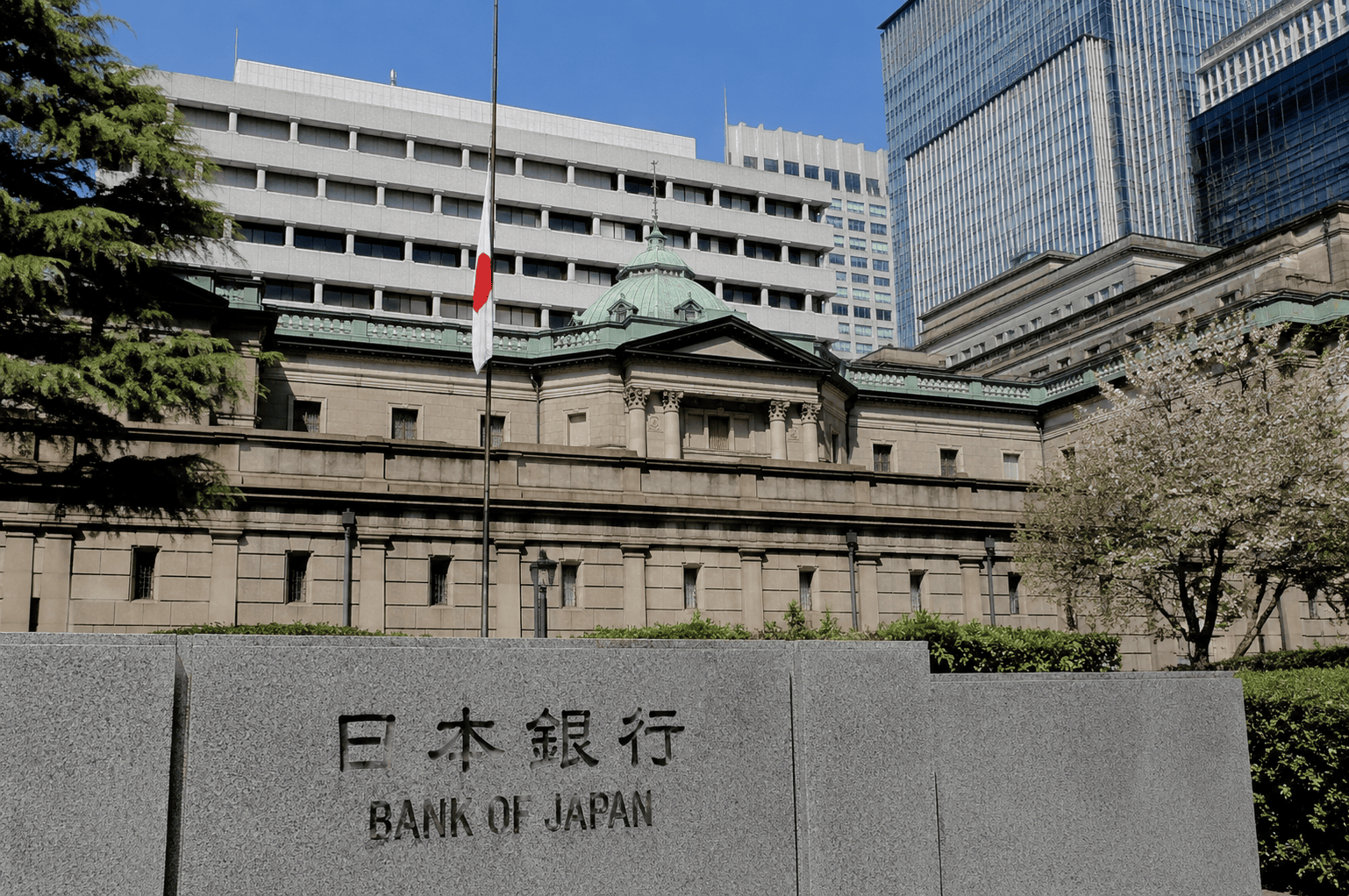
The Nikkei 225 Index is bracing for a week of significant market-moving events, with the Bank of Japan (BoJ) and the Federal Reserve both set to announce their latest monetary policy decisions. The blue-chip index, currently trading around 64,000, has already fallen 12% from its 2025 peak, and traders are watching these catalysts closely.
BoJ rate decision and inflation data
On Friday, the BoJ will conclude its policy meeting, with markets widely expecting a 25-basis-point hike to 1.25%—the highest level in over three decades. This decision follows the release of August inflation data, which is forecast to show national core CPI at 1.8% and core CPI (excluding fresh food and energy) at 2.1%. Rising energy costs and the AI-driven surge in electronics prices have kept inflation above the BoJ's 2% target.

According to prediction markets like Polymarket and Kalshi, traders are pricing in a high probability of a hike this week. The BoJ's tightening cycle aims to curb inflation and support the yen, which has strengthened to 153.53 per dollar, down 6.42% from its yearly high. While a rate hike is typically bearish for equities, the move is largely priced in, so the immediate impact on the Nikkei may be muted.
Federal Reserve decision
The Federal Reserve's decision on Wednesday is another major catalyst. Analysts expect a 25-basis-point hike, bringing the federal funds rate to a range of 3.75%–4.00%. Recent US data showed robust job growth of 162,000 in the latest report, while inflation remains above the 2% target, supporting the case for another increase.
Even with both central banks hiking, the rate differential between the US and Japan is expected to remain wide enough to keep the yen as the preferred funding currency for carry trades. This dynamic could limit the negative impact on Japanese equities.
Middle East tensions and oil prices
Geopolitical risks are also front and center. The ongoing conflict between the US and Iran, along with involvement from Houthi and Iraqi militias, has disrupted oil markets. Brent crude has surged to $107 per barrel, while West Texas Intermediate (WTI) is near $100. As a major oil importer, Japan faces higher energy costs, which can squeeze corporate margins and fuel inflation.
Rising oil prices are a headwind for the Nikkei, as they increase input costs for manufacturers and transportation companies. The impact is already visible in the broader Asian markets, with the KOSPI also under pressure from similar factors.
Bond yields and AI concerns
Another key factor is the bond market. The 10-year Japanese government bond yield has climbed to 2.98%, its highest level in decades. Higher yields increase the opportunity cost of holding equities and can weigh on valuations, particularly for growth stocks.
Additionally, concerns about the rapid pace of AI development are growing. Calls from industry leaders to slow the rollout of AI models have added uncertainty to the tech sector, which is a significant component of the Nikkei. This has contributed to recent volatility in AI-related stocks.
Other catalysts to watch
Beyond central bank decisions, investors will monitor the ongoing earnings season and any developments in the US-China trade relationship. The interplay between oil prices, yields, and AI sentiment will likely dictate the Nikkei's direction in the near term.
For a broader perspective on how these factors are affecting Asian markets, see our analysis of oil and yield pressures on KOSPI and Nikkei. Also, the rising odds of a Fed hike are impacting credit markets, while AI stocks face pressure from calls for slower development.
This article is for informational purposes only and does not constitute financial advice.

