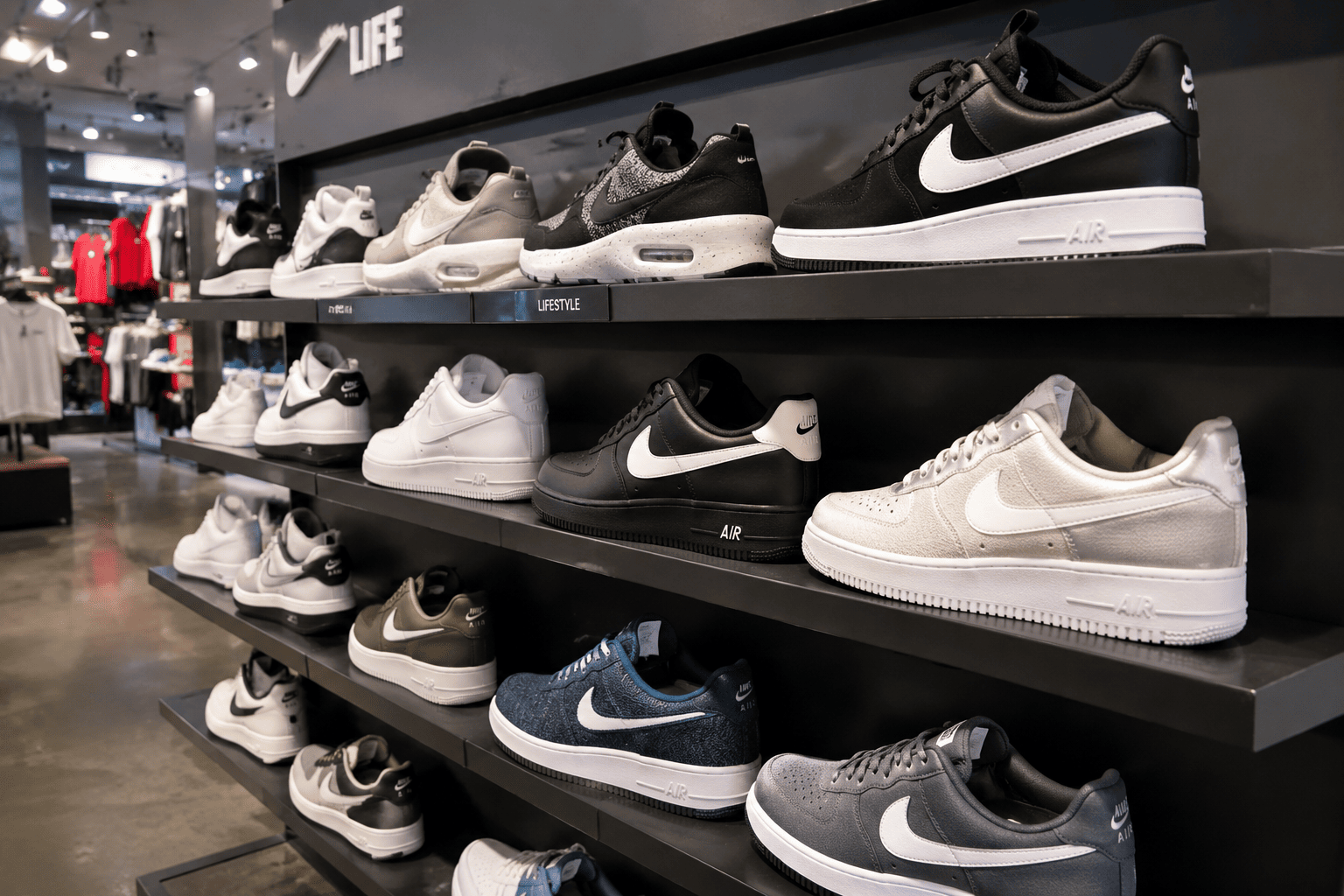
Nike Inc. shares declined approximately 4% in premarket trading Wednesday, even after the sportswear giant reported fiscal fourth-quarter results that surpassed Wall Street expectations. The muted market reaction underscores persistent investor concerns about the pace of the company's turnaround under CEO Elliott Hill, with weakness in China and a cautious near-term outlook offsetting the earnings beat.
Earnings Beat Fails to Inspire Confidence
For the fiscal fourth quarter, Nike reported adjusted earnings of $0.20 per share, excluding a $0.52 benefit tied to expected import tariff recoveries. Revenue fell 1.1% year over year to $11 billion. Analysts surveyed by LSEG had forecast earnings of $0.12 per share on revenue of $10.9 billion.

Despite the top- and bottom-line beats, investors focused on management's guidance that sales will continue to decline through the first half of fiscal 2027. The company now expects revenue to fall by low- to mid-single digits from March through November, compared with an earlier forecast of a low-single-digit decline. Earnings are expected to remain largely flat over the same period.
Chief Financial Officer Matthew Friend cited evolving tariff policies, geopolitical tensions in the Middle East, and oil price volatility as factors pressuring both costs and consumer demand. “We are not expecting the environment to improve meaningfully over the next six months,” Friend said during the earnings call. In response, Nike plans to tighten inventory and reduce orders, a strategy aimed at supporting margins but likely to weigh on near-term revenue.
Sports Strategy Shows Early Signs of Progress
Despite the cautious outlook, some analysts see encouraging developments in Nike's renewed focus on sports. Jefferies analysts described the quarterly results as “better than feared,” noting that Hill's “sport offense” strategy has helped return Nike's wholesale business to growth. “Nike's emphasis on its sports business is showing early signs of paying off, though performance in China remains a drag,” the brokerage wrote.
However, continued weakness in Nike's direct-to-consumer (DTC) business, including its retail stores and digital platform, remains a significant challenge. The company has spent the past two years rebuilding relationships with wholesale partners while reducing excess lifestyle inventory that had weighed on sales and margins. Management highlighted early progress in areas such as World Cup marketing campaigns, faster product launches, and improving football demand after a slowdown in April.
Nike forecast a slightly positive gross margin in the first quarter and said more than a dozen new footwear styles are scheduled for launch as part of a product refresh. CEO Elliott Hill acknowledged that rebuilding consumer demand will take time. “We know we're not living up to our full potential,” he said.
China Remains a Major Headwind
Greater China, which accounts for roughly 15% of Nike's annual sales and is its third-largest market, continued to post double-digit revenue declines during the quarter. Outgoing CFO Friend said the company expects China to remain under pressure as Nike works with retail partners to clear excess inventory. Some analysts believe the restructuring is showing early progress but warn that meaningful sales growth is unlikely until the inventory reset is complete.
Nike is pursuing a more premium, sports-focused strategy in China, though analysts expect the benefits to emerge gradually. Hill said newly launched footwear products should contribute more meaningfully to growth during fiscal 2027 as the broader product pipeline gains traction.
Recovery Timeline Uncertain
Analysts remain divided on how quickly Nike can regain lost market share. Bernstein said the company's decision to prioritize marketplace health over short-term revenue growth is strategically sound but likely to delay any meaningful earnings recovery. “Revenue declines through H1 mean no earnings growth until at least H2'27 as Nike prioritizes marketplace health over near-term sales — a good decision for the company but not for rapid recovery of the stock,” Bernstein analysts said.
Nike has struggled to regain momentum after losing customers to newer athletic brands and facing softer global consumer demand. In March, management acknowledged that efforts to revive growth were taking longer than expected, despite improving trends in North America, particularly in running and football footwear. Some analysts remain unconvinced that Nike's latest product launches have resonated strongly enough with consumers, and the company's digital business continues to face pressure as it shifts toward higher-priced products and away from discounting.
Nike shares have fallen roughly 35% year to date, reflecting ongoing investor skepticism about the company's recovery trajectory. The broader market context includes heightened uncertainty around trade policy and consumer spending, as highlighted in recent coverage of Samsung's 7% post-earnings drop signaling AI rally fatigue and the Dow's 160-point rise amid chip selloff pressures. For investors tracking earnings season, the BingX $1M USDT campaign highlights continued interest in earnings-driven trading opportunities.
This article is for informational purposes only and does not constitute financial advice.