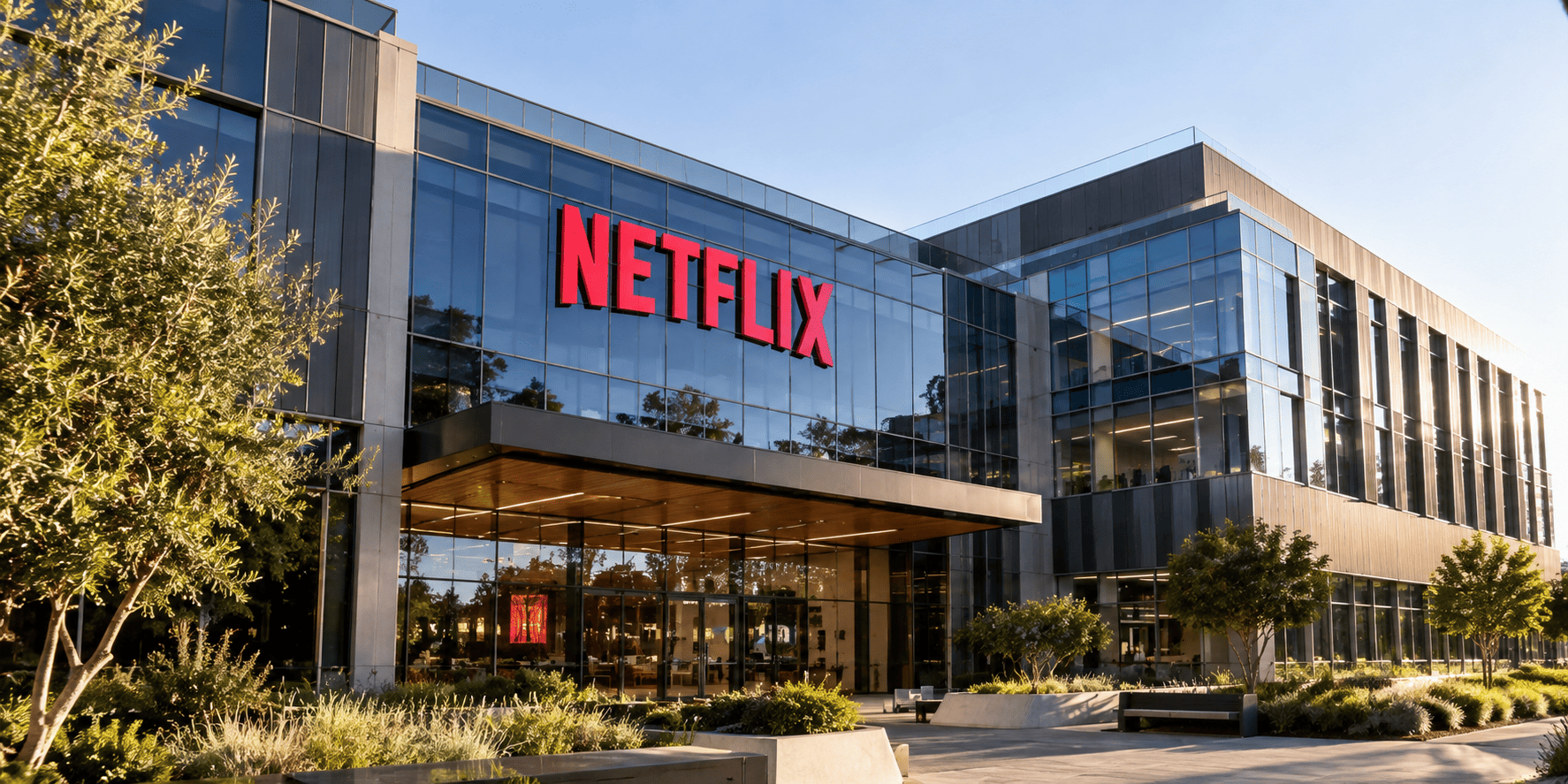
Netflix shares fell 4.5% on Wednesday after the streaming giant reported third-quarter earnings that topped expectations but issued a revenue forecast for the current quarter that came in slightly below Wall Street's estimates. The decline reflects growing investor unease about the company's ability to sustain growth amid intensifying competition and signs of slowing viewer engagement.
For the fiscal third quarter, Netflix reported adjusted earnings of 87 cents per share on revenue of $12.9 billion, compared with analysts' consensus of 82 cents per share on the same revenue, according to FactSet. However, the company guided fourth-quarter revenue to $13.4 billion, just shy of the $13.5 billion analysts had projected.

The stock's 4.5% drop on Wednesday adds to a broader downward trend, with Netflix shares down 27% in 2026. Investors have been wrestling with concerns about slowing growth, competitive pressures, and the effectiveness of the company's content strategy.
Engagement concerns weigh on Netflix shares
Investor focus has increasingly shifted to whether Netflix can maintain viewer engagement as rivals such as Disney+, Amazon Prime Video, and Alphabet's YouTube compete for audience attention. The recent merger of Paramount Skydance and Warner Bros. Discovery has also consolidated Paramount+ and HBO Max under one corporate umbrella, intensifying the competitive landscape.
Adding to the scrutiny, Netflix announced in July that it would publish its engagement report annually rather than twice a year, a move that some investors viewed as reducing transparency. In its shareholder letter on Tuesday, the company acknowledged concerns about growth in viewing hours, but said member responses to its 2026 price increases were consistent with previous changes and expectations, which it saw as evidence that engagement remained healthy.
Netflix said it aims to accelerate growth in viewing hours through investments in original content and live events designed to attract subscribers. However, live events may generate short-term viewership without necessarily fostering the sustained engagement that serialized series typically deliver.
Analysts split over Netflix's growth prospects
The company's outlook has prompted divergent views among analysts, particularly as attention turns to its growth and profitability in 2027. Morningstar described the share-price decline as the best buying opportunity for Netflix shares in years, maintaining a narrow economic moat assessment and an $80 price target, which implied more than 16% upside from the stock's last closing price. The research firm highlighted the planned expansion of Netflix's advertising-supported tier as a potential growth driver, with the company set to introduce the tier in 15 additional international markets in 2027, including nine EMEA countries, Colombia, Peru, and New Zealand. Morningstar also cited lower-than-expected customer churn and the potential for further US price increases and advertising growth.
Conversely, Needham downgraded Netflix to Hold from Buy, citing decelerating foreign-exchange-neutral revenue growth. Growth slowed from 14% in the first quarter to 12% in the second and 11% in the third. The firm expects revenue growth to fall into single digits in fiscal 2027 and raised concerns about the company's content slate and competitive position relative to YouTube.
Other firms also trimmed their price targets. Bernstein lowered its target to $80 from $95 while maintaining an Outperform rating. Rosenblatt cut its target to $71 from $75 and retained Neutral, while Barclays reduced its target to $65 from $70 and maintained Equal Weight.
Subscription business remains a source of support
Despite the growth concerns, several analysts continued to see strengths in Netflix's core business. JPMorgan maintained an Overweight rating, saying the subscription business remained healthy despite pressure on the shares from lower revenue expectations and uncertainty about 2027 growth and margins. Bank of America said Netflix's valuation remained undemanding for a global platform with more than 300 million subscribers, double-digit revenue growth, expanding margins, and rising capital returns. Goldman Sachs also maintained that the longer-term double-digit growth outlook remained intact, although it identified US content engagement as a key factor for the stock.
This article is for informational purposes only and does not constitute financial advice.