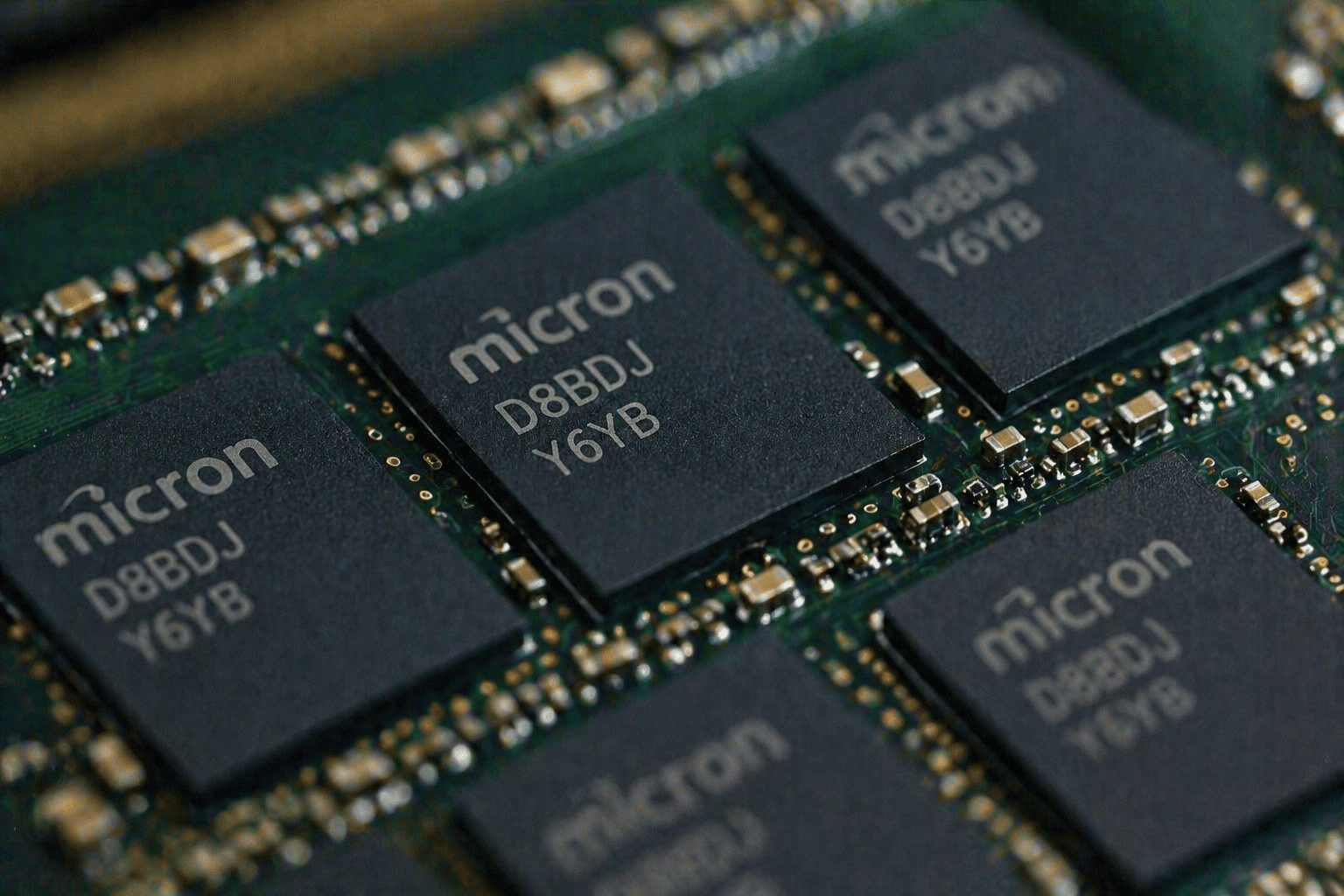
Micron Technology (NASDAQ:MU) is drawing heightened investor attention as the company prepares to report fiscal third-quarter results on June 24. The stock has already delivered one of the strongest AI-linked rallies on Wall Street, and a fresh bullish call now suggests it could climb another 60% to $1,700 per share. The key question is whether high-bandwidth memory (HBM) demand can sustain earnings upgrades that outpace the stock's recent gains.
HBM Demand Positions Micron as an AI Infrastructure Play
Micron is no longer viewed solely as a cyclical memory-chip manufacturer. For many investors, it has become a direct bet on AI infrastructure. Advanced AI processors require ultra-fast memory to handle massive data flows between chips, and as cloud providers and AI labs expand server clusters, memory content per system is rising sharply. HBM has evolved from a routine semiconductor component into a strategic product.

The company also benefits from tight supply across DRAM and NAND markets. This broader shortage has strengthened pricing and improved earnings power, leading some analysts to argue that the current upcycle may last longer than past memory booms, which typically ended when producers added excessive capacity.
According to The Efficient Investor, as cited by TipRanks, Wall Street is "still underestimating the magnitude of Micron's earnings growth." The $1,700 valuation target rests on the view that fiscal 2026 and fiscal 2027 earnings estimates remain too low, even after a sharp upward reset in market expectations. Additionally, Micron's shift toward longer-term customer agreements is designed to improve visibility on both pricing and demand.
Analysts See a Longer Memory Upcycle
Wall Street's bullish camp has become more aggressive ahead of earnings. TD Cowen's Krish Sankar raised his price target to $1,500, citing stronger memory demand and rising memory content tied to AI infrastructure. His call reflects a broader view that memory is becoming a larger share of AI server economics, not just an afterthought behind GPUs.
RBC Capital's Srini Pajjuri has also turned more constructive, projecting the DRAM upcycle could last another five to six quarters, supported by robust capital spending and HBM demand. This matters because investors are trying to gauge whether Micron's earnings are near a peak or still early in a multi-quarter reset.
Cantor Fitzgerald's C.J. Muse captured the mood directly, stating that the "memory trade is alive and well." His view is that DRAM and NAND supply constraints could persist longer than usual, keeping pricing power with producers. For more context on recent market moves, see AI and Chip Rout Sinks Nasdaq 2.2%; Dow Loses 320 Points as Micron Plunges 12%.
The 60% Upside Case Faces a High Bar
The risk is that expectations have already moved a long way. Goldman Sachs raised its Micron price target sharply to $900 but maintained a Neutral rating, citing elevated investor expectations before the June 24 results. That is the clearest caution around the stock. The issue is not weak demand today, but whether demand, pricing, and margins can keep beating forecasts that are already aggressive.
Memory remains a cyclical business. A slowdown in AI capital expenditure, faster supply additions, weaker pricing, or customer resistance to long-term pricing could quickly pressure earnings. Even a strong quarter may not be enough if guidance fails to show that HBM demand is still running ahead of supply. For a broader perspective on the chip sector, see Nvidia Lags Chip Rally as Smart Money Rotates to Memory, Custom Silicon.
As Micron's earnings approach, the debate centers on whether HBM demand can sustain the rally. While the bullish case is compelling, the high bar of expectations means investors should watch closely for signs that the upcycle still has room to run. For more on the broader market context, see Dow Gains 204 Points as US-Iran Talks Advance; PCE Inflation Data in Focus.
This article is for informational purposes only and does not constitute financial advice.

