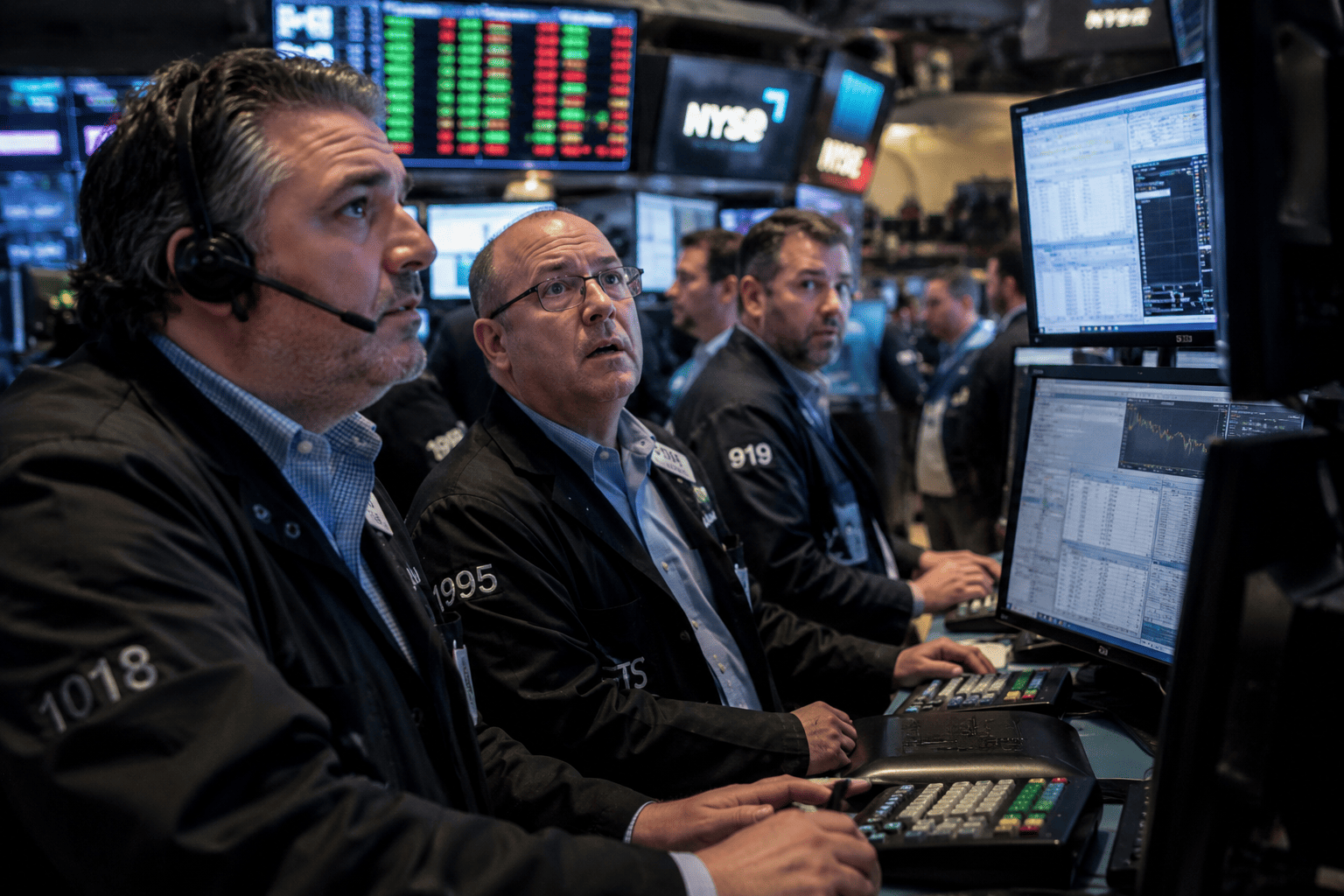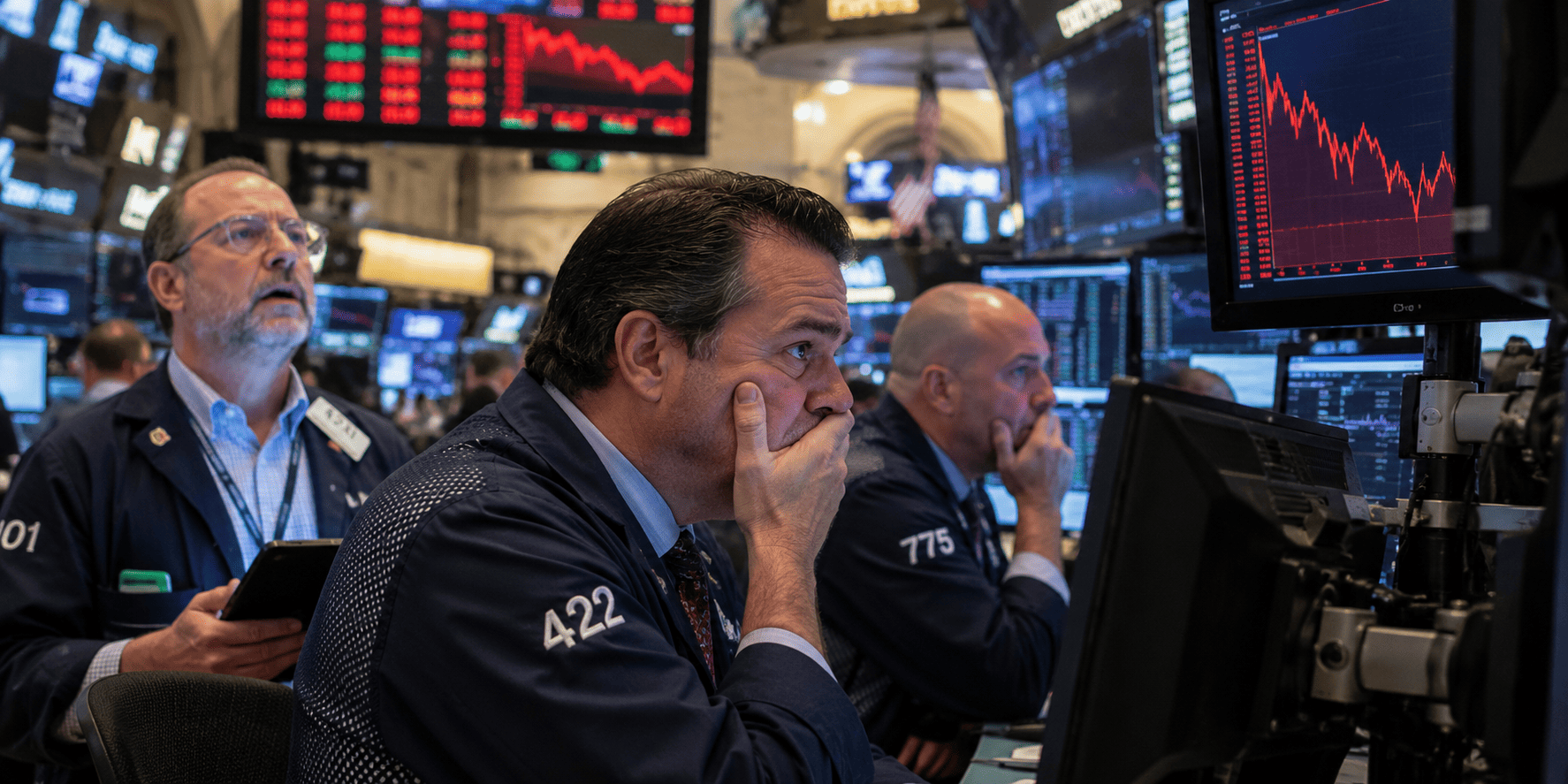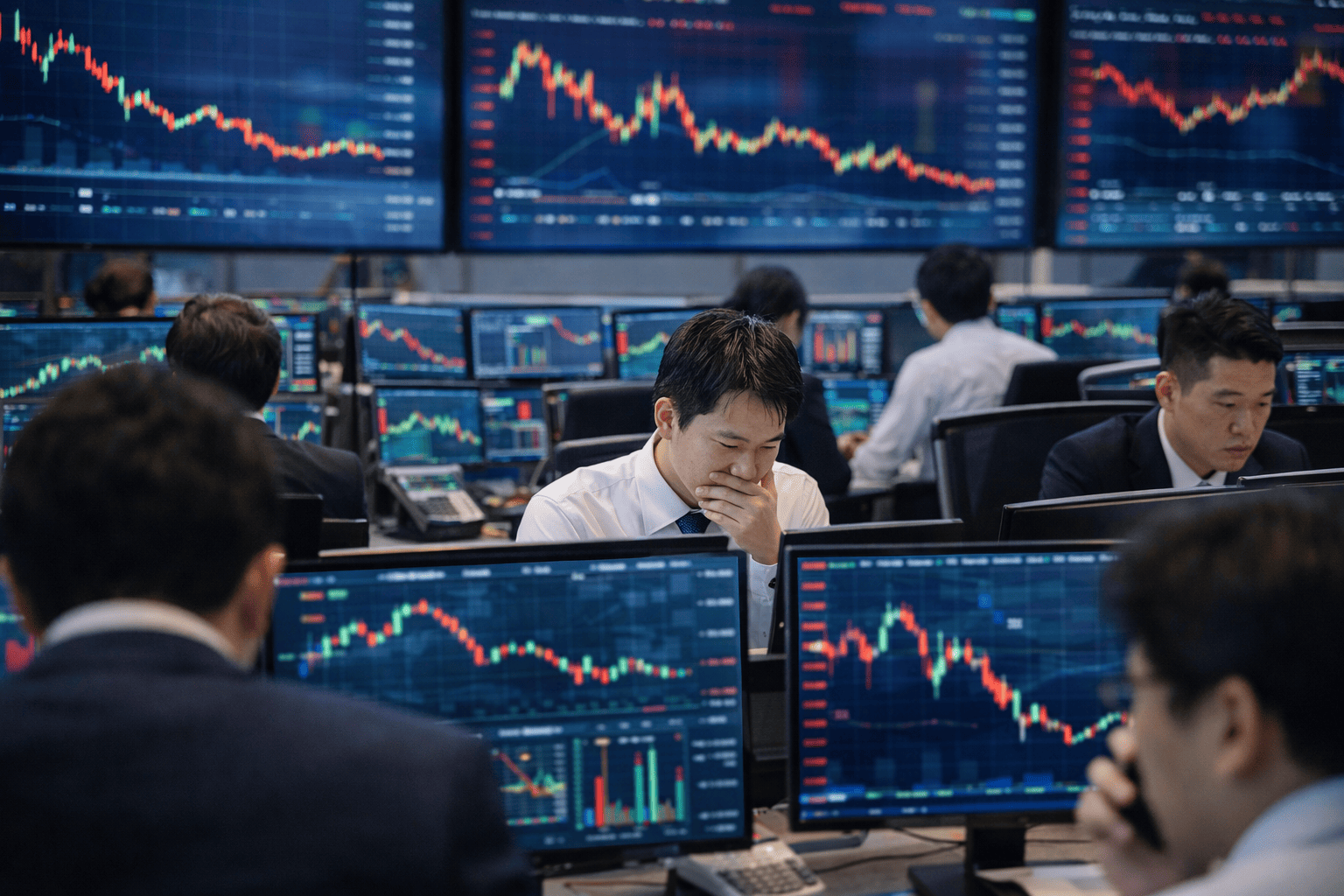
South Korea's benchmark KOSPI index suffered its steepest drop in months on Friday, plunging 5.13% to 5,633.34 by mid-morning in Seoul, as a renewed selloff in artificial intelligence-linked shares dragged down the country's two largest chipmakers. Samsung Electronics fell approximately 5%, while SK Hynix tumbled nearly 8%, prompting the Korea Exchange to activate a sell-side sidecar for the first time in 11 trading sessions.
The emergency measure, triggered at 10:04:55 am after KOSPI 200 futures dropped 5.12%, temporarily halted program sell orders for five minutes. Unlike a full market shutdown, the sidecar only pauses automated selling, allowing the market to continue trading manually. The intervention came as foreign investors dumped a net 553.7 billion won of shares, with local institutions adding another 240.9 billion won in selling pressure. Retail investors bought 709.3 billion won, but their purchases were insufficient to stem the decline.
AI Spending Concerns Spill Over from Wall Street
The rout followed a sharp technology retreat on Wall Street, where Alphabet shares lost 12.6% on Thursday after heavy AI investment pushed its free cash flow into negative territory. The Nasdaq Composite fell 1.38%, with Intel and Amazon also weakening after reporting results. For South Korea, the reaction is particularly significant because Samsung and SK Hynix supply memory chips used in data centers, making their earnings increasingly dependent on technology companies' continued expansion of AI capacity.
Both firms reported record quarterly profits—Samsung posted third-quarter operating profit of 107.4 trillion won, while SK Hynix earned 83.33 trillion won—yet these exceptional results have done little to reassure investors. The market is not necessarily predicting a collapse in chip orders; rather, investors are questioning whether data-center investments will generate sufficient returns to justify another round of massive capital spending. Pepperstone analyst Chris Weston told Reuters that markets were questioning whether shareholders would earn “an adequate return on the enormous capital being deployed.”
Foreign Selling and Sentiment Shifts Drive the Decline
The KOSPI opened 2.99% lower and losses accelerated as overseas investors and local institutions sold in tandem. Seo Sang-young, a managing director at Mirae Asset Securities, told The Herald Business that foreign investors' futures and cash-market positions are critical to the direction of Korean stocks, and that recent chip-share volatility reflects shifts in capital flows and sentiment as much as changes in earnings. This helps explain the speed of Friday's retreat: selling by major investors can drive the index lower even when smaller buyers view valuations as attractive.
The latest fall follows a 9.93% two-session rally through Wednesday, underscoring how quickly sentiment has swung. Samsung faced additional pressure after its shareholder-return announcement offered few immediate details about further buybacks or cancellations. IBK Investment & Securities cut its price target to 350,000 won from 460,000 won, citing disappointment over the policy.
Record Profits vs. Valuation Concerns
There is a more optimistic view. Hanwha Investment & Securities analyst Ha Jang-kwon said in an October 28 assessment reported by Chosunbiz that Korean share prices had fallen too far relative to earnings already generated. However, those hopes depend on whether corporate guidance can restore confidence in future chip margins. The market's focus remains on whether the AI-driven earnings boom can be sustained, and Friday's action suggests that investors are increasingly skeptical.
This article is for informational purposes only and does not constitute financial advice.