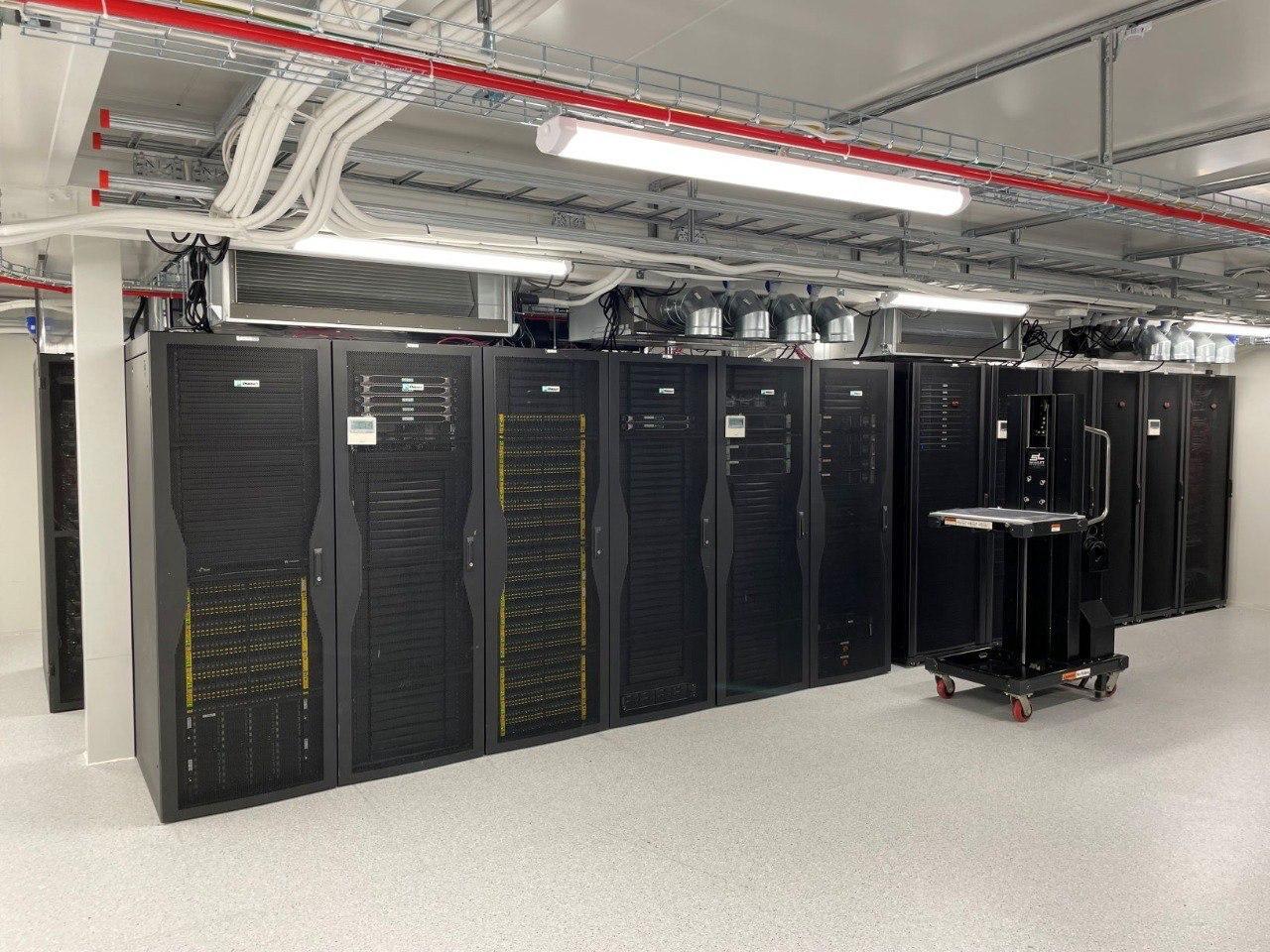
The rapid expansion of AI compute has created a fundamental capital allocation question: should operators rent data-center capacity and focus on deploying GPUs, or own the physical infrastructure that underpins their services? The answer shapes risk profiles, cost structures, and strategic flexibility.
Asset-light models have gained traction because they limit capital exposure before demand becomes predictable. Operators can scale up or down as conditions change, preserving room to respond to shifts in hardware economics, customer requirements, or regional constraints. However, this agility comes with a reliance on a host's pricing, available power, and expansion timetable—factors that can become most restrictive when demand is strongest.

Ownership, by contrast, offers greater control over power architecture, cooling, hardware configuration, deployment schedules, and customer allocations. At sufficient utilization, a shorter intermediary chain can improve the underlying cost position, though the advantage varies by hardware, location, power prices, and utilization. The trade-off is a largely fixed cost base that becomes less forgiving when demand falls short of expectations.
Clichmont, an independent European operator, illustrates the strategic calculus. Power availability ranks first in its site-selection process, followed closely by time to power, cooling conditions, and fiber connectivity. Land cost carries less weight because inexpensive property offers little strategic value when a location cannot deliver sufficient electricity quickly enough or support dense compute efficiently.
The duration mismatch between GPUs and physical infrastructure is a key consideration. GPUs cycle through product generations quickly, while grid connections, substations, fiber routes, cooling systems, and data halls can support successive hardware refreshes. Capital committed to the physical layer underwrites a production environment that can carry through multiple technology cycles.
Financing structure determines how much pressure fixed-cost commitments create. Clichmont finances infrastructure through a mix of company resources, private equity, and proceeds from the $CLAI ecosystem, with bank or vendor financing available depending on the project. For larger facilities, including a planned Bodø data center, the company intends to raise dedicated equity capital for physical infrastructure and spread funding across multiple sources.
Utilization becomes central to the investment case because productive use must absorb the fixed-cost base before ownership can translate into economic leverage. Investors should focus closely on that exposure, as an asset-heavy operator makes a forward commitment to future demand, power economics, and the commercial life of each site.
Scale carries a different meaning for an independent European operator. Trying to match the largest funded compute platforms GPU for GPU would turn capital intensity into a structural burden. A more disciplined strategy selects a smaller number of markets where power, infrastructure, and operating conditions can support competitive delivered-compute economics.
Clichmont's current pipeline extends across distinct markets: Bodø Harbor is already operating, Alicante is at an advanced stage of development, and a larger purpose-built Bodø facility is planned. Outside Europe, a UAE expansion is targeted for 2028, still in planning and partnership-development. A broader geographic spread will expose the model to materially different power, cooling, and operating conditions, providing a more demanding measure of scalability.
Announced capacity is the wrong scoreboard. GPU counts, megawatts, and new sites communicate potential supply but reveal little about financial productivity. More useful measures come from operations: utilization of deployed compute, contracted capacity, and the cost required to deliver each unit of compute. These metrics show whether infrastructure converts capital into productive capacity.
This article is for informational purposes only and does not constitute financial advice.