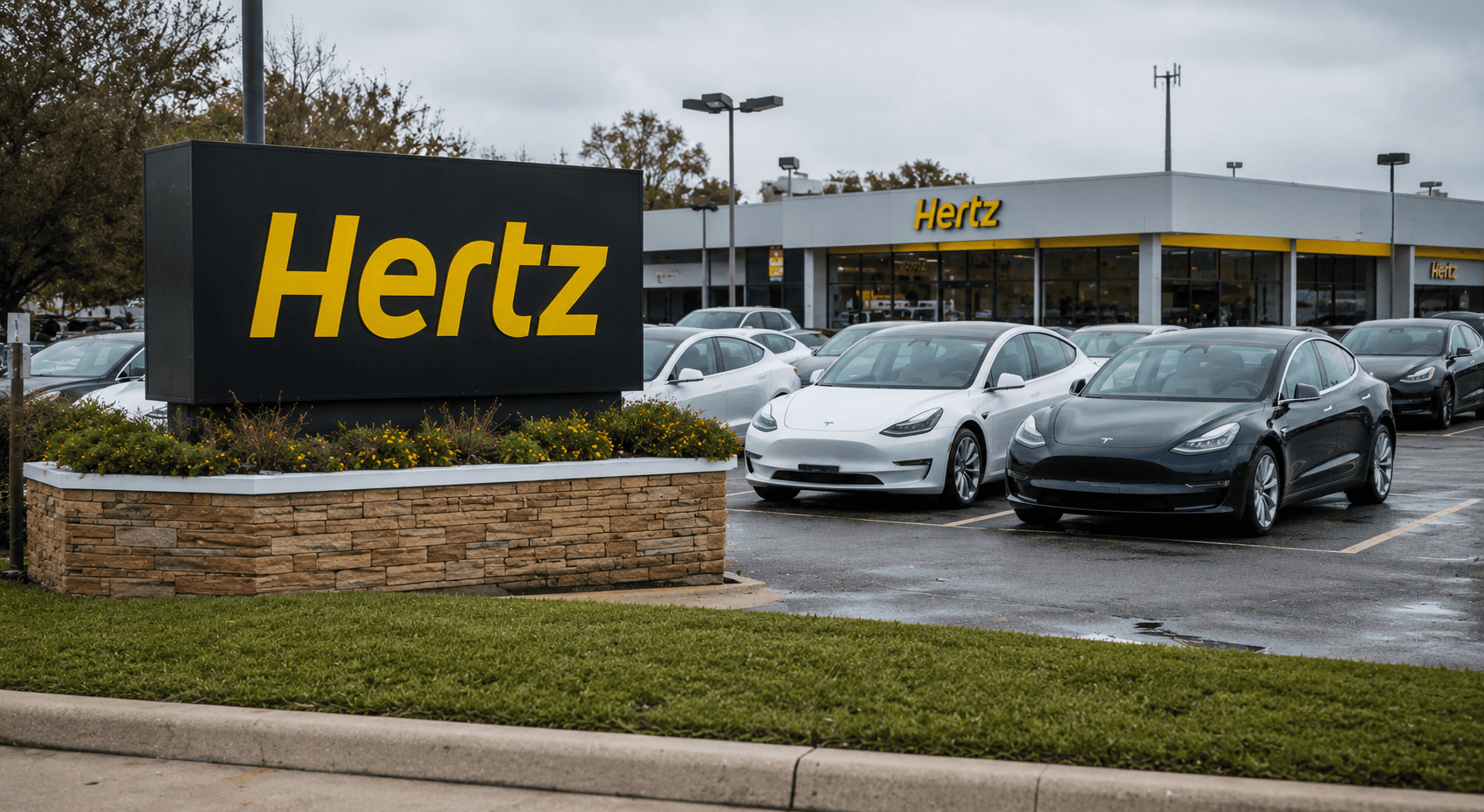
Hertz Global Holdings saw its stock price collapse by more than 38% on Wednesday after the company issued a downbeat earnings outlook tied to deteriorating conditions in the used-car market and unveiled a $400 million capital-raising initiative. The selloff pushed shares toward their largest single-day percentage decline on record and their lowest close since March 2025, according to Dow Jones Market Data.
Used-Car Market Weakness Drives Depreciation Costs Higher
The rental car giant now expects second-quarter adjusted corporate EBITDA to fall between $50 million and $80 million. While that range remains within previously issued guidance, it is skewed toward the lower end and below the $79.11 million average estimate from analysts surveyed by LSEG. The company attributed the shortfall to softer-than-expected used-car pricing, which has directly increased depreciation expenses and eroded profitability.

Hertz disclosed that it recorded losses on vehicle sales in May after generating gains in April, reflecting an abrupt shift in used-car market dynamics. The company now projects net depreciation per vehicle per month of approximately $300 for the second quarter, a sharp increase from earlier expectations that had factored in gains from vehicle dispositions. The unexpected deterioration in used-car values has created a significant headwind, offsetting otherwise solid operational metrics. Fleet size, revenue, rental days, and revenue per day are all expected to meet or slightly exceed prior forecasts, supported by healthy demand and strong capacity utilization.
Financing Plan Adds to Investor Concerns
Adding to the negative sentiment, Hertz announced plans for a $100 million public stock offering alongside a $300 million offering of exchangeable senior first-lien secured payment-in-kind (PIK) notes due 2030. Proceeds from the note offering will be used for general corporate purposes, including potential debt repayment. Under the arrangement, Hertz will lend the newly issued shares to underwriter J.P. Morgan Securities, enabling investors to establish short positions to hedge purchases of the notes. Hertz will receive only a nominal lending fee from the stock transaction and no direct proceeds from the share sale itself.
The notes will pay interest through a combination of cash and PIK interest and may be exchanged for cash, Hertz common stock, or a combination of both at the company's election. The number of shares issuable upon exchange is capped at 19.9% of outstanding shares unless shareholders approve a larger issuance. The capital raise adds to the overhang on equity sentiment, keeping volatility elevated.
Broader Context and Stock Performance
Wednesday's rout extends a difficult period for Hertz shares. Including the latest losses, the stock has fallen roughly 28% year-to-date and nearly 50% over the past 12 months. The company has spent the past year streamlining operations, refreshing its fleet, and working to improve its financial position. It also sought to rebuild investor confidence through partnerships, including agreements announced in April with Uber Technologies to support the ride-hailing company's robotaxi ambitions. However, persistent challenges in the used-car market and concerns about profitability continue to weigh on investor sentiment.
The broader used-car market faces headwinds despite higher U.S. tariffs increasing the cost of new vehicles and pushing some consumers toward pre-owned cars. Macroeconomic pressures and strained household budgets have made it difficult for used-vehicle companies to maintain margins. For context, the DRAM ETF Plunges 8% as SK Hynix, Samsung, Micron Stocks Tumble on Profit-Taking highlights similar margin compression in other sectors. Meanwhile, Nasdaq Futures Drop 290 Points as Chip Stocks Slide on Iran Oil Shock underscores the broader market volatility.
This article is for informational purposes only and does not constitute financial advice.