Commodity markets experienced sharp divergences on Wednesday as geopolitical risks in the Middle East intensified. Gold prices tumbled to their lowest point in over a month, while crude oil rebounded strongly following overnight military exchanges between the United States and Iran. Base metals, meanwhile, edged lower on mixed signals from China's trade data.
Gold Slumps on Rate Hike Fears
Gold futures on COMEX slid more than 2% to $4,140.62 per ounce, the weakest level since March 22. The decline came as renewed fighting between the US and Iran dashed hopes for a diplomatic resolution, reigniting concerns over inflation and the prospect of higher interest rates. Iran's Revolutionary Guards claimed responsibility for missile and drone strikes on US military bases in Jordan, Kuwait, and Bahrain, retaliating for American attacks on Iranian positions near the Strait of Hormuz. The clashes represent one of the most significant escalations since a fragile ceasefire was agreed in April.
Bullion has now fallen over 20% since the US-backed conflict with Iran began in late February. While gold is traditionally viewed as an inflation hedge, rising interest rates tend to weigh on the non-yielding metal. According to the CME FedWatch tool, traders currently price in a 68% probability of a US rate hike in December, further pressuring gold prices.
Oil Rebounds on Supply Disruption Fears
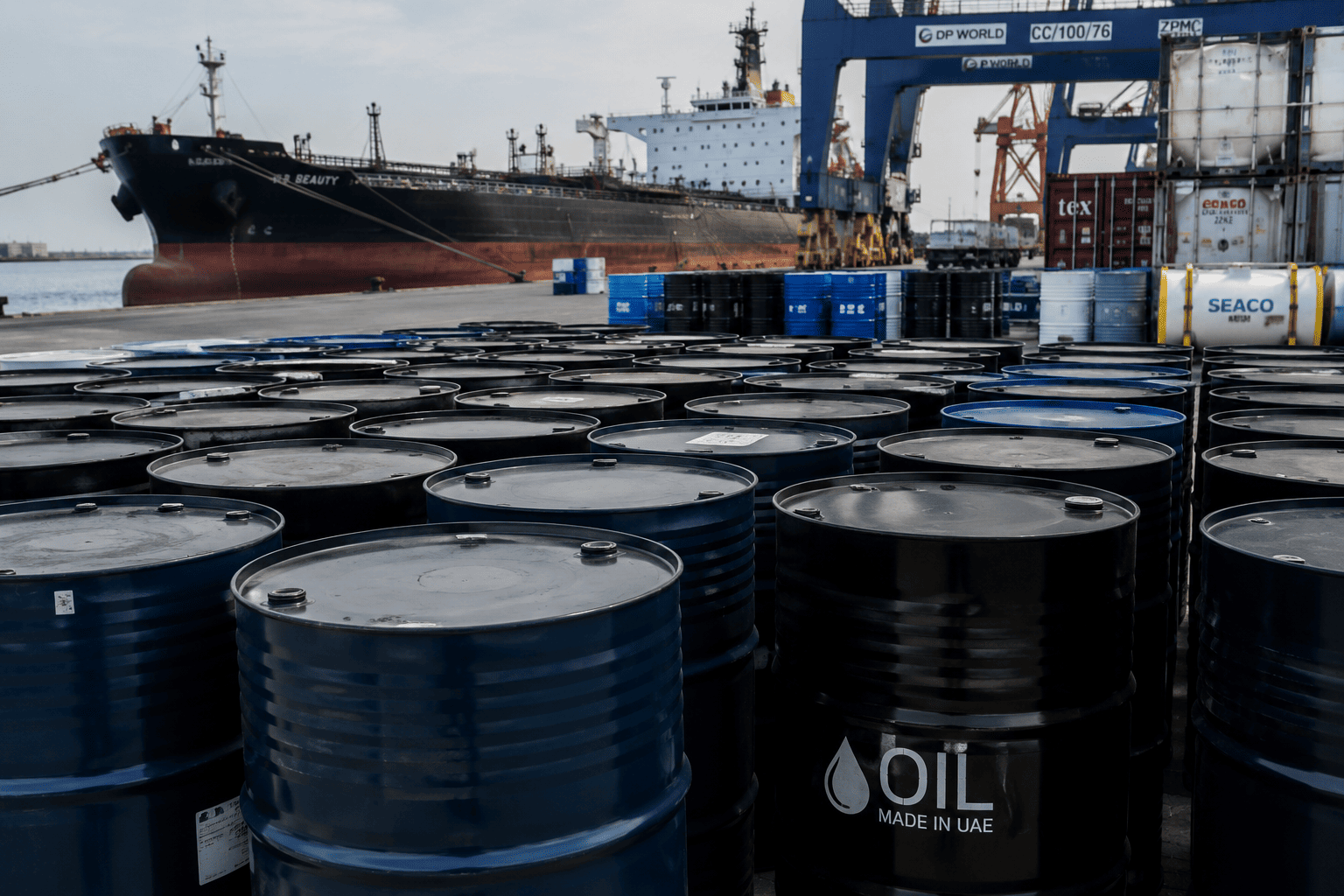
Crude oil prices climbed sharply on Wednesday after US President Donald Trump warned on Truth Social that he was close to ordering new strikes against Iranian power plants and bridges, accusing Tehran of delaying negotiations. Brent crude rose 1.7% to $93 per barrel, while West Texas Intermediate gained 2.2% to $90.10 per barrel. The rebound followed overnight tit-for-tat strikes that shifted market focus back to potential supply disruptions.
“While diplomatic efforts remain ongoing, the latest military exchanges have reintroduced a geopolitical risk premium into oil markets,” said Priyanka Sachdeva, senior market analyst at Phillip Nova, as quoted by Reuters. Tehran has warned it would resume hostilities if Israel continued its campaign against Hezbollah in Lebanon, complicating Trump's efforts to extend the ceasefire.
Global stock draws are providing some support to prices, but weaker Chinese crude imports are capping gains. PVM analyst Tamas Varga noted that limited shipping through the Strait of Hormuz—which normally carries a fifth of the world's crude—is also restraining upside. JP Morgan analysts forecast Brent to average around $100 per barrel through most of 2026. US Energy Secretary Chris Wright said Tuesday that ship traffic in the Gulf and exports through the Strait are gradually increasing, even as Washington and Tehran struggle to reach a lasting agreement.
Base Metals Dip on Mixed China Data
Copper and aluminum contracts on the London Metal Exchange slipped following the release of mixed Chinese trade data. Unwrought copper imports rose 4.4% year-on-year to 445,700 tons in May, though year-to-date volumes remained down 7% at 2.01 million tons. ING Economics attributed the increase to higher domestic refined output. Copper concentrate imports fell 1% year-on-year, with year-to-date volumes down 1.4%.
In ferrous markets, iron ore imports declined 0.4% year-on-year and 5.9% month-on-month to 97.7 million tons. On the export side, unwrought aluminum and product shipments surged 15.5% year-on-year to 632,400 tons—the highest since November 2024—as producers responded to stronger overseas demand following Middle East supply disruptions, according to ING commodities strategist Ewa Manthey.
For more on related market movements, see our coverage of copper's recent gains amid ceasefire hopes and the dollar's retreat as Hormuz talks ease safe-haven demand.
This article is for informational purposes only and does not constitute financial advice.