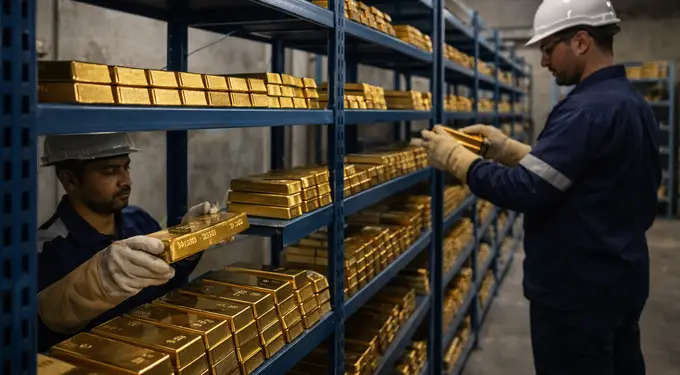
Gold prices are hovering near their weakest level in almost two weeks on Tuesday, as investors pivot from last week's Jackson Hole symposium to a packed US labor-market calendar that could shape the Federal Reserve's next policy move. Spot gold traded around $4,450 an ounce during Asian hours, after touching its lowest since August 19 on Monday.
The precious metal has retreated sharply from last week's three-month high after Fed Chair Kevin Warsh signaled that policymakers may need to tighten again if inflation does not show convincing progress toward the 2% target. Markets now assign roughly a 66% probability of a September rate increase, up notably from a week earlier.
Jobs data takes center stage
The first test arrives Tuesday with the July JOLTS job-openings report, due at 10:00 am ET. Openings stood at 7.4 million in June, with expectations for a modest decline to around 7.3 million in July. The ADP private-payroll report follows Wednesday, ahead of the official August employment report on Friday at 8:30 am ET.
This sequence carries extra weight because July payrolls unexpectedly fell by 23,000, and prior months were revised lower. That makes employment data the clearest potential counterweight to Warsh's inflation concerns. A strong jobs report could solidify the case for a September hike, while a weak one might ease pressure on bullion.
Technical levels to watch
FXStreet analyst Dhwani Mehta sees $4,400 as an increasingly important near-term battleground. Her technical assessment places the 21-day moving average near $4,430, followed by the 100-day average around $4,366. A recovery through the 200-day average near $4,531 would strengthen the bullish setup again.
For context, gold's recent slide mirrors broader market dynamics. Similar pressure has been seen in other metals, as silver prices have also faced headwinds from rising rate-hike bets.
Warsh's hawkish reset
Warsh's Jackson Hole message has fundamentally altered how markets approach bullion. September is no longer viewed as an easy hold, with investors again debating whether the Fed may need to resume tightening. CME pricing showed roughly a 66% probability of a September increase on Monday, up sharply from a week earlier. Barclays expects two quarter-point increases before year-end, in September and December.
IG market analyst Tony Sycamore noted that a single rate increase would probably not fundamentally undermine gold's longer-term case, but a sequence of two or three could become much more damaging. That distinction matters because gold generates no income, so sustained increases in real yields create a stronger headwind than one isolated policy move.
Iran tensions add two-sided risk
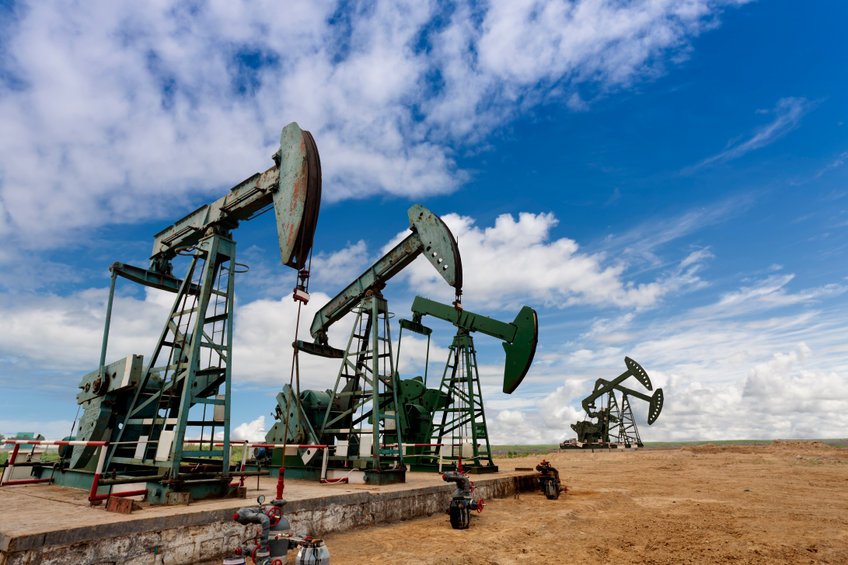
Renewed US-Iran fighting is offering safe-haven support, but it is simultaneously pushing oil and inflation expectations higher. Brent crude climbed above $91 a barrel on Tuesday after Washington and Tehran exchanged direct attacks for the first time in about a month. Shipping through the Strait of Hormuz remains heavily constrained, keeping the threat of another energy-supply shock alive.
That creates an awkward trade for gold. Geopolitical escalation can increase demand for defensive assets, but higher energy costs can also strengthen the Fed's case for tighter policy. Investors are also watching other markets for spillover effects, such as semiconductor stocks sliding on TSMC's capex hike, which reflects broader risk sentiment.
As the week progresses, gold's direction will likely hinge on the jobs data and any shifts in rate expectations. A break below $4,400 could open the door to further downside, while a strong recovery above the 200-day average might signal renewed bullish momentum.
This article is for informational purposes only and does not constitute financial advice.