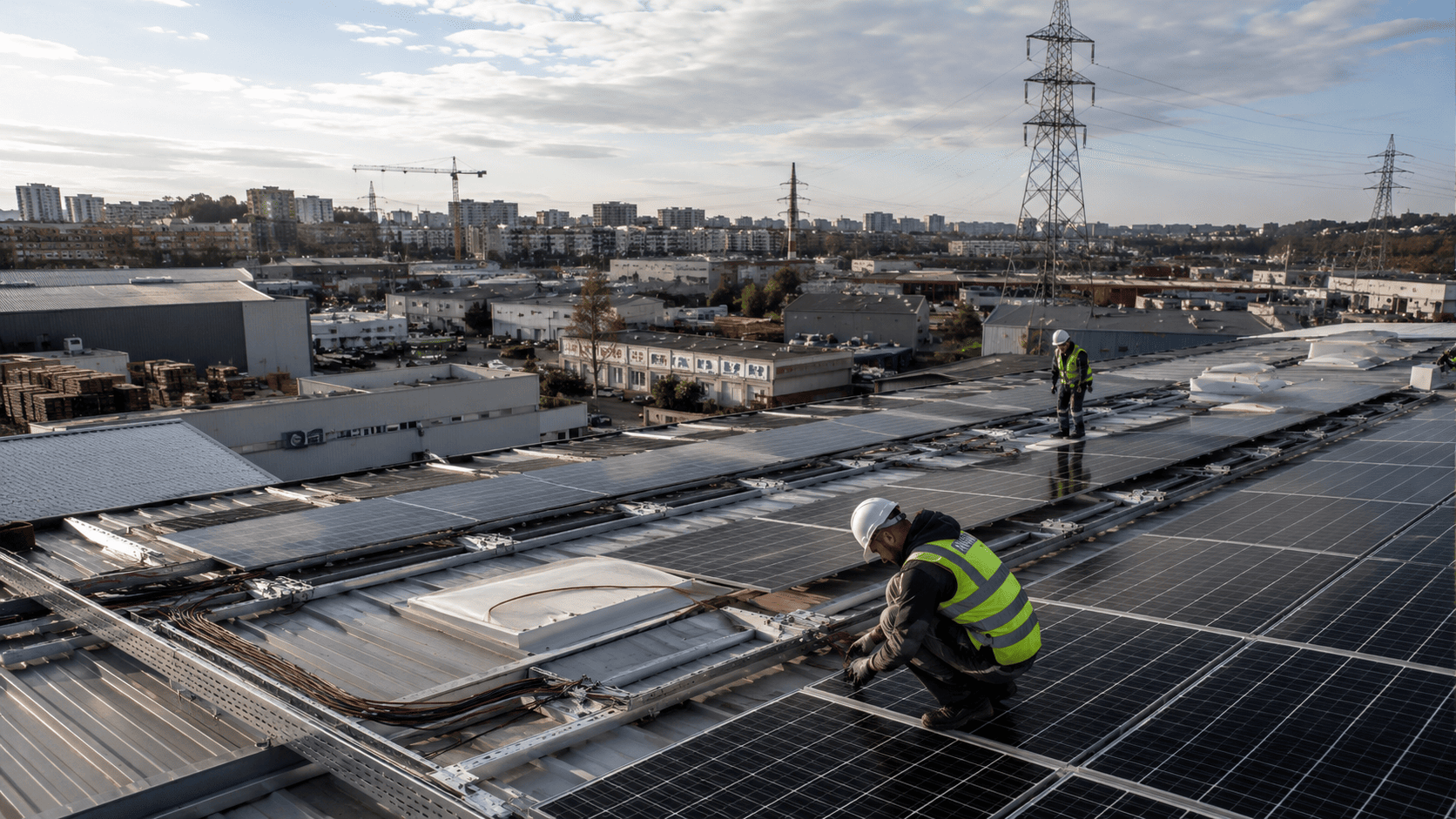
Europe's solar expansion is entering a more challenging phase, but for ENSOOL CEO Sandro Gonzalez, this shift signals an opportunity for disciplined execution rather than a warning for investors. In an interview, Gonzalez outlined how the company plans to transform small and medium enterprise (SME) rooftops into an institutional-grade infrastructure asset class, targeting a €500 million to €1 billion YieldCo.
After years of rapid growth, new EU solar additions have slowed, with the first annual decline in nearly a decade. However, Gonzalez argues this is not a demand problem. Europe still added roughly 65 GW of solar last year, bringing total installed capacity above 400 GW. The bottleneck, he says, lies in execution: slower grid connections, reduced incentives, and tighter financing conditions are making it harder to deploy capital. The gap between current capacity and the 750 GW target by 2030 cannot be closed by utility-scale projects alone, making distributed solar essential.

“The market is simply moving into a phase where execution matters more than momentum,” Gonzalez said. “The first wave was easier to finance with high power prices and strong subsidies. Now, the challenge is delivery, not demand.”
Institutional capital has traditionally favored utility-scale solar, viewing SME rooftops as fragmented and operationally heavy. Gonzalez sees this complexity as a structural advantage. “Once you aggregate hundreds or thousands of sites under identical standards, unified data, and a single operating model, they become a truly scalable asset class,” he explained. “Utility-scale is easier to understand but far more crowded. Distributed solar is harder, which creates a moat for companies that can execute well.”
The key to successful aggregation, according to Gonzalez, is discipline before deployment. “The mistake is to sign sites first and clean them up later,” he said. “The first pressure point is data quality. If you don’t know the roof, the customer load profile, and the contract risks upfront, you end up with portfolios that look good on paper but create problems in operations.” ENSOOL rejects weak sites early and enforces strict standardization of contracts and installation requirements across all contractors.
To secure long-term Power Purchase Agreements (PPAs) with SMEs, Gonzalez emphasizes solving the business owner’s immediate problems: unpredictable energy costs, tight capital expenditure, and the desire to avoid managing additional assets. “Once the savings are clear, the contract becomes easier to understand,” he said. “They are not buying a solar project; they are buying cheaper power with less operational burden.” Credit risk is mitigated through rigorous selection at entry and broad diversification across customers.
ENSOOL keeps engineering, procurement, and construction (EPC) in-house, a move that adds responsibility but also captures value where it is most concentrated. “In distributed solar, execution is exactly where most value is won or lost,” Gonzalez noted. This vertical integration, combined with a focus on data quality and standardization, positions the company to build a portfolio that can attract institutional capital.
The broader European market context supports this strategy. As European stocks hit new highs on rate optimism, the energy transition remains a key driver for infrastructure investment. Meanwhile, Tesla's European sales recovery highlights the region's growing appetite for clean energy solutions. For investors, ENSOOL's approach offers a way to tap into the distributed solar market, which Gonzalez believes is poised to become a mainstream asset class as execution capabilities improve.
This article is for informational purposes only and does not constitute financial advice.