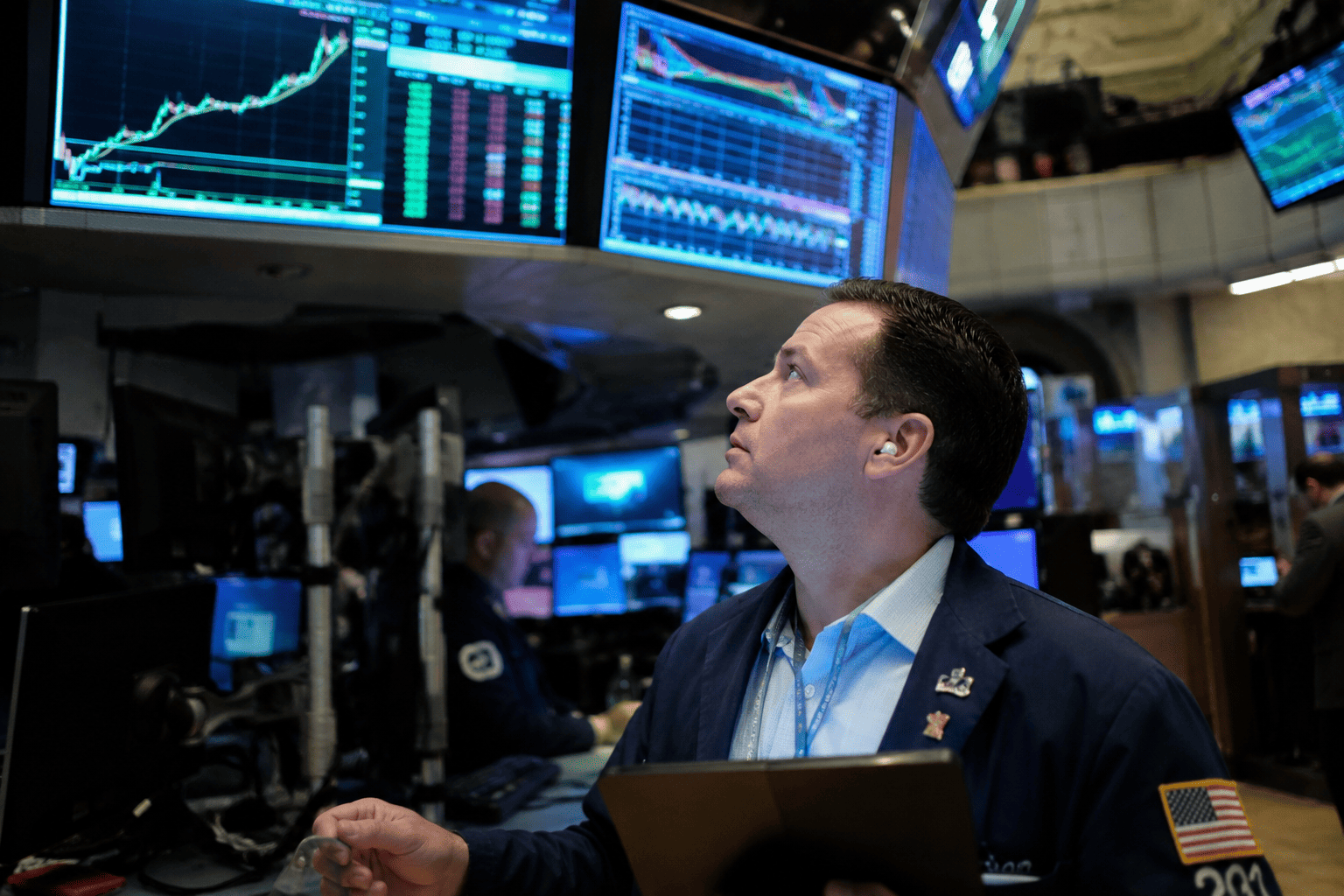
Wall Street edged higher in early trading Friday, with the Dow Jones Industrial Average adding approximately 70 points (0.14%), as investors balanced anticipation of SK Hynix's record-breaking Nasdaq debut against escalating geopolitical risks in the Middle East. The S&P 500 and Nasdaq Composite each gained 0.11% and 0.14%, respectively, reflecting a cautious tone after Thursday's strong rally fueled by semiconductor stocks.
For the week, the S&P 500 is on track for a 0.8% gain, while the Nasdaq Composite is poised to advance 1.5%. The Dow, however, is down roughly 0.8% over the same period, underscoring divergent sector performance.

SK Hynix Listing Takes Center Stage
All eyes are on SK Hynix's highly anticipated Nasdaq debut after the South Korean memory-chip maker raised about $26.5 billion by pricing its American depositary receipts at $149 each. The offering is set to become the world's largest share sale since SpaceX's record-breaking IPO last month. For deeper context, see our analysis: SK Hynix Raises $26.5B in Nasdaq Debut: What Investors Should Know.
Despite the optimism surrounding the listing, semiconductor stocks traded lower ahead of the event. Micron Technology fell about 2.4%, reversing a 4.5% gain from the prior session. Intel dropped roughly 3.3%, while Marvell Technology and Lam Research also declined. Nvidia, Broadcom, and AMD traded modestly lower, and both the iShares Semiconductor ETF and VanEck Semiconductor ETF slipped. Some investors worry that SK Hynix's large offering could temporarily divert capital from US-listed memory chip companies, as highlighted in Micron, SanDisk, Marvell Slide as SK Hynix's Record $26.5B Nasdaq Listing Looms.
Geopolitical Risks and Fed Outlook Remain in Focus
Investors continued to monitor the conflict between the United States and Iran after fresh military exchanges this week renewed concerns about inflation. Iran launched attacks on US military infrastructure in Gulf states on Thursday following US strikes on Iranian targets, adding uncertainty to global energy markets. However, markets found some relief after President Donald Trump said Iran had reached out to negotiate a deal. Officials from Qatar and Pakistan are also working to bring both sides back to the negotiating table, while an administration official told MS Now that technical talks would continue despite the latest military action.
New York Federal Reserve President John Williams said he does not expect the Middle East conflict to cause a sustained increase in energy prices through the remainder of the year. Attention is now shifting to next week's US inflation report and testimony from Federal Reserve Chair Kevin Warsh before the House Committee on Financial Services. According to LSEG data, markets are pricing in at least one 25-basis-point interest rate hike before the end of 2026. For more on currency market reactions, see Currency Markets Mixed as US-Iran Tensions Keep Investors on Sidelines.
Earnings Season Approaches
Investors are also preparing for the start of the second-quarter earnings season. According to LSEG data, analysts expect S&P 500 companies to report average earnings growth of 24% from a year earlier, with technology companies expected to account for much of that increase.
Elsewhere, crypto-related stocks advanced in trading as bitcoin strengthened. Strategy gained 6.2%, while Coinbase rose 5.5% and Circle surged 15%. Among individual movers, Delta Air Lines slipped 1.85% despite forecasting third-quarter profit above Wall Street expectations. Meanwhile, European markets edged higher, with the Stoxx 600 rising 0.19%, while South Korea's Kospi outperformed regional peers with a 2.5% gain, partly driven by SK Hynix's rally.
This article is for informational purposes only and does not constitute financial advice.

