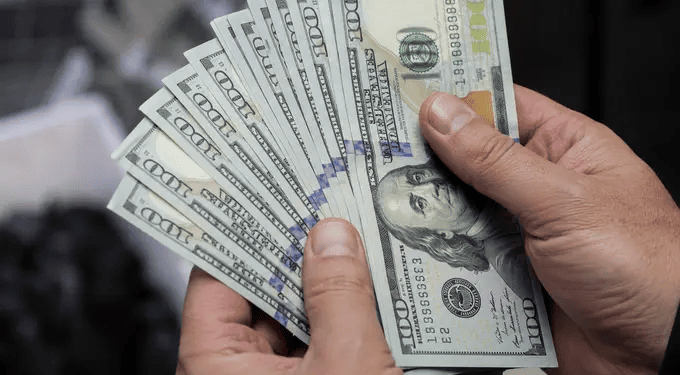
The US dollar held near its strongest level in over two months on Thursday, supported by growing market expectations that the Federal Reserve will raise interest rates again this year. The dollar index, which measures the greenback against a basket of major currencies including the euro and yen, was little changed at 100.24 after surging 0.85% in the prior session—its largest single-day gain in more than three months.
Fed Rate Hike Expectations Firm
The Federal Reserve left its benchmark interest rate unchanged at 3.50%-3.75% at its latest meeting, the first under Chair Kevin Warsh, who also initiated a broad review of monetary policy. However, nearly half of Fed policymakers now project at least one rate increase in 2025, reflecting persistent inflation pressures. Market pricing has shifted accordingly: according to CME FedWatch data, fed funds futures imply an 85% probability of a rate hike in December, up sharply following a robust US retail sales report.

The euro edged up marginally to $1.1518 after touching a two-month low earlier, while the British pound strengthened to $1.3313, recovering from the previous day's low near 1.3260. Gains in sterling remained limited, however, as traders cited a challenging fundamental backdrop. The Bank of England was widely expected to keep rates unchanged at 3.75% later Thursday, while assessing the inflation implications of the tentative US-Iran truce.
Yen Weakness Triggers Official Response
The Japanese yen weakened to as much as 160.760 per dollar, its weakest level since 2024, erasing gains made after Tokyo's currency intervention on April 30. The renewed decline prompted another response from Japanese authorities, though details were not immediately available. The yen's slide underscores the persistent divergence between the Bank of Japan's ultra-loose monetary policy and the tightening bias of the Fed.
US-Iran Agreement Eases Geopolitical Tensions
Oil prices fell after the United States and Iran signed an interim agreement aimed at ending the Iran conflict, reopening the Strait of Hormuz, and removing US sanctions on Iranian oil exports. The development reduced safe-haven demand for the dollar and improved sentiment across risk-sensitive markets. The Australian dollar rose 0.3% to $0.70365, while the New Zealand dollar gained nearly 0.5% to $0.5794.
For more on how geopolitical developments are influencing currency markets, see Dollar Holds Steady as CPI Looms; Oil Rally Pressures Rupee, Kiwi Gains.
Gold Rebounds as Oil Declines
Gold prices recovered on Thursday, rising more than 1% after a sharp sell-off in the previous session. The rebound was supported by falling oil prices and expectations that energy flows through the Strait of Hormuz could normalise following the US-Iran interim agreement. However, the outlook for bullion remains constrained by the possibility of higher US interest rates later this year, which could reduce demand for non-yielding assets. For context on how rate expectations are affecting precious metals, see Gold Retreats From 2% Rally as Oil Spike Threatens to Undermine Inflation Relief.
Investors are also watching the Bank of England decision later today, which could provide further direction for currency and commodity markets. The broader market narrative remains one of dollar strength driven by rate hike expectations, even as geopolitical developments offer occasional counterweights.
This article is for informational purposes only and does not constitute financial advice.