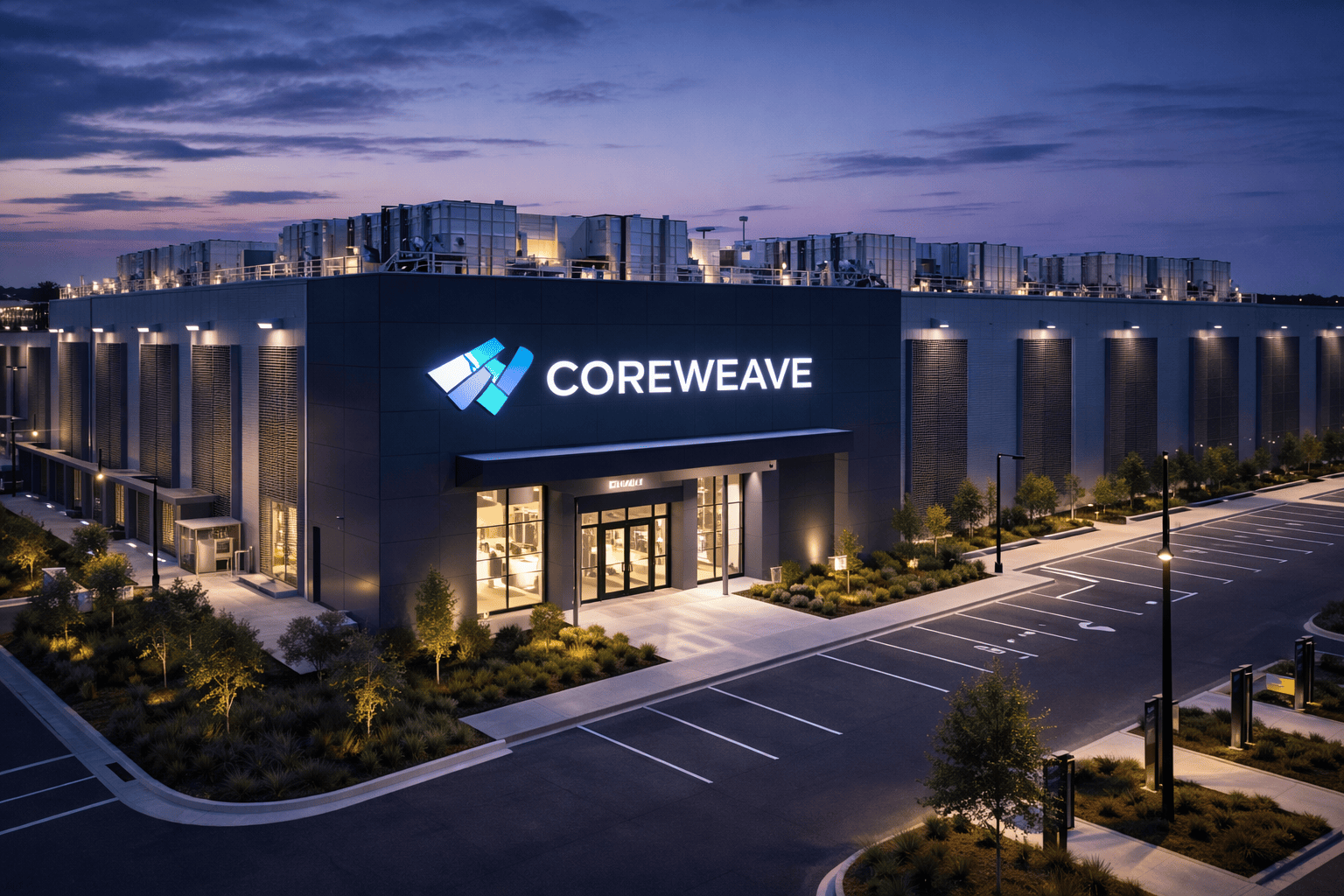
Shares of CoreWeave and Nebius are still trading well below their record highs, with both neocloud operators caught in a bear market as worries about an artificial intelligence bubble continue to weigh on sentiment. CoreWeave changed hands at $86.65 on Tuesday, a decline of 53% from its all-time peak. Nebius slipped to $240, roughly 20% below its high for the year.
Fundamentals remain strong
On paper, the two companies are performing exceptionally well. CoreWeave reported second-quarter revenue of $2.6 billion, a 112% year-over-year increase, while its backlog climbed to $104 billion. Nebius posted revenue of $582 million, up 454% from the prior-year period, and its half-year top line reached $981 million, a 529% gain. Demand is so intense that Nebius management believes it could sell out its entire 2026 capacity today.

AI bubble warnings mount
Despite those numbers, the stocks have been unable to reclaim their highs, and short interest in both names remains above 10%. A key driver is growing anxiety that the broader AI trade has become a bubble. Prominent investors including Ray Dalio, Michael Burry, Jim Chanos, and Patrick Boyle have all raised alarms about stretched valuations and speculative excess in the sector.
A significant risk for CoreWeave and Nebius is the financial health of their AI lab customers. Anthropic recorded a loss of more than $42 billion last year, and OpenAI is reportedly losing over $12.3 billion per quarter. OpenAI has warned investors that its cumulative cash burn could exceed $280 billion by 2030. Those losses raise questions about whether such clients can sustain the enormous compute contracts they have signed.
Competition and cost pressure
The competitive landscape is also intensifying. Meta Platforms' Muse is gaining share, and Chinese open-weight models are attracting more demand thanks to their effectiveness and lower cost. That combination could pressure pricing and demand for Western neocloud capacity over time.
Debt-funded expansion and dilution
CoreWeave and Nebius are pouring billions into data center buildouts. CoreWeave has guided capital expenditure for the year to between $35 billion and $39 billion, and Nebius is spending heavily as well. Much of this is financed through GPU-backed loans arranged via special purpose vehicles, with the companies pledging their contracts as collateral.
That structure carries three main risks. First, customers could cancel contracts to manage their own costs. Second, depreciation could accelerate as newer GPUs come online, forcing the firms to write down assets faster while still investing in next-generation chips. Third, the debt must amortize faster than the collateral loses value, and the customer contract must outlast the loan. With new chip generations arriving roughly every year, that race is difficult to win.
Shareholders are also absorbing dilution. Nebius sold 12.7 million shares through June, raising $2.8 billion, and has another 12.3 million shares available to sell. CoreWeave's outstanding share count has risen to 457 million from 317 million a year earlier.
This article is for informational purposes only and does not constitute financial advice.

