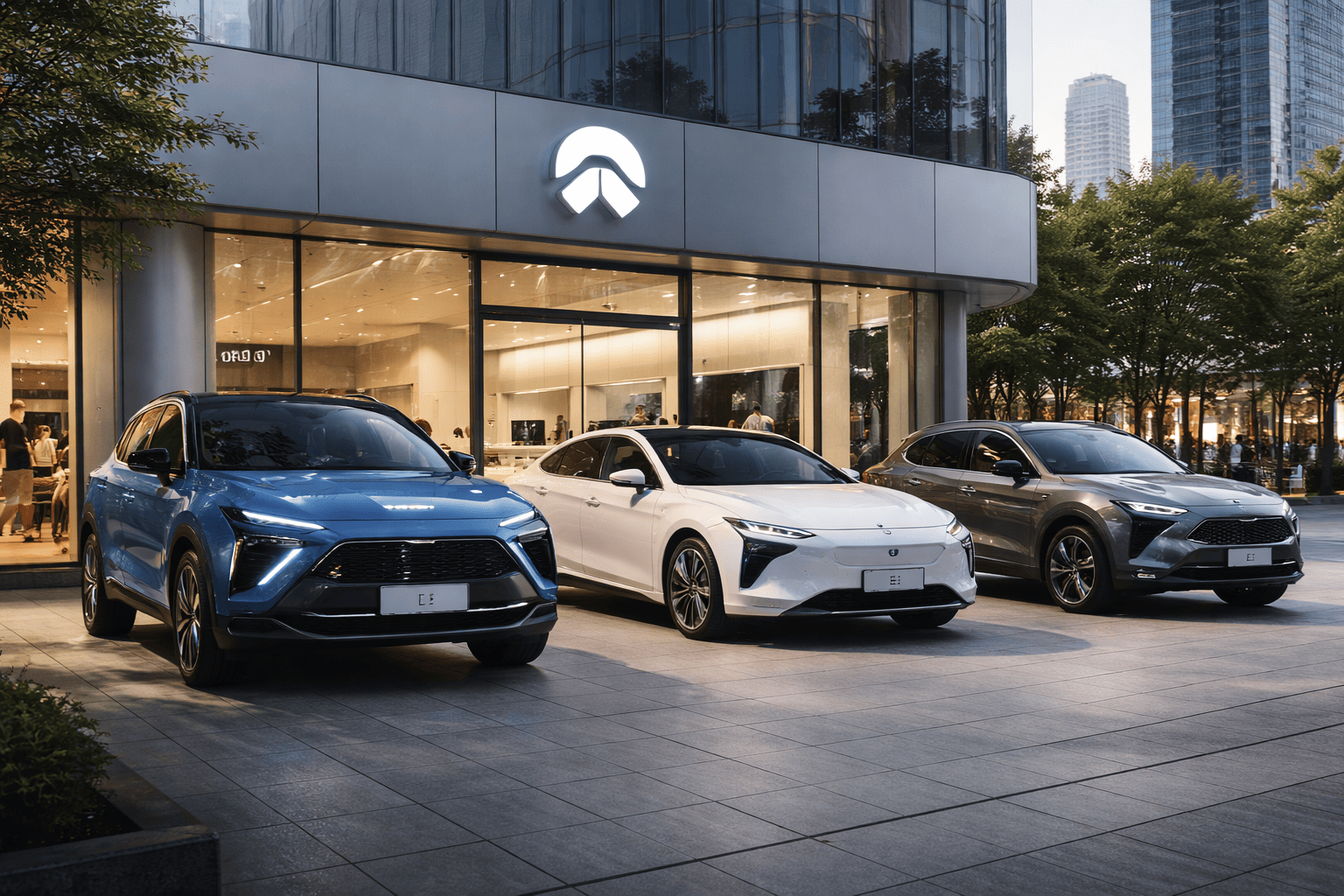
Chinese electric vehicle manufacturers are experiencing a significant downturn in 2023, with shares of major players like Nio, XPeng, Li Auto, and Polestar dropping sharply. Nio's stock has fallen to $3.29, a decline of over 53% from its yearly high and a staggering 95% from its all-time peak. Polestar, which spun off from Geely, has plummeted to $3.65, down 99% from its record high. XPeng trades at $9.30, off more than 67% from its peak, while Li Auto and other EV makers have also seen substantial losses.
The primary driver of this selloff is a weakening domestic market. Chinese EV companies are producing far more vehicles than consumers are buying, leading to a severe oversupply. Industry estimates suggest that passenger vehicle sales in China could drop to 18.5 million units this year, a 22% decline from last year and the worst performance since 2014. With around 143 EV brands competing, the market is saturated, forcing companies to offer steep discounts to move inventory.

For example, Skyworth, which opened a factory in 2021 with an annual capacity of 100,000 vehicles, has sold only 660 cars through September this year, according to the Wall Street Journal. Even established players are feeling the pinch: XPeng delivered 41,256 vehicles in September, down 0.78% year-over-year, while Xiaomi delivered 40,015 units, a 4.61% drop, and Li Auto sold 31,817 vehicles.
Beijing's shift in policy has compounded the problem. The government, which once heavily subsidized the EV industry, has stopped prioritizing it, and many incentives have ended. This has removed a crucial support for demand. Additionally, the ongoing price war among EV makers is eroding profit margins, as companies battle for market share in a shrinking market.
Cost pressures are also mounting. While inflation in China remains low, the cost of shipping raw materials has risen due to the ongoing US-Iran conflict, increasing the cost of doing business for EV manufacturers. These higher costs, combined with aggressive pricing, are squeezing profitability.
International expansion, once a key growth story, is also facing hurdles. The United States has imposed 100% tariffs on Chinese EVs, and Europe is considering similar measures. Volkswagen's CEO recently noted that Chinese EVs are sold at price points that European manufacturers cannot match, citing BYD's flagship hybrid sedan, which sells for $44,000 in the UK—$10,000 less than a comparable Volkswagen Passat. Such tariffs could limit Chinese EV makers' ability to offset domestic weakness with overseas sales.
Given these challenges, investors have increasingly shorted Chinese EV stocks. Short interest in companies like Li Auto, Nio, and XPeng has risen throughout the year, reflecting bearish sentiment. The combination of weak demand, policy shifts, price wars, and trade barriers paints a grim picture for the sector in the near term.
This article is for informational purposes only and does not constitute financial advice.