
Oil prices extended their advance on Tuesday, with Brent crude topping $91 a barrel and West Texas Intermediate approaching $87, as renewed military exchanges between the United States and Iran intensified concerns about the security of the Strait of Hormuz, the world's most critical oil chokepoint.
Brent rose about $1.05 to $91.54 in Asian trading, while WTI gained $1.27 to $87.03. The move followed a more than 2% rally on Monday after US forces struck Iranian missile launchers on Larak Island in the strait and Tehran retaliated against US bases in Jordan.
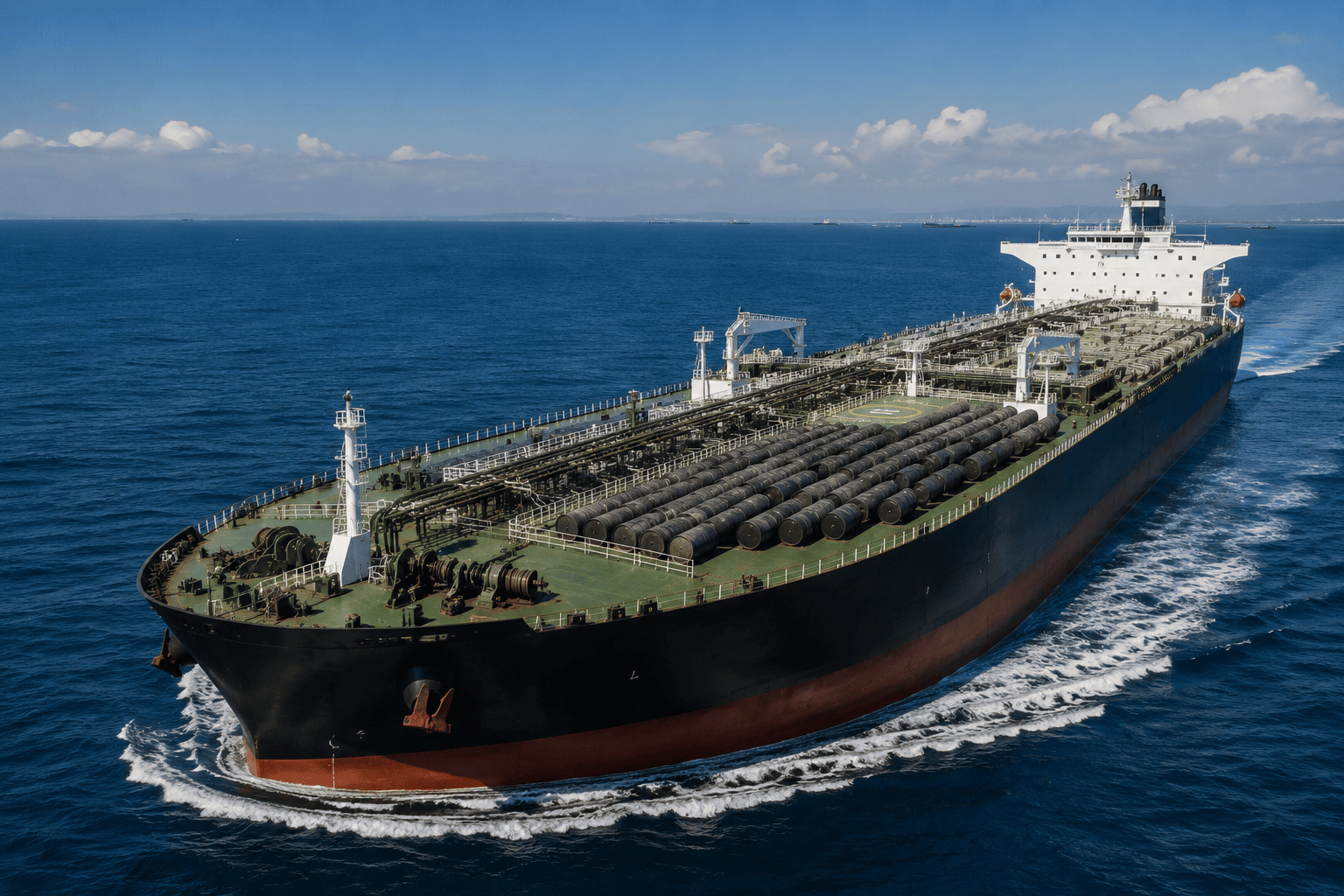
Hormuz shipping under scrutiny
The immediate worry is no longer just Iranian production but whether commercial vessels can transit Hormuz safely. According to Kpler data, only five commodity ships were recorded passing through the strait on Monday, well below the 10-day average of 14, and no liquid tankers were observed. Before the conflict, the route handled roughly a fifth of global oil trade.
ANZ Research analysts told The Wall Street Journal that the latest strikes raise the prospect of prolonged supply disruption, as both sides appear prepared for a drawn-out confrontation rather than a quick diplomatic resolution. This backdrop is giving Brent, the global seaborne benchmark, a stronger geopolitical premium than WTI.
The market remains highly sensitive to any fresh tanker incidents, mine threats, or attacks on Gulf infrastructure.
Supply workarounds limit panic
Despite the heightened tensions, traders are not pricing a complete shutdown. Saudi Aramco has been offering more crude for loading outside Hormuz, including cargoes destined for China, while regional suppliers increasingly rely on pipelines, ship-to-ship transfers, and vessels operating with tracking systems switched off.
ING commodity strategists Warren Patterson and Ewa Manthey argue that actual oil flows are becoming harder to measure because of dark shipping and shuttle movements. Their assessment is that the key question is whether renewed strikes make shipowners less willing to enter Hormuz, rather than whether official statements describe the route as open.
There are also broader limits on the rally. The latest analyst survey puts the average 2026 Brent forecast at $85.08 and WTI at $80.20, with weak Chinese demand expected to offset part of the Middle East supply risk.
Oil rally feeds into rates
The crude surge is spilling beyond energy markets. The US 10-year Treasury yield climbed toward 4.78% on Tuesday, while Japan's 10-year yield touched 3%, as investors priced renewed inflation risk from higher energy costs.
That creates a feedback loop for oil. Stronger crude prices can reinforce expectations for tighter monetary policy, weakening growth and eventually demand. But persistent disruption around Hormuz keeps the supply side tight enough to prevent traders from ignoring geopolitical risk.
For context on how geopolitical tensions can shift quickly, see our recent coverage on Hormuz diplomacy trimming the risk premium and Iran-Oman talks easing fears.
This article is for informational purposes only and does not constitute financial advice.