Oil prices edged lower on Friday, but Brent's stubborn resistance to falling below $105 highlights a persistent problem: moving crude safely and cheaply remains difficult even as supply increases. Brent slipped about 0.7% to $105.21 a barrel, while West Texas Intermediate fell 0.8% to $97.20. Both benchmarks are set for weekly gains, with WTI up nearly 6%.
The Trump administration is considering easing restrictions on some sanctioned tankers to boost shipping capacity and lower freight rates. The International Energy Agency is also accelerating emergency fuel releases, including more than 20 million barrels of diesel. Yet traffic through the Strait of Hormuz remains impaired, keeping freight, insurance, and geopolitical costs embedded in crude prices.

Tanker Relief May Be Limited
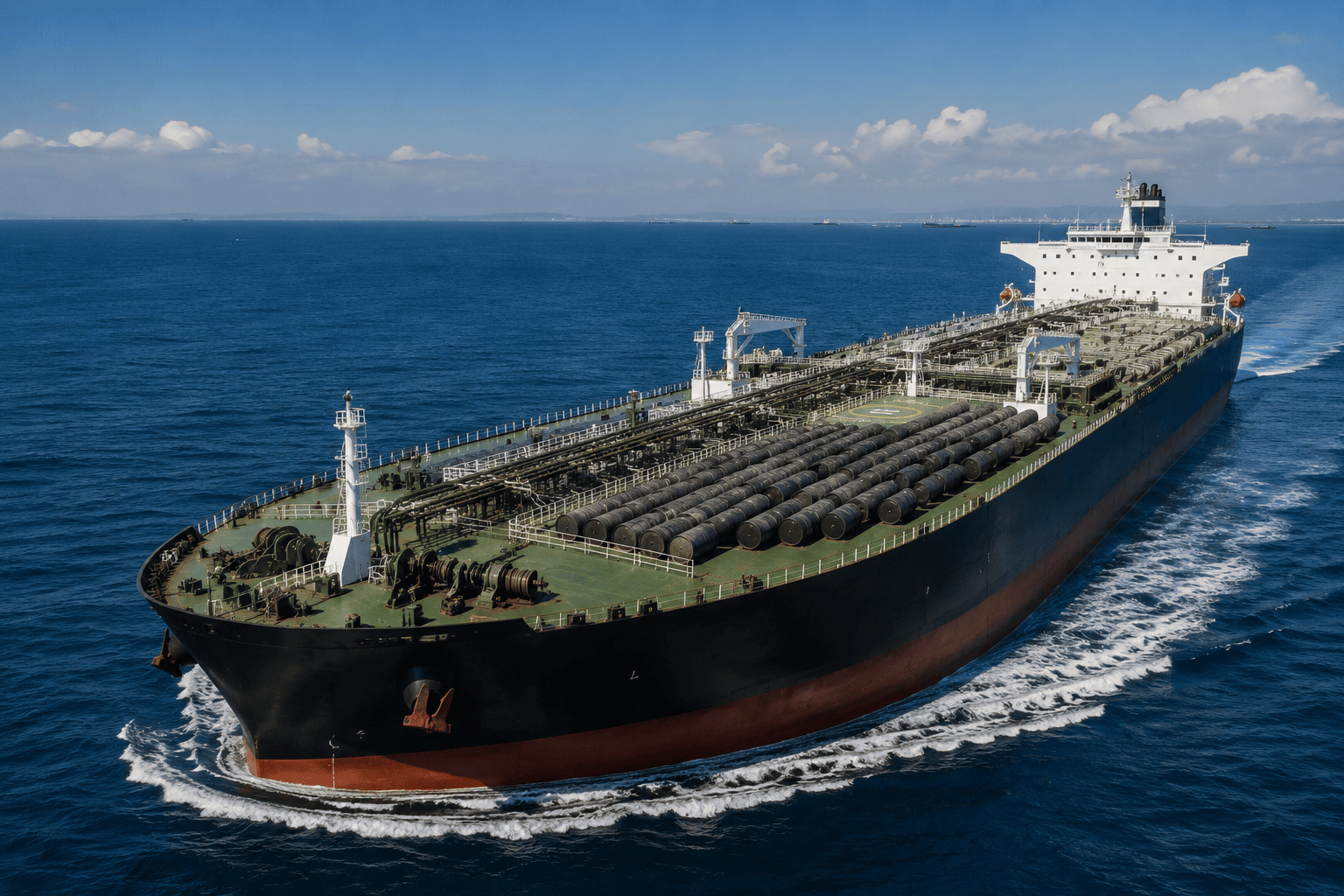
The proposed tanker relief targets logistics rather than production. A shortage of usable vessels has pushed tanker costs sharply higher, making some barrels expensive to deliver even when crude itself is available. The Financial Times reported that Washington sees tanker scarcity as an increasingly important contributor to elevated fuel prices.
However, the potential impact appears limited. Kpler analysts estimate that only around 24 of 160 sanctioned supertankers could realistically return to mainstream trading because many are too old, lack insurance or certification, or remain restricted by other governments. Their assessment suggests easing US sanctions alone would barely dent the tanker shortage.
Hormuz Remains the Real Constraint
Physical flows through the Gulf are still far from normal. Kpler data show Hormuz clearances averaged about 11.62 million barrels a day in the week through October 13, roughly 68% of the 17.15 million-barrel baseline. Analysts expect recovery to remain uneven while attacks continue.
Two Emirati vessels sank near the strait this week, and attacks on Saudi infrastructure plus renewed Iranian pressure on commercial shipping have kept war-risk insurance elevated. Goldman Sachs recently estimated Brent's geopolitical risk premium at about $22 a barrel, the second-highest monthly level on record. That helps explain why policy announcements have struggled to drive crude sustainably lower.
WTI's Surge Shows Physical Tightness
The US market is sending its own bullish signal. WTI jumped about 3% on Thursday after Energy Information Administration data showed crude inventories falling 8.6 million barrels in the latest week, alongside a 2.5 million-barrel diesel draw. Hurricane-related production outages contributed to the decline.
That helps explain why WTI is up almost 5.8% this week while Brent has gained less than 1%. The IEA is trying to cool the products market by accelerating roughly 100 million barrels of remaining emergency releases, including more than 20 million barrels of diesel. About 330 million barrels have already been released under the March programme.
Haitong Futures analysts argued that emergency supply measures can only do so much while Middle East tensions remain unresolved. Their view is that genuine geopolitical de-escalation, rather than incremental stock releases, would be needed to remove the larger premium from crude.
This article is for informational purposes only and does not constitute financial advice.