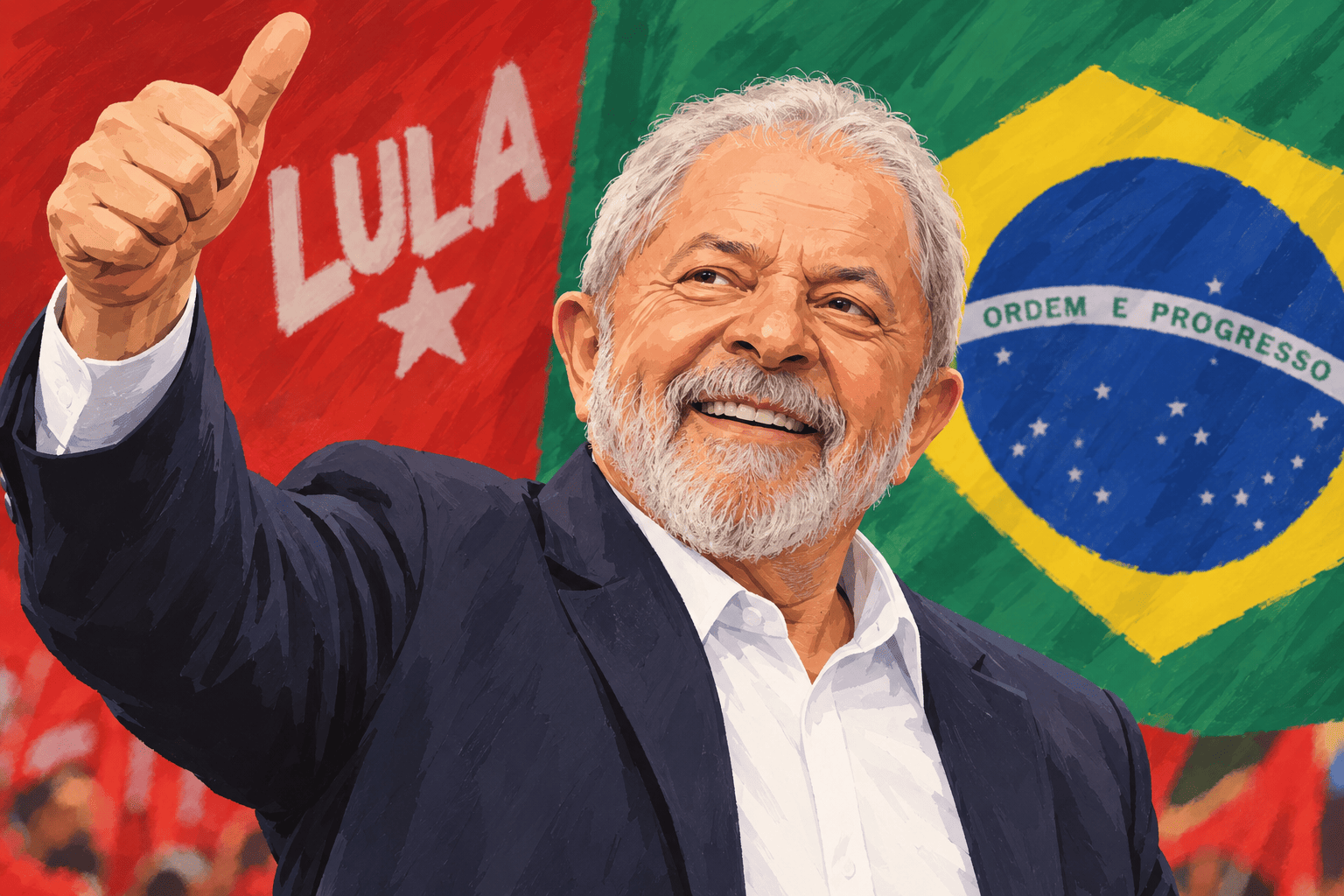
Brazilian financial markets are bracing for a turbulent session after Luiz Inácio Lula da Silva clinched a narrow victory in Sunday's presidential runoff, upending investor expectations of a shift toward fiscal conservatism. The leftist leader secured 51.8% of the vote, defeating right-wing candidate Flávio Bolsonaro and marking the first time since 1989 that a runner-up in the first round has come from behind to win the presidency.
The iShares MSCI Brazil ETF (EWZ) tumbled more than 27% in premarket trading on Monday, while Tokyo-listed Nomura NF Ibovespa Link ETF dropped 15%, reflecting the abrupt reversal in market sentiment. Investors had positioned for a Bolsonaro win, which was seen as a catalyst for spending cuts and deregulation.

Bolsonaro has refused to concede, alleging electoral fraud and raising concerns about potential unrest. According to Chris Turner, global head of markets at ING Think, the speed of Bolsonaro's acceptance of the result will be crucial for local markets. "Important for local financial markets will be how quickly Bolsonaro accepts the result – or at least allows the constitution to run its course," Turner wrote, noting that a similar move by his father in 2022 helped calm markets.
Investors Unwind Bets on Conservative Shift
In the weeks leading up to the election, Brazilian assets rallied on expectations of a Bolsonaro victory. The benchmark Bovespa index closed Friday nearly 7% above its pre-first-round level, and the real had appreciated almost 5% against the dollar. Interest-rate futures also reflected hopes that tighter fiscal policy would allow borrowing costs to decline.
Those positions are now being unwound. Turner had previously forecast gains in Brazil's currency and bond markets under a Bolsonaro administration, but now warns of a sharp reversal. "Expect Brazilian markets to be hit hard," he said, predicting the real could gap 5-7% higher against the dollar to the 5.20/25 area, while the Bovespa could see double-digit losses. He added that the fiscal situation remains Brazil's Achilles heel, with a 7-8% budget deficit and net debt at 70% of GDP leaving the country vulnerable in a global bond selloff.
Fiscal Challenges Loom Large
Lula's four-year term will be defined by the challenge of slowing public debt growth while preserving social programs and investment. Investors will scrutinize whether his gradual approach to fiscal adjustment can restore confidence and eventually reduce borrowing costs. Without a credible plan, lenders may demand higher interest rates, increasing debt servicing costs and making credit more expensive for businesses and households.
Viktor Szabó, investment director for emerging market debt at Aberdeen Investments, highlighted the pace and scale of Lula's proposed fiscal consolidation as a key concern. Lula has pledged to improve public finances but at a slower pace than his rival, with conditions to protect lower-income Brazilians. Government projections show the primary balance improving gradually to a surplus of 1.3% of GDP by 2030.
Szabó argued that measures like cutting campaign funding and public-sector salaries, proposed by Lula's running mate Geraldo Alckmin, would be insufficient. "Brazil has little room left for this kind of politics," he said. Gross public debt has climbed to around 83% of GDP, up more than 10 percentage points during the current administration, and a deficit close to 10% of GDP is now almost entirely interest. "Brazil pays one of the highest real interest rates in the world on a debt that keeps growing, which is the definition of an unsustainable path," he added.
Investors Demand a Credible Fiscal Plan
Alejo Czerwonko, chief investment officer for emerging markets at UBS Global Wealth Management, said investors need clear evidence that Lula's administration will stabilize the debt trajectory. "Investors want a clear and credible commitment to fiscal discipline," he said. He expects the post-first-round rally to be largely priced out, with sentiment staying weak until a credible fiscal plan emerges.
That plan would need to include an end to campaign-related spending and a believable path toward stabilizing public debt, as well as a working relationship with an opposition-leaning Congress. Lula's administration is expected to pursue a gradual approach, building on the existing fiscal framework while preserving public investment and social spending. Goldman Sachs analysts anticipate "modest measures" to contain spending growth, alongside further increases in an already high tax burden.
This article is for informational purposes only and does not constitute financial advice.