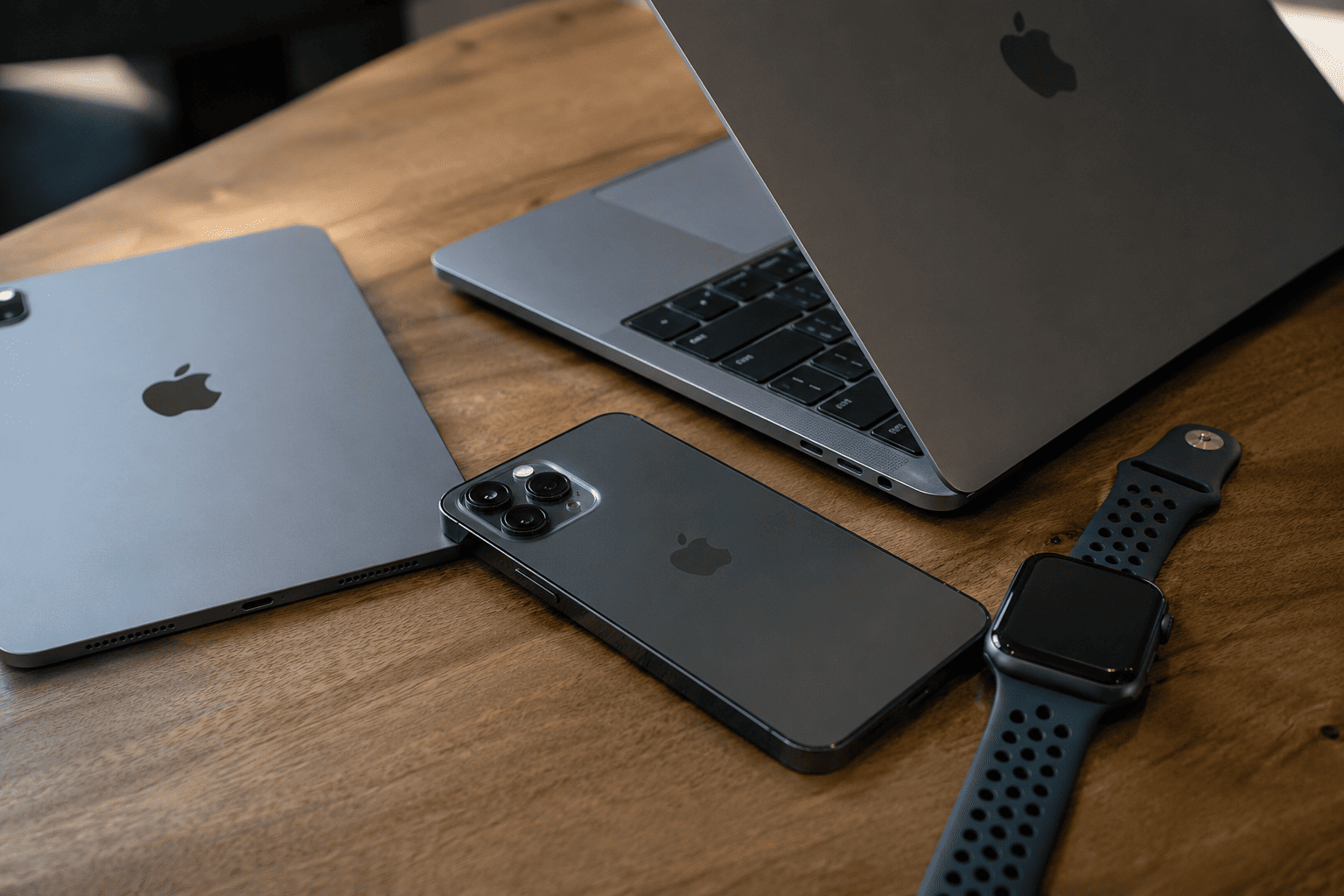
Apple Inc. (AAPL) shares declined approximately 1.7% to $311.91 on Tuesday after KeyBanc Capital Markets downgraded the technology giant, pointing to decelerating hardware demand and valuation concerns. The stock has since recovered some losses and was trading down 0.46% at the time of writing.
KeyBanc's Bearish Stance
Analyst Brandon Nispel lowered his rating on Apple to Underweight from Sector Weight and set a price target of $250, implying roughly 21% downside from Monday's closing price. In a research note, Nispel highlighted that KeyBanc's spending checks indicated "another month of below-trend growth" for Apple in June, with growth momentum fading after a boost earlier in 2025.
Nispel pointed to sluggish iPhone sales, weaker demand for Macs and iPads, and the potential spillover effects on Apple's high-margin services segment, which includes iCloud and Apple Music. He argued that the combination of slowing hardware demand and softer services growth makes the stock appear "too expensive." Apple currently trades at about 36 times expected fiscal 2026 earnings, above both its five-year historical average and the broader S&P 500.
According to Nispel's analysis, June indexed hardware spending fell 2% month over month, compared with a three-year average growth rate of 9%, suggesting U.S. demand has normalized after last year's tariff-driven surge. He also expects slower iPhone production, weaker upgrade activity in the United States, and reduced device subsidies to weigh on future growth. In his view, consensus forecasts for iPhone, Mac, iPad, Wearables, and Services through 2027 are too optimistic and may require downward revisions.
Wall Street Bulls Remain Confident
Despite the downgrade, Apple continues to enjoy broad support from analysts. The stock has gained 1.4% over the past week, 6.4% over the past month, and 51% over the past year. Wall Street currently maintains a Moderate Buy consensus, with an average 12-month price target of $327.20.
Morgan Stanley analyst Erik Woodring reiterated his Buy rating and maintained a $360 price target. Woodring emphasized Apple's pricing power as a key advantage, arguing that demand for major products remains resilient even as prices increase. He noted that "demand for key devices such as the iPhone, Mac, and iPad is relatively insensitive to price changes, allowing Apple to raise prices without materially weakening unit demand, while also protecting margins as component costs rise." He also expects higher iPhone pricing and new AI-focused products to support earnings growth over the coming years.
Evercore ISI analyst Amit Daryanani also maintained a Buy rating on Apple and set a $365 price target.
Price Increases and Future Growth
Apple announced in late June that it would increase prices for MacBooks and iPads as memory component costs continue to rise. Woodring believes upcoming iPhone price increases, combined with Apple's product roadmap featuring new form factors and AI-enhanced user experiences, could lift both near-term and fiscal 2027 earnings per share.
For context, Apple's recent moves in AI and hardware have drawn attention. In a related development, Apple gained $600 billion as its cautious AI strategy paid off, with a foldable iPhone seen as a potential catalyst. Additionally, JPMorgan raised its price target on Apple, arguing that price hikes are unlikely to dampen demand.
While KeyBanc's downgrade introduces a note of caution, the broader analyst community remains optimistic about Apple's ability to navigate headwinds through pricing power and innovation. Investors will be watching upcoming earnings reports for signs of whether hardware demand stabilizes or continues to soften.
This article is for informational purposes only and does not constitute financial advice.