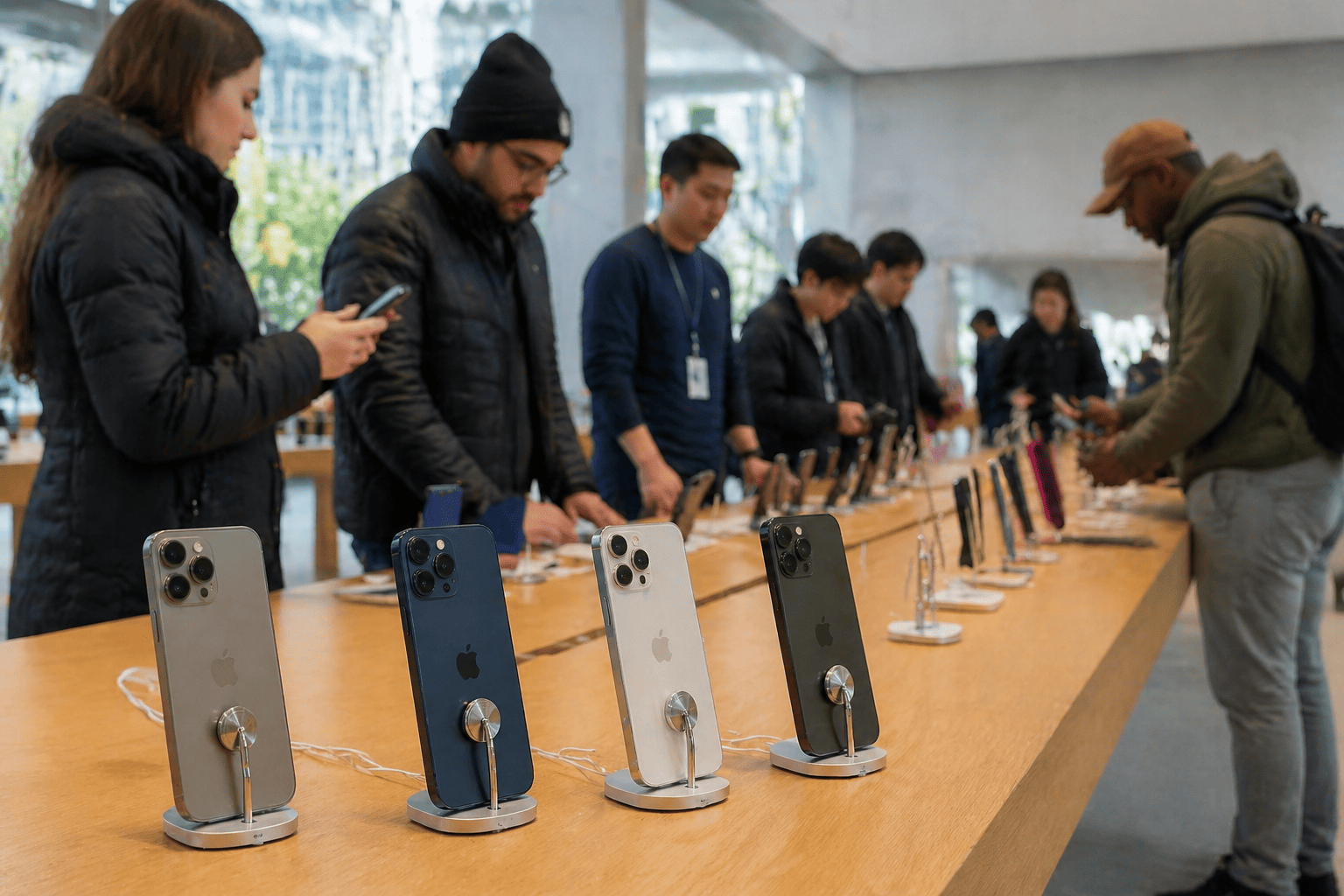
Apple (NASDAQ:AAPL) remains in the spotlight Thursday after reports of an aggressive iPhone launch cycle, but the stock's elevated valuation and mounting cost pressures are giving investors pause. The company is reportedly preparing at least five new iPhone models across the second half of 2026 and the first half of 2027, according to Nikkei Asia, while also raising its foldable iPhone production target to around 10 million units this year, up from an earlier forecast of 7 million to 8 million.
Ambitious Product Cycle Meets Cost Headwinds
The expanded lineup would mark one of Apple's most ambitious hardware pushes in years, directly entering the foldable market currently contested by Samsung and Huawei. For bulls, the timing could drive a powerful upgrade cycle. Morgan Stanley analysts have outlined a path to over 250 million iPhone shipments in fiscal 2027, supported by stronger upgrade rates and the foldable debut. Their bull case values Apple at $376 if foldables and AI features spur demand.

However, the optimism is tempered by a challenging cost environment. The AI data-center boom has tightened supply of DRAM and NAND chips, key components in iPhones, iPads, and Macs. According to JPMorgan data, memory could account for roughly 45% of iPhone production costs by 2027. That leaves Apple with a difficult choice: absorb higher costs and squeeze margins, or pass them to consumers and risk dampening upgrade demand.
Apple already raised prices on Macs, iPads, and other products in June due to memory cost inflation, triggering a 6.12% drop in the stock to $275.15 on June 25. The broader Asia tech rout deepened as memory suppliers like SK Hynix and Samsung slid on Apple's cost warning.
Wall Street Split on Valuation and Outlook
Analyst opinions remain sharply divided. KGI Securities downgraded Apple to Hold from Outperform with a $315 price target, signaling limited upside after the stock's strong run. Jefferies recently downgraded Apple to Underperform, warning that expectations around upcoming iPhone models and the upgrade cycle had become unrealistic.
On the bullish side, TD Cowen raised its Apple target to $350 from $335 and maintained a Buy rating. Maxim Group also lifted its target to $350 from $310, with analyst Tom Forte noting that Apple's WWDC presentation showed "meaningful improvements" in its AI efforts, which could support both services and hardware sales.
Memory Cost Pressures and Competitive Dynamics
The memory cost issue extends beyond Apple. The DRAM ETF has plunged 22.75% from its peak amid shifting cloud plans and sourcing changes. Apple's foldable push also intensifies competition with Samsung and Huawei, potentially pressuring their pricing power and volume growth in the foldable segment.
For Apple, the key risk is whether it can protect iPhone margins while executing this ambitious product blitz. If memory costs continue to rise and Apple is forced to raise prices again, upgrade demand could disappoint. Conversely, if Apple manages costs effectively, the stock could see significant upside from the anticipated upgrade cycle.
This article is for informational purposes only and does not constitute financial advice.