Apple's shares advanced 1.66% on Thursday, bucking a broader market downturn, as investors weighed the company's latest hardware releases and analyst commentary on its growth trajectory. The Nasdaq Composite fell 1.24% and the S&P 500 slipped 0.29%, pressured by disappointing quarterly results from Alphabet that reignited concerns about artificial intelligence spending.
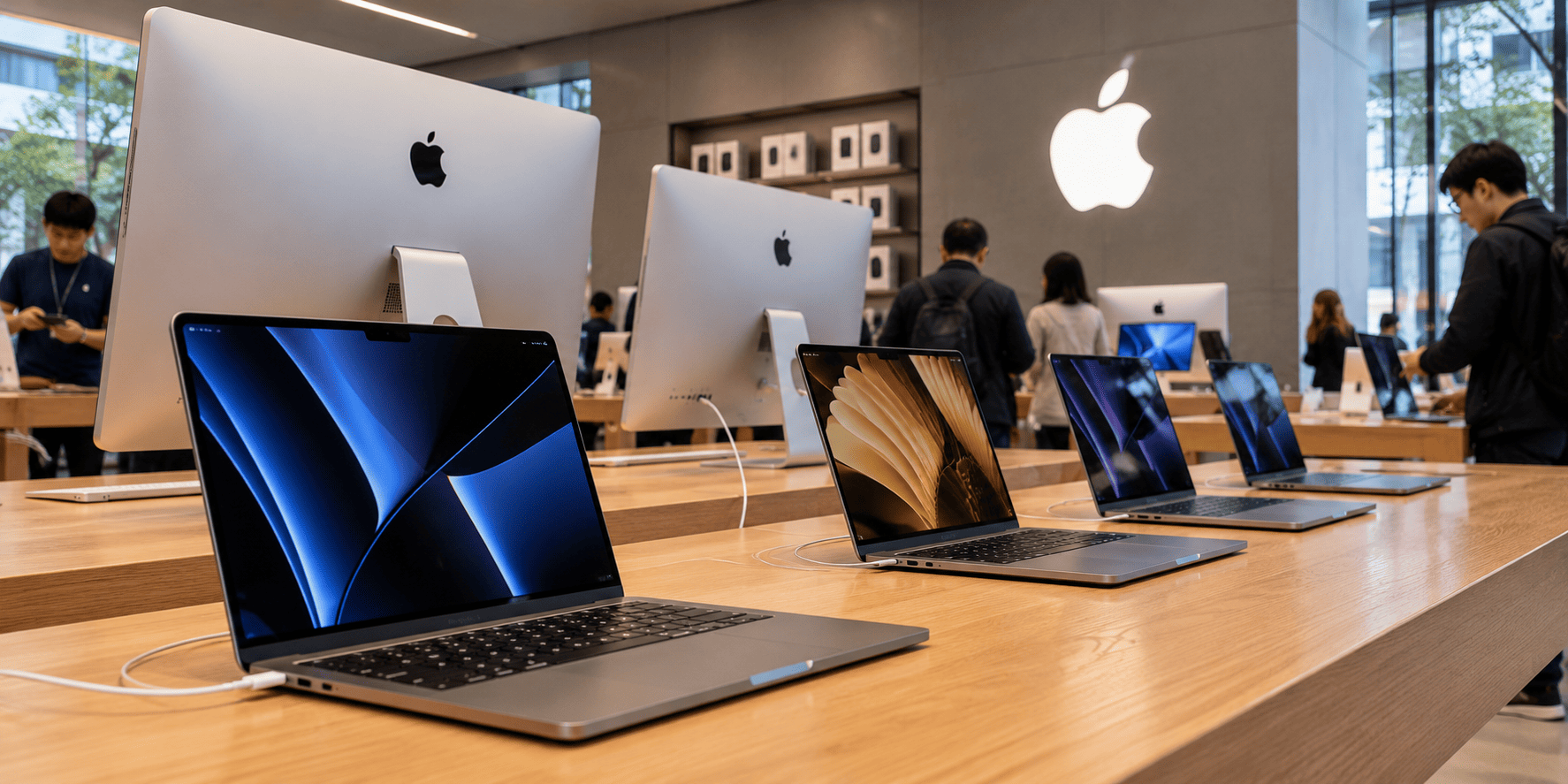
The tech giant unveiled a new MacBook Pro with a touchscreen display, a notable shift from its previous laptop design philosophy. The device incorporates OLED technology, which Apple says delivers enhanced brightness, color accuracy, and viewing angles. Powered by the M5 Pro or M5 Max chips, the laptop runs macOS and is slated for release on November 6. The 14-inch model starts at $2,899, while the 16-inch version begins at $3,399, both representing price increases over prior models.

This launch marks the third major product introduction under CEO John Ternus, signaling a faster cadence of hardware updates. Apple also introduced a new iMac, drawing positive reactions from analysts.
Goldman Sachs reiterated its Buy rating on Apple, noting that the latest MacBook, iMac, and iPad models, along with broad-based price hikes, should support revenue growth and competitive positioning. The bank also emphasized that a more premium product mix could help offset near-term supply constraints and weakness in PC and tablet markets.
Analyst Dan Ives of Yorkville Ives maintained an Outperform rating and a $400 price target, highlighting the capabilities of Apple's M6 chip, including its 12-core CPU and 12-core GPU, as well as neural processing improvements designed for on-device AI workloads. According to Ives, the chip offers up to 25% faster on-device large language model prompt processing compared with the M5, while Apple claims up to 13 times faster time to first token versus its M1-based machine.
Ives also pointed to Apple's disclosures suggesting that expanded access to certain server-side Apple Intelligence features, including AI-powered Siri functions, could eventually require a fee. This indicates Apple intends to generate direct revenue from AI through its Services business, rather than relying solely on hardware upgrades. The potential for additional services revenue could become a key component of Apple's growth outlook as it expands its AI capabilities.
Meanwhile, Apple faces customer complaints about cracked screens on its new foldable iPhone Duo. Social media reports over the weekend described cracks along the central crease after users unfolded their devices. Despite these issues, HSBC analyst Nicolas Cote-Colisson maintained a Buy rating on Apple with a $366 price target, noting that sales of the foldable smartphone appear promising despite display problems affecting a small number of units.
Overall, Apple's latest product cycle and AI monetization potential are drawing analyst support, even as broader market sentiment remains cautious amid AI spending concerns.
This article is for informational purposes only and does not constitute financial advice.