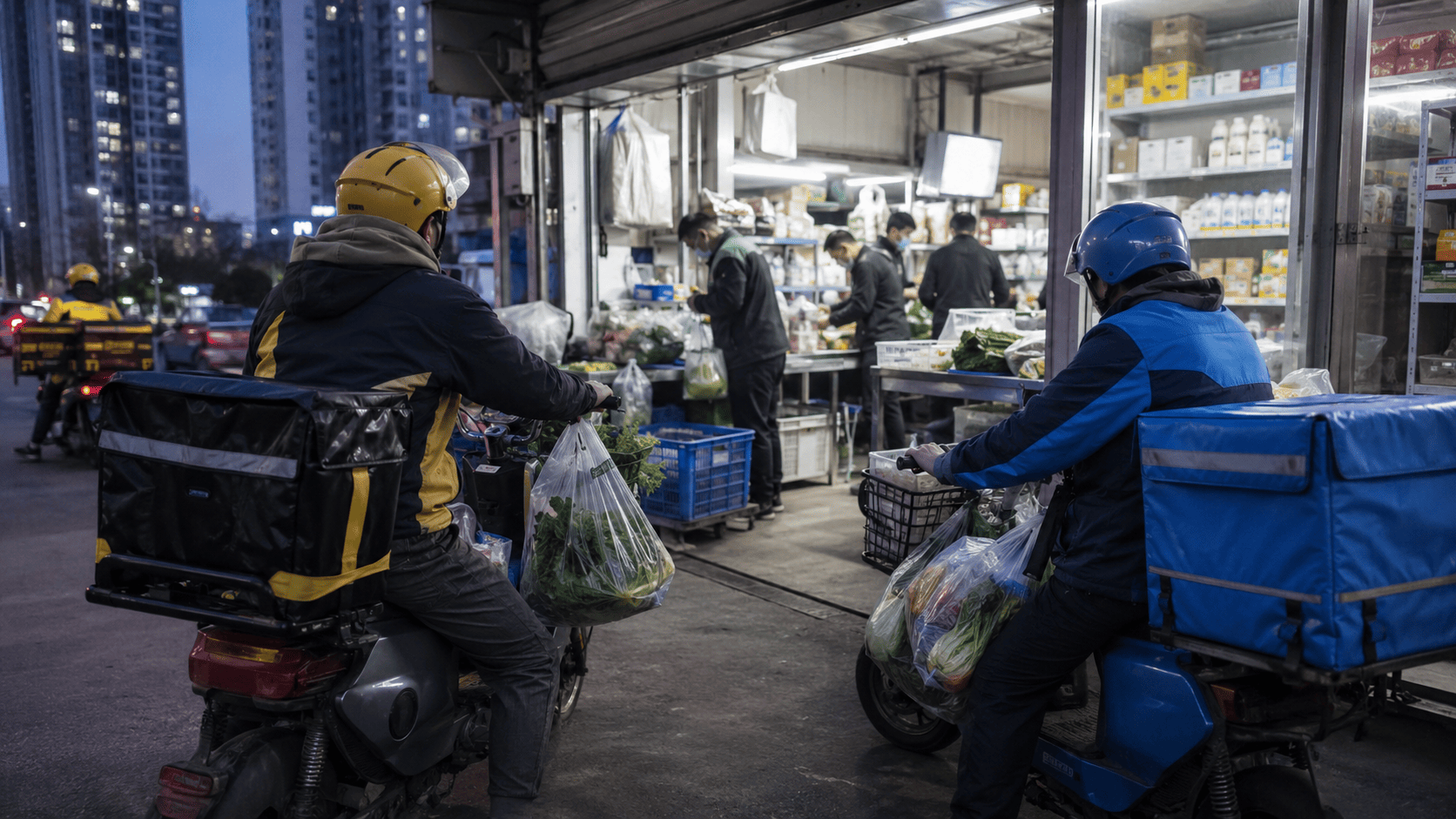
Alibaba has reportedly made a $1.5 billion offer to acquire Chinese grocery delivery company Pupu, more than double the $600 million bid previously submitted by Sun Art Retail, according to Bloomberg. The move underscores Alibaba's aggressive push to secure a foothold in China's fiercely competitive instant retail market, where speed and logistics are paramount.
Why Pupu Matters
Pupu, based in Fujian province, is one of the last major independent players in China's front-warehouse grocery sector. The company generates annual revenue exceeding 30 billion yuan (approximately $4.2 billion) and operates a network of local warehouses that stock fresh food, daily essentials, and fast-moving consumer goods. Its model enables deliveries within 30 minutes across several provinces, a capability that Alibaba views as a critical asset in the race to capture consumer habits beyond restaurant meals.

China's instant retail market has evolved rapidly, with consumers now expecting rapid delivery of fruit, meat, milk, medicine, snacks, and household products. The company that controls this habit gains not only grocery sales but also daily access to the consumer, making Pupu's dense delivery network a strategic prize.
The Competitive Landscape
The value of Pupu has risen as the field of independent players has thinned. In February, Meituan agreed to acquire Dingdong's China business for $717 million, consolidating another front-warehouse grocery platform. This left Pupu as one of the few sizable independent assets available. If Alibaba does not act now, it may miss the opportunity to acquire a similar target, especially as rivals like Meituan and JD.com continue to invest heavily in instant retail.
According to 36Kr, Meituan, Alibaba, and JD.com collectively burned at least 150 billion yuan over the past year competing in food delivery and instant retail. Daily order volumes, once around 80 million to 90 million, crossed 200 million at the peak of the battle. The economics were brutal: a securities analyst cited by 36Kr estimated that at the worst point, Meituan was losing about 2 yuan per order, while rivals were losing as much as 6 yuan per order.
A Strategic Shortcut
For Alibaba, acquiring Pupu offers an operational shortcut. Instead of spending years building warehouse density, supplier relationships, cold-chain systems, and local delivery habits city by city, it can plug an existing network into its own ecosystem. This approach could reduce the need for endless subsidies, which have plagued the sector.
The comparison with Meituan is instructive. Meituan has long used food delivery as an entry point into broader local commerce. Alibaba is attempting to do the same from the other direction: turning its e-commerce traffic into daily-use quick commerce traffic. By integrating Pupu's network, Alibaba could accelerate its strategy to compete in the 150 billion yuan war for China's instant retail market.
This bid also comes amid broader shifts in China's economy. For context, China's Q1 GDP exceeded forecasts at 5% growth, but the property sector remains weak, highlighting the importance of consumer-driven sectors like instant retail. Additionally, Apple's iPhone shipments jumped 20% in China, signaling resilient consumer demand in certain segments.
What's at Stake
The reported bid is not just about buying a grocery delivery company; it is a bet on frequency, logistics, and consumer habit. For Alibaba, Pupu offers something difficult to build quickly: a dense 30-minute delivery network in a market where Meituan, JD.com, and Alibaba have already spent heavily to win the next phase of Chinese retail. The outcome of this bid could reshape the competitive dynamics of China's instant retail landscape.
This article is for informational purposes only and does not constitute financial advice.