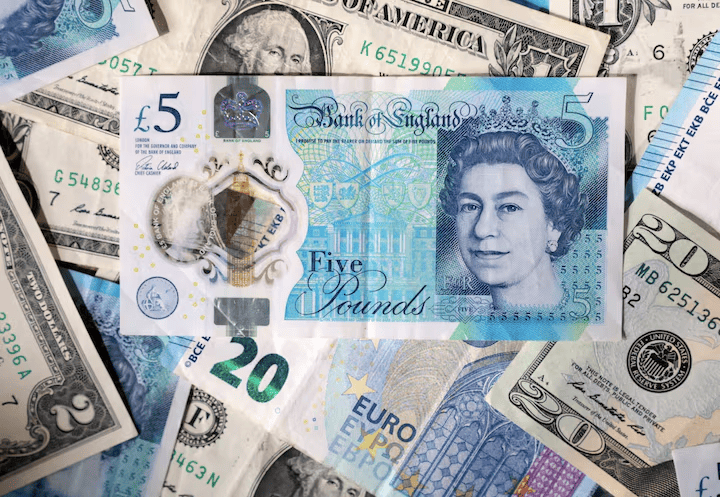
The British pound is on track for its strongest weekly performance against the US dollar in three months, supported by a combination of easing domestic political risks and a weaker greenback following disappointing US employment figures.
Sterling rose 0.1% to $1.3357 on Friday, bringing its weekly advance to 1.2% — the largest such gain since early April. The currency has been buoyed by a shift in market expectations regarding the Federal Reserve's rate path, after the latest US jobs report showed the economy added fewer positions than anticipated.
The softer labor market data has tempered expectations that the Fed will continue raising interest rates, putting downward pressure on the dollar and providing a tailwind for the pound. This dynamic has been a key driver of sterling's recent rally, as investors recalibrate their outlook for monetary policy divergence between the US and the UK.
Political Concerns Ease
Earlier in the week, British financial markets showed signs of unease after Labour lawmaker Andy Burnham, the only party figure to publicly express interest in replacing outgoing Prime Minister Keir Starmer, gained support for a potential leadership challenge. Burnham had previously stated that the country needed to move beyond being 'in hock to the bond markets,' a comment that raised concerns among some investors about a possible shift away from the government's existing borrowing commitments.
However, market sentiment improved after Burnham reaffirmed his commitment to the country's current fiscal rules, which include balancing day-to-day government spending through tax revenues and reducing debt as a share of economic output. His reassurance helped ease investor concerns over fiscal discipline, allowing the pound to extend its gains.
Pound Slips Slightly Against the Euro
Against the euro, sterling edged lower to 85.73 pence, after touching 85.47 pence the previous day — its strongest level in a year. The euro's modest recovery came as geopolitical tensions in the Middle East showed signs of easing, with oil supplies gradually resuming from the region.
Despite the easing of hostilities in Iran, financial markets continue to assign a higher probability to a Bank of England interest rate hike than a rate cut later this year. This reflects persistent inflation concerns and the central bank's hawkish stance.
Bank of England Signals Remain in Focus
Attention also remained on comments made by Bank of England rate-setter Catherine Mann on Thursday. Mann noted that looser financial conditions since the Bank's June policy meeting would be an important factor when policymakers meet again in July. She also stated that she would be prepared to support a rate increase if higher inflation expectations following the US-Iran war reduce the likelihood of inflation returning to the Bank's 2% target.
Money market futures currently imply around a 70% chance of a Bank of England rate hike by the end of the year. Before the Middle East conflict, investors had expected the central bank to deliver two interest rate cuts during 2026. This shift in expectations has provided additional support for the pound.
For broader context, European stocks have also been hitting new highs, driven by optimism over interest rate trajectories. Meanwhile, the evolving landscape for AI and tech stocks, as highlighted by Michael Burry's short position on Micron, underscores the complex interplay between monetary policy and market sentiment.
This article is for informational purposes only and does not constitute financial advice.