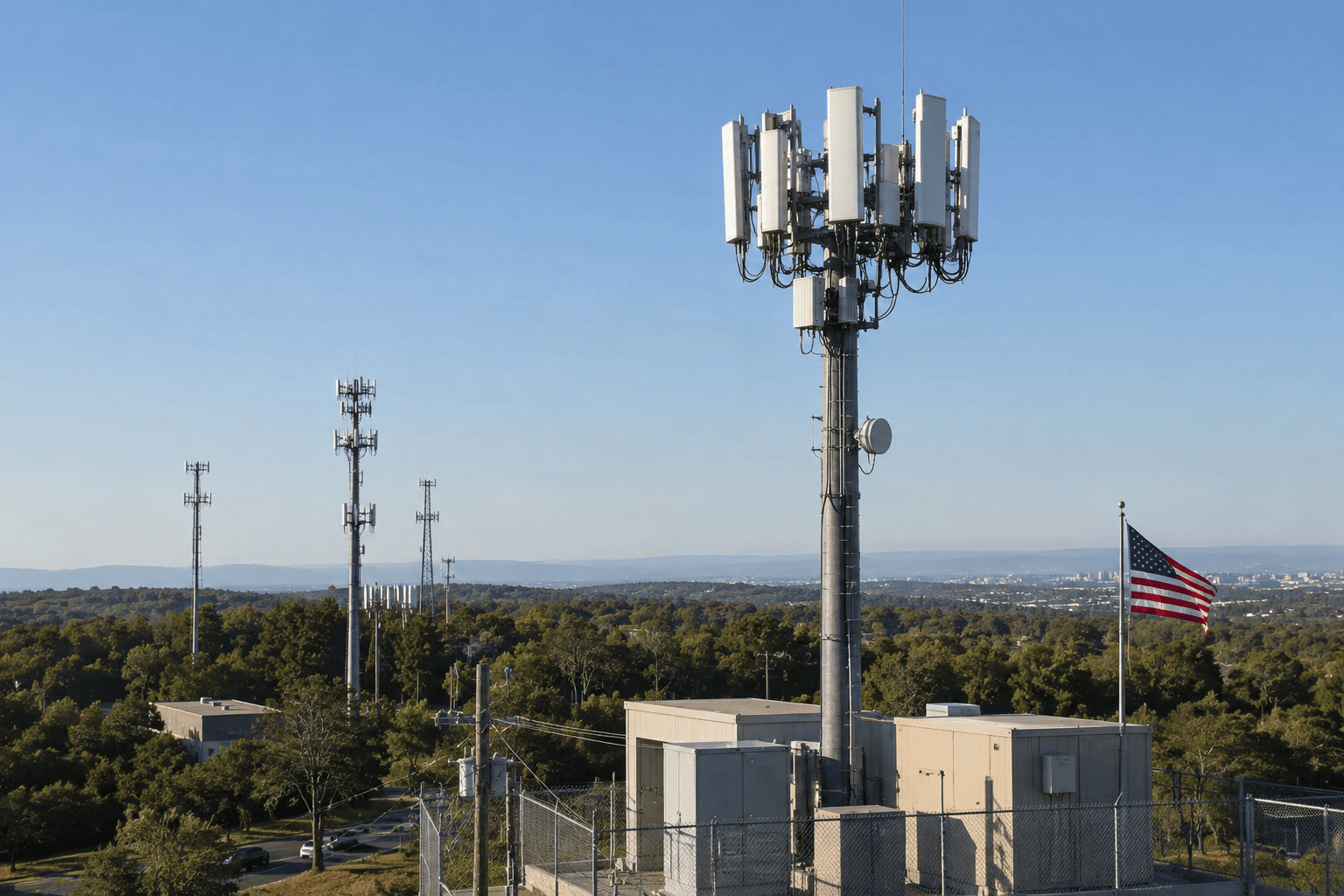
Wall Street is increasingly factoring SpaceX's expanding telecom ambitions into its valuations of major US communications companies. Research firm Bernstein on Monday reduced price targets for five leading telecom operators, pointing to the growing competitive pressure from SpaceX's Starlink satellite broadband service.
Target Reductions Across the Sector
Bernstein cut its price target for Verizon to $44 from $49, maintaining a “Market Perform” rating. The revised target implies roughly 3% upside from current levels. AT&T saw its target lowered to $25 from $30, though the stock retained an “Outperform” rating. T-Mobile's target was reduced to $220 from $245, also with a “Market Perform” rating.
Cable operators faced steeper cuts. Comcast's target fell to $28 from $32, while Charter Communications saw its target drop to $170 from $210. Both retain “Market Perform” ratings, with Charter's new target still implying roughly 29% upside.
These adjustments come after reports that SpaceX is preparing to launch a direct-to-consumer Starlink mobile service and exploring plans to build its own terrestrial wireless network in the United States. For more on SpaceX's market positioning, see SpaceX Stock Hovers Near $135 IPO Price as Analysts Maintain 70% Upside Target.
Starlink's Growing Competitive Threat
While Bernstein does not expect Starlink to materially disrupt incumbent operators in the near term, the firm believes its expansion introduces another competitor into an already saturated broadband market. A Starlink mobile offering could intensify competition further, making subscriber growth increasingly dependent on winning customers from rival operators rather than attracting first-time users.
Investor perception of Starlink has shifted significantly over the past year. Initially viewed as a niche service for rural communities without reliable cable or fiber internet, rapid subscriber growth and expansion into commercial aviation have led analysts to reconsider its long-term competitive position. Starlink has doubled its subscriber base annually in recent years and secured broadband agreements with airlines including American Airlines and United Airlines.
Wolfe Research analyst Peter Supino recently described Starlink as “a comet bearing down on broadband incumbents,” reflecting growing concern that SpaceX could steadily capture broadband market share from cable operators such as Charter and Comcast, while also posing a longer-term challenge to fiber providers including Verizon and AT&T.
Cable Operators Most Exposed
Among major telecom companies, analysts generally view cable operators as the most vulnerable because broadband accounts for the bulk of their profits and their businesses rely heavily on aging network infrastructure. Although Starlink's immediate impact is expected to remain limited, analysts increasingly believe the company's ambitions warrant closer attention as SpaceX expands beyond satellite internet into broader telecommunications services.
The report also drew attention from television personality Jim Cramer, who said during CNBC's Mad Dash segment, “I don't want to own AT&T or Verizon,” referencing Bernstein's revised outlook.
For additional context on SpaceX's financial trajectory, see MEXC Q2 Report: SpaceX Futures Hit $7.1B as Platform Bridges Pre-IPO to Real Stocks and Evening Digest: Oil Jumps on Hormuz Toll Plan; SpaceX Slides 4%.
This article is for informational purposes only and does not constitute financial advice.