Rocket Lab (NASDAQ: RKLB) shares have entered a local bear market, declining approximately 25% from their 2025 peak of $151 to trade near $113.65. The pullback has trimmed the company's market capitalization from over $86.8 billion to roughly $65 billion, raising questions about whether further downside is ahead or if a rebound is imminent.
Broader Space Sector Weakness
The decline in Rocket Lab stock is not an isolated event. Other space-focused equities have also retreated sharply in recent weeks. Planet Labs shares fell from a year-to-date high of $51.70 to $32, while Virgin Galactic (SPCE) dropped 54% from $8.90 to $4.12. The Procure Space ETF (UFO) declined from $68.30 to $54.85, and the Tema Space Innovators ETF (NASA) slipped from $42.65 to $33.30.
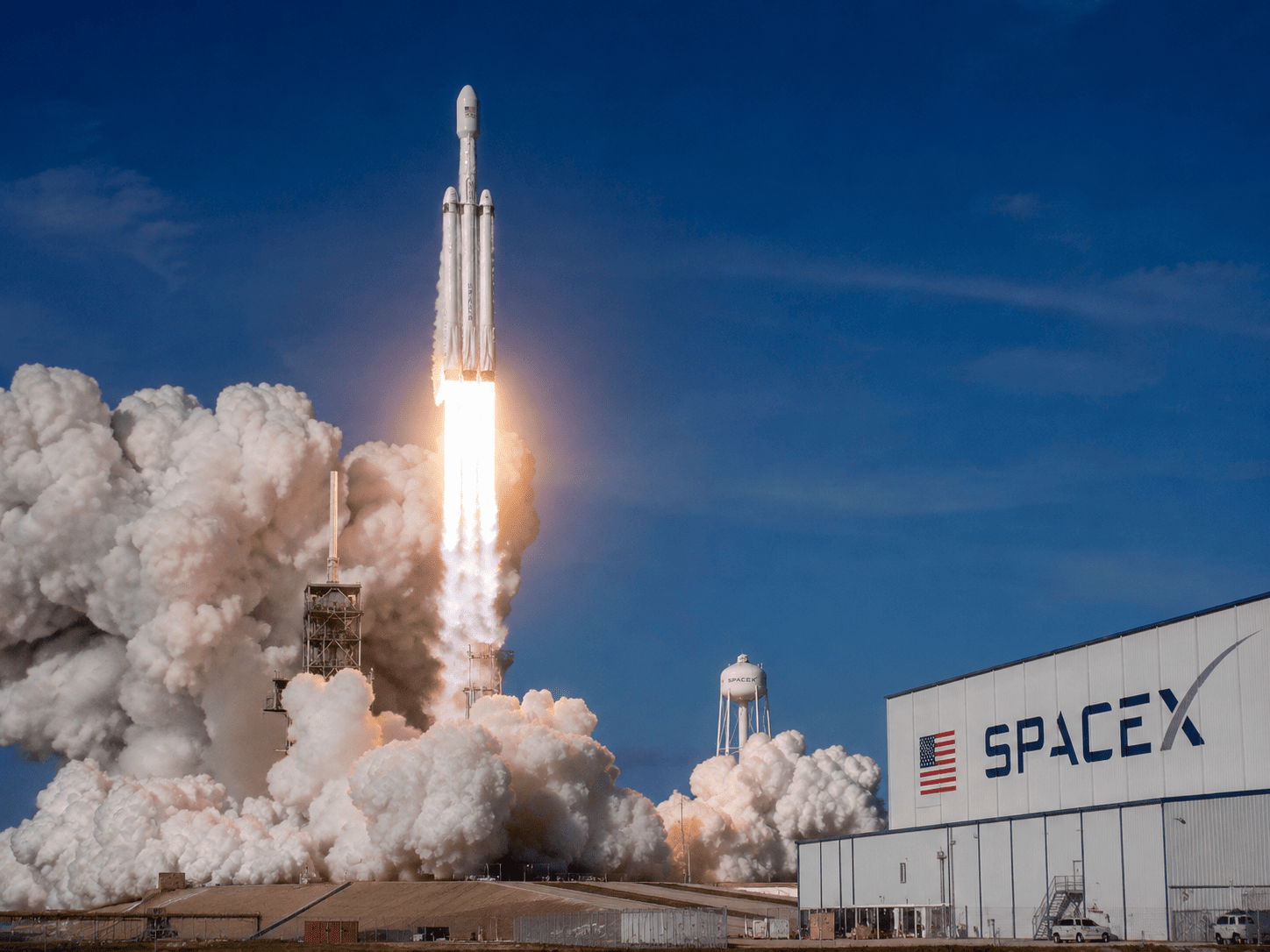
This synchronized sell-off appears driven by profit-taking after a massive rally in the sector. Prior to the pullback, Rocket Lab stock had surged over 3,435% from a low of $4.26 in 2024 to its 2025 high of $150. Such parabolic moves often invite profit-taking, especially when a major catalyst looms—in this case, the anticipated SpaceX initial public offering (IPO), which could be the largest in history with a potential raise exceeding $75 billion.
Rocket Lab's Fundamentals Remain Solid
Despite the stock's recent weakness, Rocket Lab's business fundamentals continue to strengthen. The company provides end-to-end space services, including launch, spacecraft design and manufacturing, and optical systems. Its workhorse Electron rocket has a payload capacity of 300 kilograms, while the upcoming Neutron platform will offer 8,000 kg of payload capacity.
In the most recent quarter, Rocket Lab reported revenue of $200.3 million, a 63.5% increase year-over-year and an 11.5% sequential gain. The company completed six launches during the quarter and ended with a backlog of over 70 launches. Analysts project first-quarter revenue of $231 million (up 60% YoY), with full-year 2025 revenue expected to reach $914 million (up 52%) and $1.29 billion in 2026.
Technical Analysis Points to $100 Support
From a technical perspective, Rocket Lab stock remains above its 50-day exponential moving average (EMA) and is holding just above the key support level of $100—the stock's highest point on January 16. The relative strength index (RSI) has dipped below the neutral 50 level, indicating bearish momentum in the near term.
The most likely scenario, based on chart patterns, is a further decline toward the $100 support zone before buyers step in. This level has historically acted as resistance and could now serve as a launchpad for a rebound, particularly if the broader market stabilizes and the SpaceX IPO narrative re-energizes investor interest in the space sector.
For context, similar pullbacks have occurred in other high-growth names. For instance, Samsung rebounded 5% after a circuit breaker crash, and Nvidia stock rebounded 2% on AI deals, showing that sharp corrections can create buying opportunities.
Investors will closely watch whether Rocket Lab can hold the $100 level. A break below that could signal deeper losses, while a bounce from support would confirm the uptrend remains intact.
This article is for informational purposes only and does not constitute financial advice.