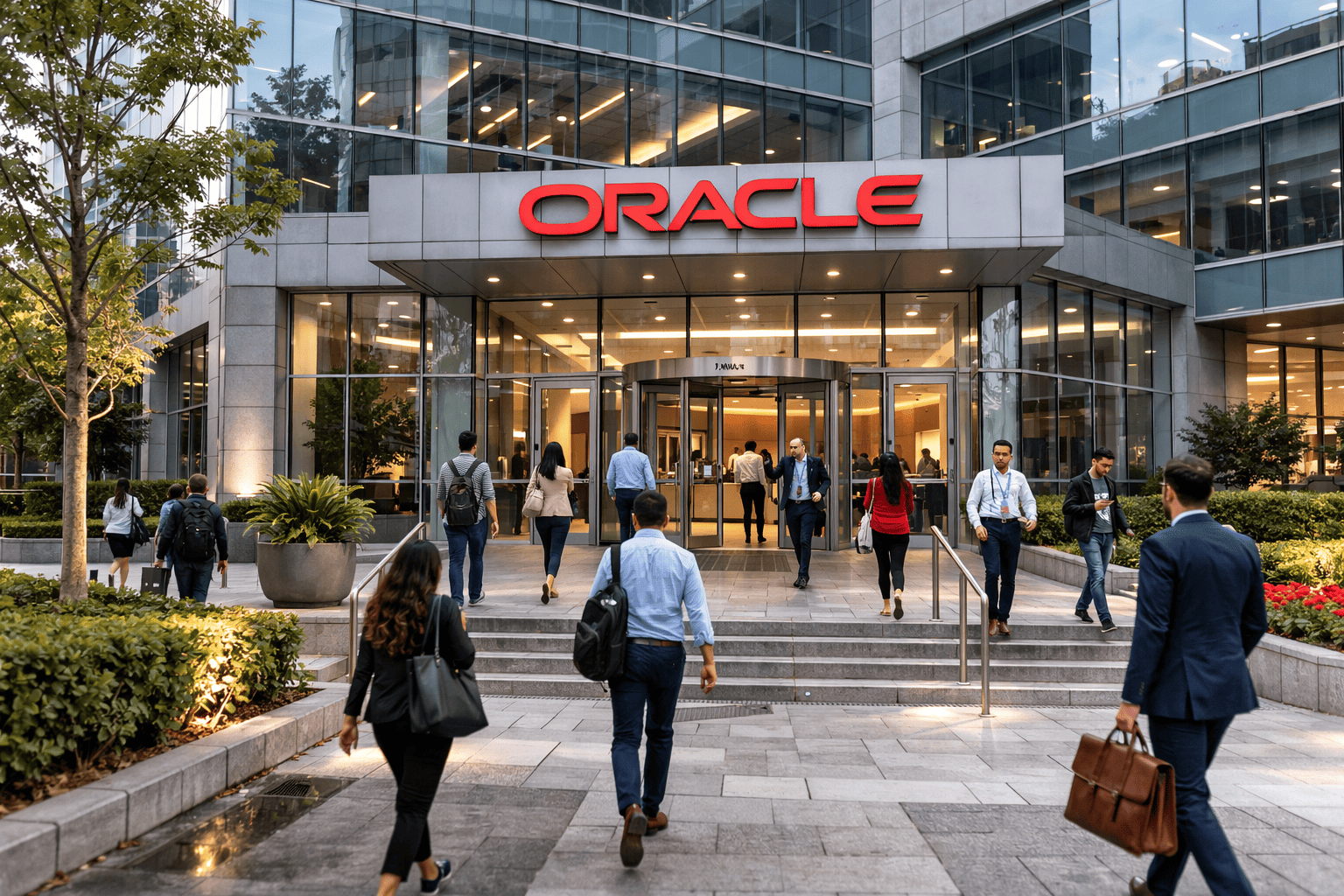
Oracle's stock (ORCL) slid 4% to $123.94 on Thursday, extending a sharp decline that has left shares down 36% in 2026 and on pace for their worst annual performance since 2001, according to Dow Jones Market Data. Over the past 12 months, the stock has dropped 54%, including a 16% slide in the last month.
The selloff comes despite robust demand for Oracle's cloud and AI services, with analysts at Cantor Fitzgerald and Evercore ISI arguing that concerns about the company's debt load and growth prospects may be overblown.
Financing requirements for AI expansion
Cantor Fitzgerald estimates Oracle will need approximately $76 billion in additional financing through fiscal 2029 to fund its AI infrastructure buildout. However, raising that capital could become more expensive as yields on Oracle's bonds have climbed roughly three percentage points above their original rates. The cost of insuring Oracle's debt has also risen, with five-year credit-default-swap quotes approaching 300 basis points, meaning investors would pay about $300,000 annually to insure $10 million of Oracle debt against default over five years.
Another source of uncertainty is Oracle's reliance on OpenAI. Cantor analysts estimate that the ChatGPT developer accounts for roughly half of Oracle's remaining performance obligations, raising questions about OpenAI's ability to generate sufficient revenue to meet its commitments.
Despite these concerns, Cantor believes Oracle has time to strengthen its financial position. The company's more substantial debt repayments are not expected to begin until 2032, giving it several years to generate cash. The analysts also highlighted upfront customer payments and arrangements where customers provide their own AI hardware as potential ways to reduce borrowing needs.
Analysts defend valuation
Cantor Fitzgerald maintained its Overweight rating on Oracle with a $284 price target, implying approximately 120% upside from Wednesday's close. The firm sees Oracle benefiting from AI demand through its data and application assets and an expanding GPU fleet within Oracle Cloud Infrastructure. Cantor also expects cloud service providers to remain key in distributing AI capabilities across businesses.
Evercore ISI has similarly argued that Oracle is being affected by investor concerns that have weighed on more debt-dependent AI infrastructure companies, including CoreWeave and Nebius. In a research note last week, Evercore analysts wrote: "Let's be clear, Oracle isn't a neocloud but it trades like one." Unlike neocloud providers that focus heavily on renting computing capacity, Oracle has an established software business that provides an additional revenue stream. Evercore estimates that Oracle's core software operations alone are worth approximately $100 per share, suggesting investors are assigning relatively little value to its expanding cloud infrastructure business.
Upcoming analyst day could clarify financing strategy
Oracle's upcoming analyst day is expected to provide an opportunity for management to clarify how it plans to finance its AI expansion and address concerns about the profitability of its OpenAI contract. Investors will be looking for greater visibility into the company's capital requirements, financing strategy, and ability to convert its growing backlog into cash flow.
The debate reflects broader market concerns about the debt required to build AI infrastructure and the returns those investments can generate. For Oracle, the central question is whether sustained demand for cloud and AI services can support its expansion without putting excessive pressure on its balance sheet.
This article is for informational purposes only and does not constitute financial advice.